IUCN in Sri Lanka Announces CORALL Conservation Trust Fund to Protect Coral Reefs and Support Coastal Communities
IUCN in Sri Lanka officially announced the establishment of CORALL (Conservation of Reefs for All Lives and Livelihoods), Conservation Trust Fund (CCTF) dedicated to protecting coral reefs and strengthening coastal community livelihoods. The announcement took place on World Fisheries Day, 22 November 2025, at the “Aqua Planet” exhibition in Colombo, Sri Lanka.
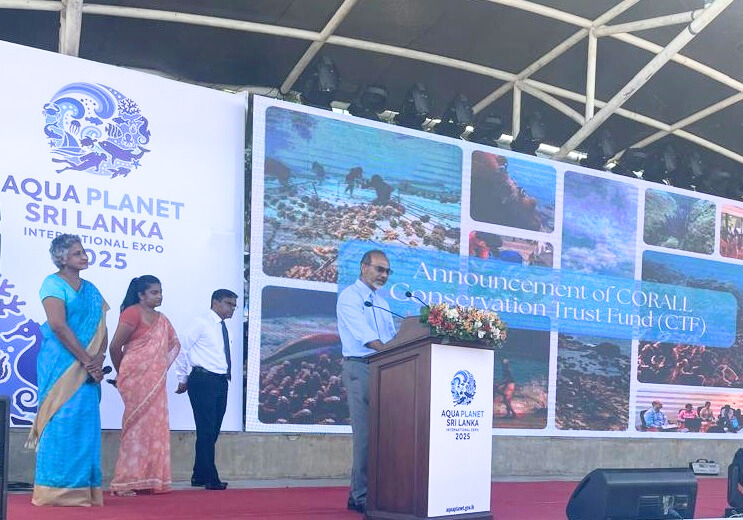
Dr Shamen Vidanage, Country Representative, IUCN in Sri Lanka, highlights the importance of coral reefs and the need for long-term conservation financing
Photo: Oliver Steve David/ IUCN

Dr Shamen Vidanage, Country Representative, IUCN in Sri Lanka, highlights the importance of coral reefs and the need for long-term conservation financing
Photo: Dinithi Samarathunga
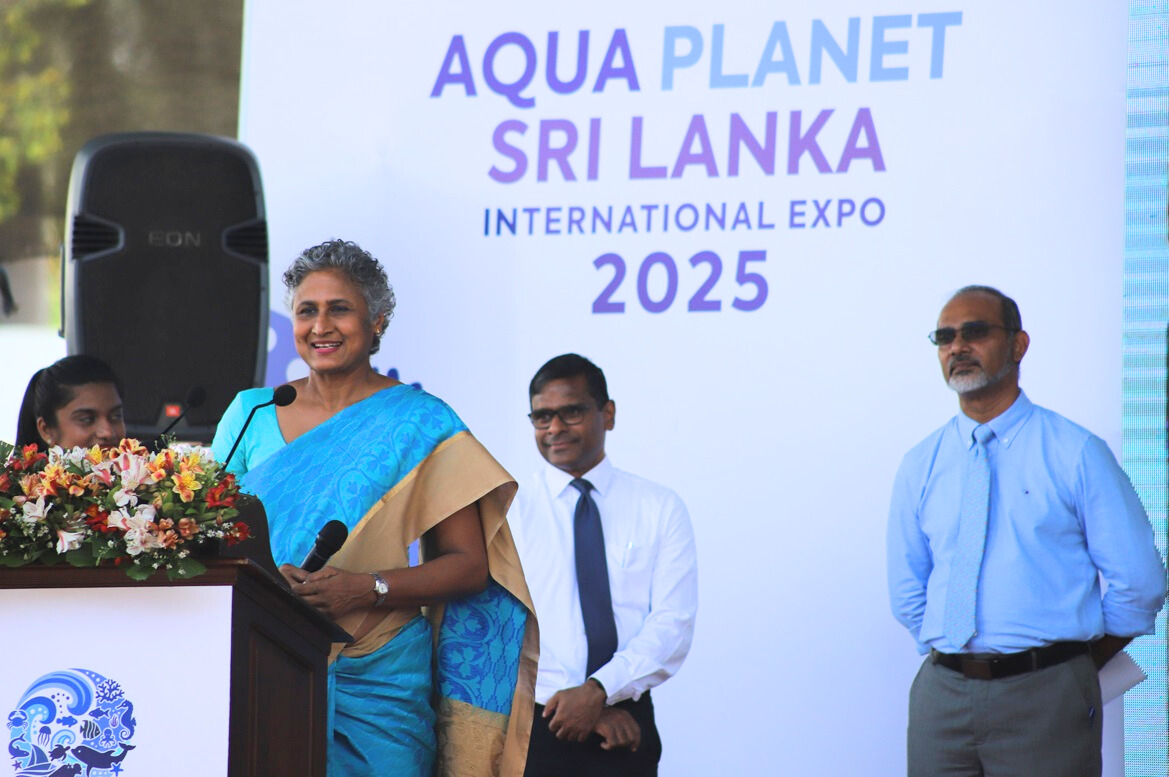
Ms Deshini Abeywardena, Chairperson and Director of Environmental Foundation (Guarantee) Ltd. (EFL), speaks on the legal process and governance of the CCTF
Photo: Oliver Steve David/ IUCN
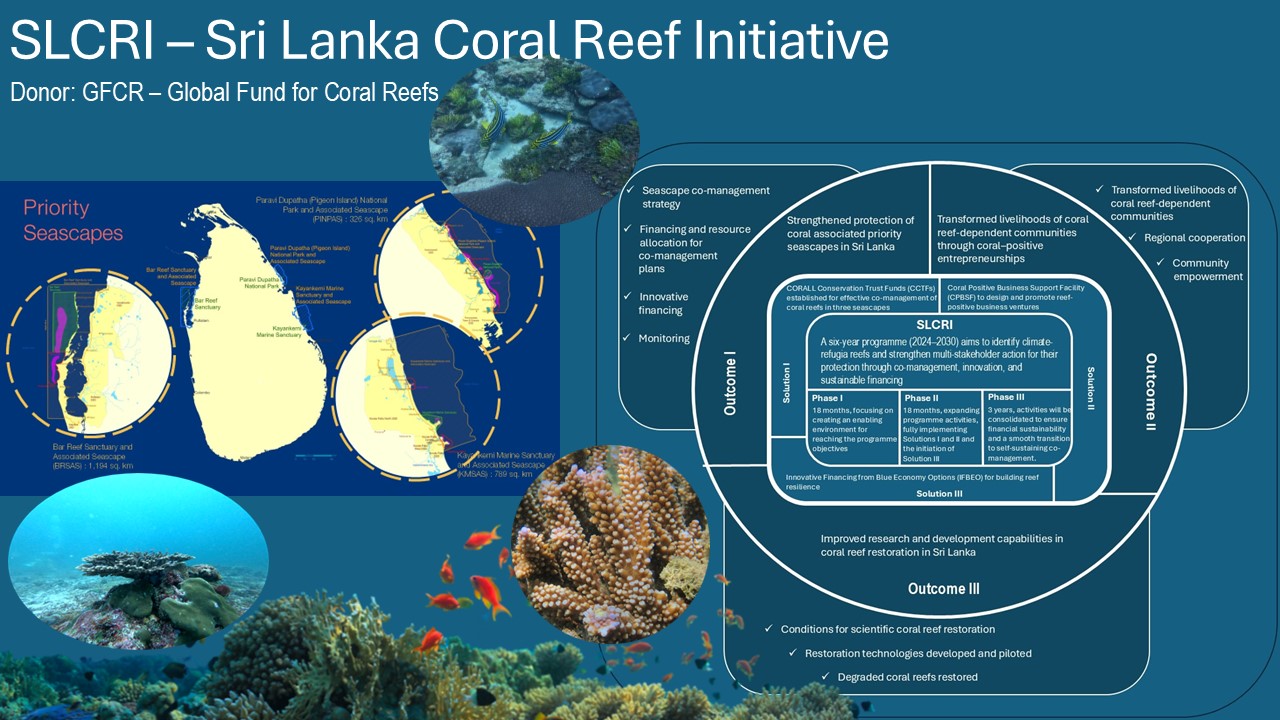
Sri Lanka’s coral reefs are among the country’s most vibrant lifelines supporting fisheries, tourism, culture, and the livelihoods of thousands of coastal families. Yet, these ecosystems continue to face climate stress, pollution, and unsustainable resource use, while funding for long-term conservation remains limited and fragmented. The CCTF is part of the Sri Lanka Coral Reef Initiative (SLCRI), supported by the Global Fund for Coral Reefs (GFCR), and is positioned as a lasting solution to bridge financing gaps and ensure conservation efforts continue beyond project cycles.
The CCTF is built on a simple idea: conservation succeeds when it is consistently funded, community-driven, and focused on ecosystems that support people. The Trust Fund is structured as a revolving mechanism, enabling funds to be reinvested into the same seascapes where revenue is generated through sources such as tourism sector contributions, voluntary contributions from all making a net revenue based on the seascape resources, donations, and eco-enterprise investments. This means that money intended for conservation stays within the ecosystems and communities that depend on it. CCTF is governed by a Board of Trustees and supported by committees on investment, technical evaluation, and project oversight. Together, these bodies ensure funds are responsibly managed, transparently allocated, and directed where they create the most impact.
The announcement featured a panel of experts representing diverse perspectives of the CCTF. Dr Shamen Vidanage, Country Representative of IUCN in Sri Lanka, underscored the importance of coral reefs for fisheries and tourism related livelihoods and the need for long-term conservation financing. As the initial donor to the Trust Fund through GFCR, he noted that an initial contribution of approximately LKR 97 million (USD 321,000) will support reef resilience and coastal communities through SLCRI. Ms Deshini Abeywardena, Chairperson and Director of Environmental Foundation (Guarantee) Ltd. (EFL), together with Ms Nimshi Hirimbura, Head of Legal at EFL, spoke about the legal, policy, and institutional process behind establishing the CCTF, outlining its legal status, governance structure, and its unique role in conservation financing. As the Settlor, EFL is the legal entity that establishes the trust, defines its purpose and structure through the trust deed, and initiates its formal registration. Mr Nalin Karunatileka, a Trustee of the CCTF, discussed the challenges and opportunities in establishing independent, transparent, and flexible financing for conservation and sustainable livelihoods in coral-associated seascapes. He highlighted the importance of creating a trusted mechanism to channel donations directly into these seascapes to strengthen ecosystem resilience and support coastal communities. Proposals for consideration for CCTF will come to the Board of Trustees through the Special Management Area Coordinating Committees in the respective seascapes in Puttalam, Trincomalee, and Batticaloa Districts and guided by seascape scale Special Area Management Plans produced according to the provisions in the Coastal Conservation (Amendment) Act No 49 of 2011.
The SLCRI is a six-year programme (2024 to 2030) supported by the GFCR to protect climate-resilient coral ecosystems while strengthening fisheries and improving coastal livelihoods. The initiative focuses on three priority seascapes: Bar Reef Sanctuary and Associated Seascape in Puttalam District, Kayankerni Marine Sanctuary and Associated seascape in Batticaloa District and Pigeon Island National Park and Associated Seascape in Trincomalee District. It promotes co-management through Special Management Areas, where government agencies, coastal communities and non-governmental partners jointly plan and steward marine resources. SLCRI is convened by the IUCN in Sri Lanka with six implementing partners, Coast Conservation & Coastal Resource Management Department, Department of Fisheries and Aquatic Resources, Department of Wildlife Conservation, Sarvodaya Shramadana Movement, EFL and the Blue Resources Trust, and is guided by a National Steering Committee chaired by the Ministry of Environment. By combining large-scale planning, community leadership, innovative financing and restoration research, SLCRI aims to establish a long-term, self-sustaining model for coral conservation and coastal resilience, with the Conservation Trust Fund serving as the primary pathway for sustained financing. By 2030, the initiative aims to evolve into a self-sustaining model where thriving coral ecosystems and resilient coastal communities grow together.
Through CCTF, IUCN in Sri Lanka is taking a major step toward a future where conservation is not dependent on short-term funding cycles but driven by a continuous flow of resources that safeguard reefs and the communities who rely on them.

The Bangladesh Forest Department (BFD) and IUCN Bangladesh, with support from Agence Française de…

Each year, International Women's Day is an opportunity to recognise the women advancing change in…

On 14 January 2026, in Dhaka, the Bangladesh Forest Department and IUCN Bangladesh formally signed…