Policy in action: How IUCN ESARO’s technical leadership catalyzed the institutionalization of Ethiopia’s PES framework
For years, the concept of Payment for Ecosystem Services (PES) remained a promising but abstract mechanism in Ethiopia. While the need to link ecosystem conservation with sustainable development was evident, translating this into a functional legal framework required overcoming significant institutional and technical challenges. Key national actors, including the Environmental Protection Authority (EPA), the Ethiopian Biodiversity Institute (EBI), and the Ethiopian Wildlife Authority (EWA), required consistent, evidence-based support to move from theoretical discourse to a nationally owned, actionable policy framework.
Since 2021, IUCN ESARO's team on the ground, led by Abdeta Robi, Programme Officer for Ethiopia, has been at the heart of this transformation. Operating at the intersection of science and policy, the team has worked to ensure that national institutions are empowered as architects of their own environmental agenda. This work has focused on enhancing landscape restoration, addressing biodiversity loss, regulating access to natural resources, and integrating environmental costs and benefits into national accounting systems.
A partnership grounded in technical accompaniment
Building on a formal MoU with Ethiopia's EPA, IUCN ESARO deployed a strategy rooted in deep technical accompaniment. The team's work exemplifies the whole-of-government, whole-of-society approach in action, serving as technical partners embedded within the policy ecosystem rather than external consultants delivering reports. Working side by side with sectoral ministries and agencies, IUCN supplied rigorous, science-based tools and policy guidance to strengthen biodiversity governance.
As among the first institutions to champion the PES concept in Ethiopia, IUCN led feasibility discussions, mapped existing opportunities, and identified the enabling conditions required for success. This foundational work culminated in the development of national PES guidelines and strategy documents, effectively positioning PES as a practical tool for national development and demonstrating the power of sustained technical partnerships.
Bridging executive and legislative branches
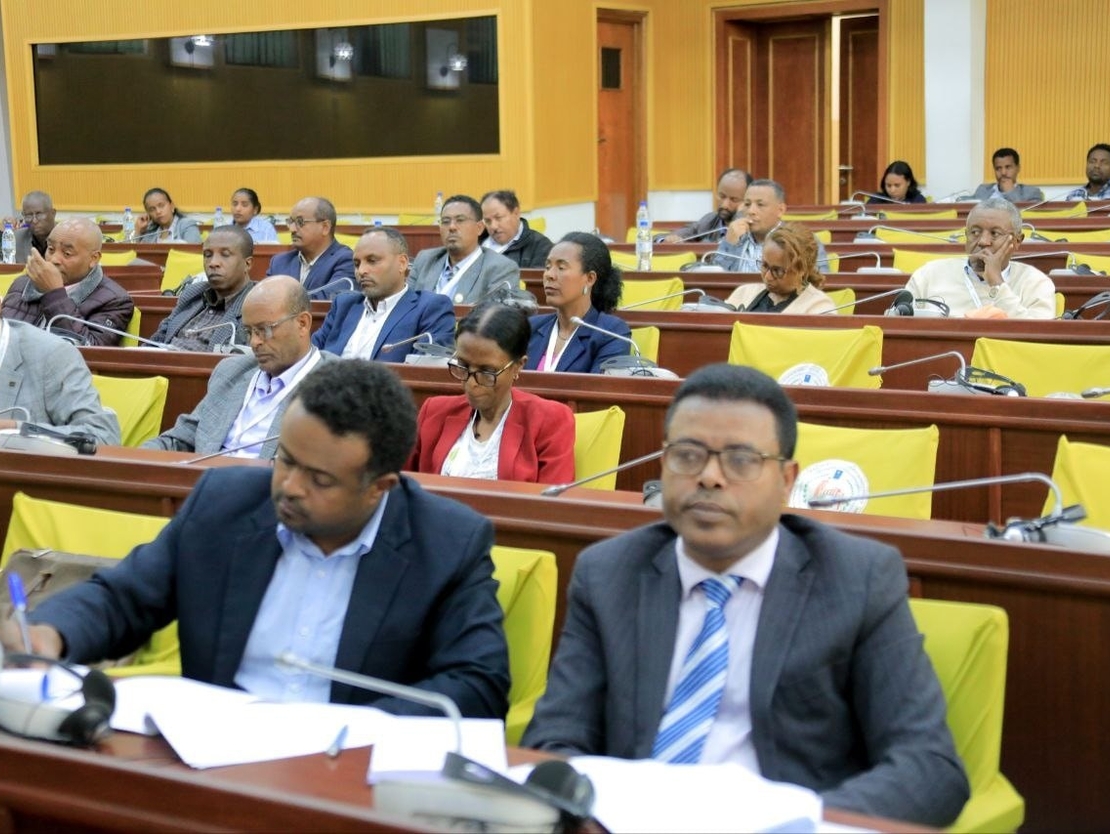
The critical juncture arrived when the draft PES legislation reached the Federal Democratic Republic of Ethiopia's Parliament. Recognising the need to build understanding among the nation's lawmakers, the EPA requested direct support from the IUCN team. In response, IUCN delivered targeted, two-day capacity-building sessions for Members of Parliament, breaking down the fundamentals of PES, exploring international experiences, and articulating its power to regulate access to ecosystem services while driving socioeconomic benefits.
The team trained key members of the parliamentary standing committees and, at a historic moment, appeared before Parliament during public hearings to provide the technical justification for the proclamation's urgency and long-term value. This engagement, bridging the executive and legislative branches while empowering national stakeholders, exemplifies how trusted technical partnerships can facilitate policy transformation.

A historic outcome
This sustained collaboration between IUCN, EPA, EBI, and EWA led to the historic outcome of the Ethiopian Parliament passing the Payment for Ecosystem Services Proclamation, which officially took effect in January 2026. The new law establishes a robust legal framework that incentivises conservation by creating a formal system to reward those who protect crucial ecosystems. It mobilizes sustainable finance by unlocking new, domestic funding streams for biodiversity, and it integrates environment and development by mainstreaming ecological protection into Ethiopia's national development agenda, ensuring a resilient future for all Ethiopians.
This achievement showcases IUCN's distinctive role as a reliable and knowledgeable technical partner in policy and legal framework influence. The collaboration demonstrates that meaningful policy transformation requires sustained accompaniment, deep institutional relationships, and the ability to facilitate dialogue across government and society. By embedding technical capacity within national structures and empowering local actors to lead, IUCN ESARO has helped Ethiopia turn an innovative concept into a concrete tool for change.
The PES Proclamation stands as a model for how technical leadership can catalyse the political will needed to secure our planet's future. It reaffirms IUCN's commitment to partnerships that deliver strong, measurable results and positions the organisation as a partner of choice for institutions seeking to translate environmental principles into lasting policy impact.
Check out this Facebook post by the House of Peoples Representatives of FDRE announcing the passing of the proclamation.

The Bangladesh Forest Department (BFD) and IUCN Bangladesh, with support from Agence Française de…

Each year, International Women's Day is an opportunity to recognise the women advancing change in…

On 14 January 2026, in Dhaka, the Bangladesh Forest Department and IUCN Bangladesh formally signed…