Rewilding in Siem Pang Wildlife Sanctuary, Cambodia: learning and scaling up opportunity in Viet Nam
Rewilding is emerging as a core approach in modern conservation, going beyond the recovery of threatened wildlife populations to restoring entire ecosystem functions. Viet Nam has started to develop a National Rewilding Plan. In this context, efforts in Siem Pang Wildlife Sanctuary in Cambodia demonstrate that rewilding can be implemented at a landscape scale, with multi-stakeholder engagement and sustainable financing. This can serve as a conservation model for learning.
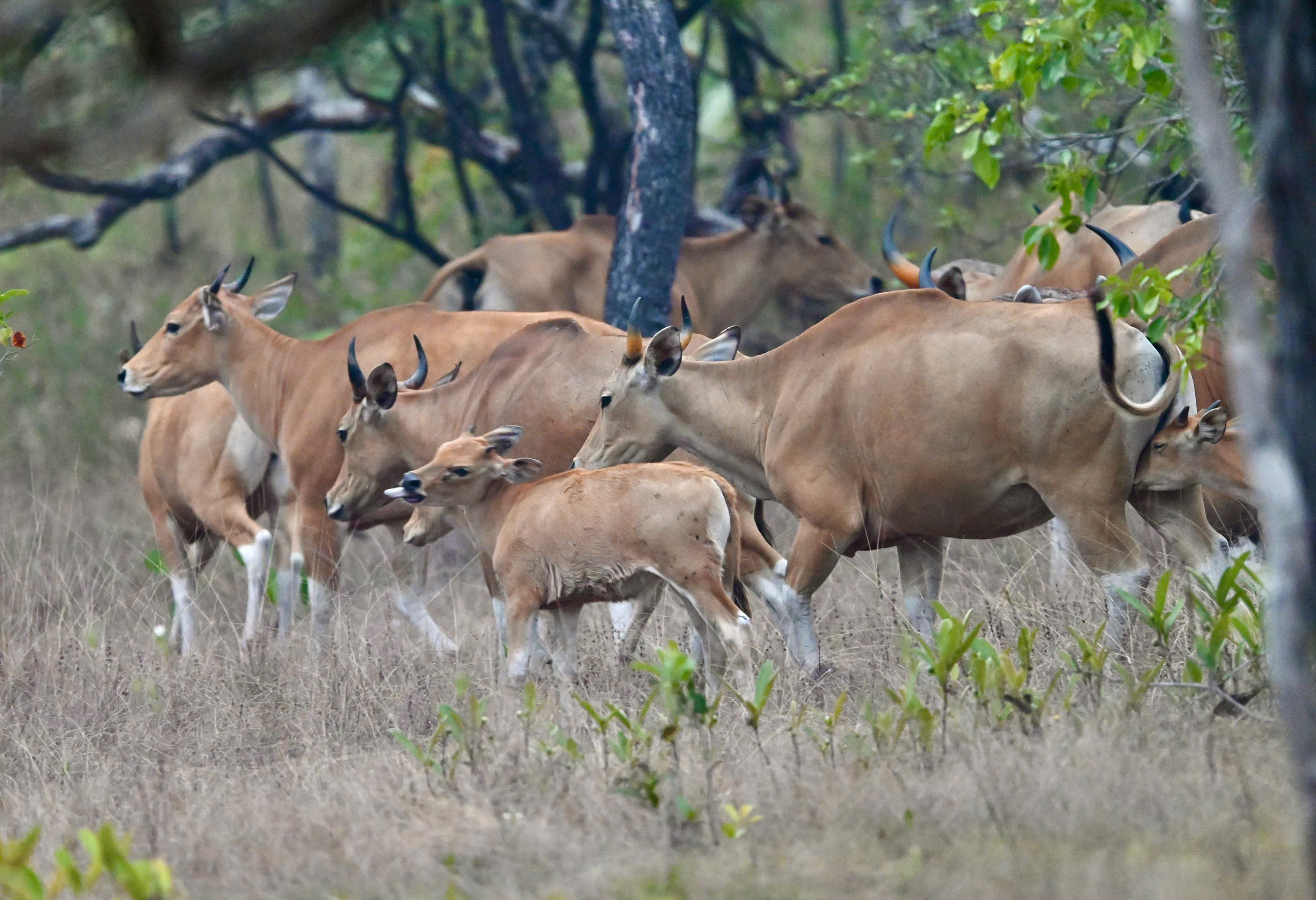
Photo: Banteng rewilding in Siam Pang Nature Sanctuary, Cambodia © IUCN Viet Nam
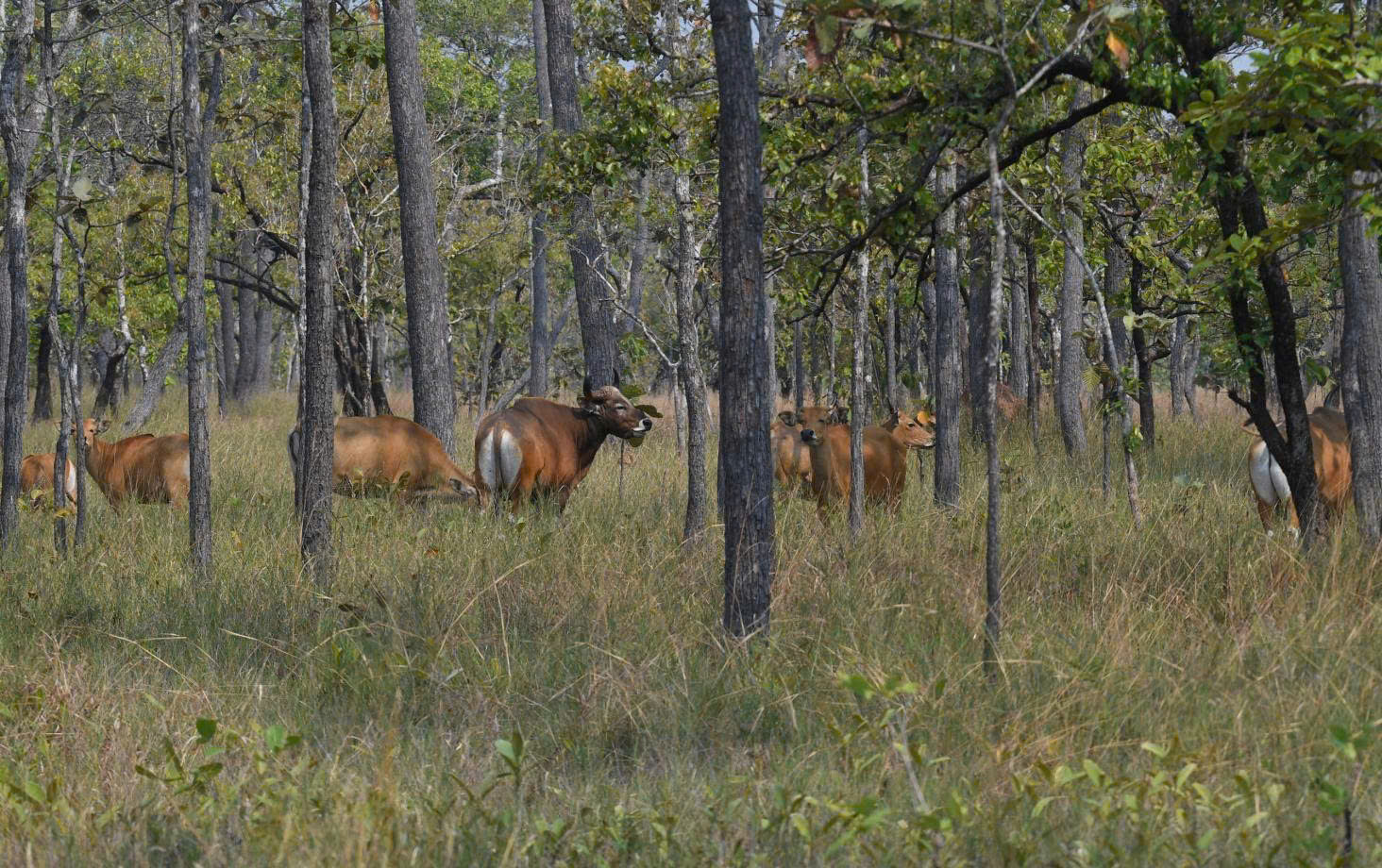
Photo: The delegates discussing during the field trip at Siam Pang Nature Sanctuary © IUCN Viet Nam
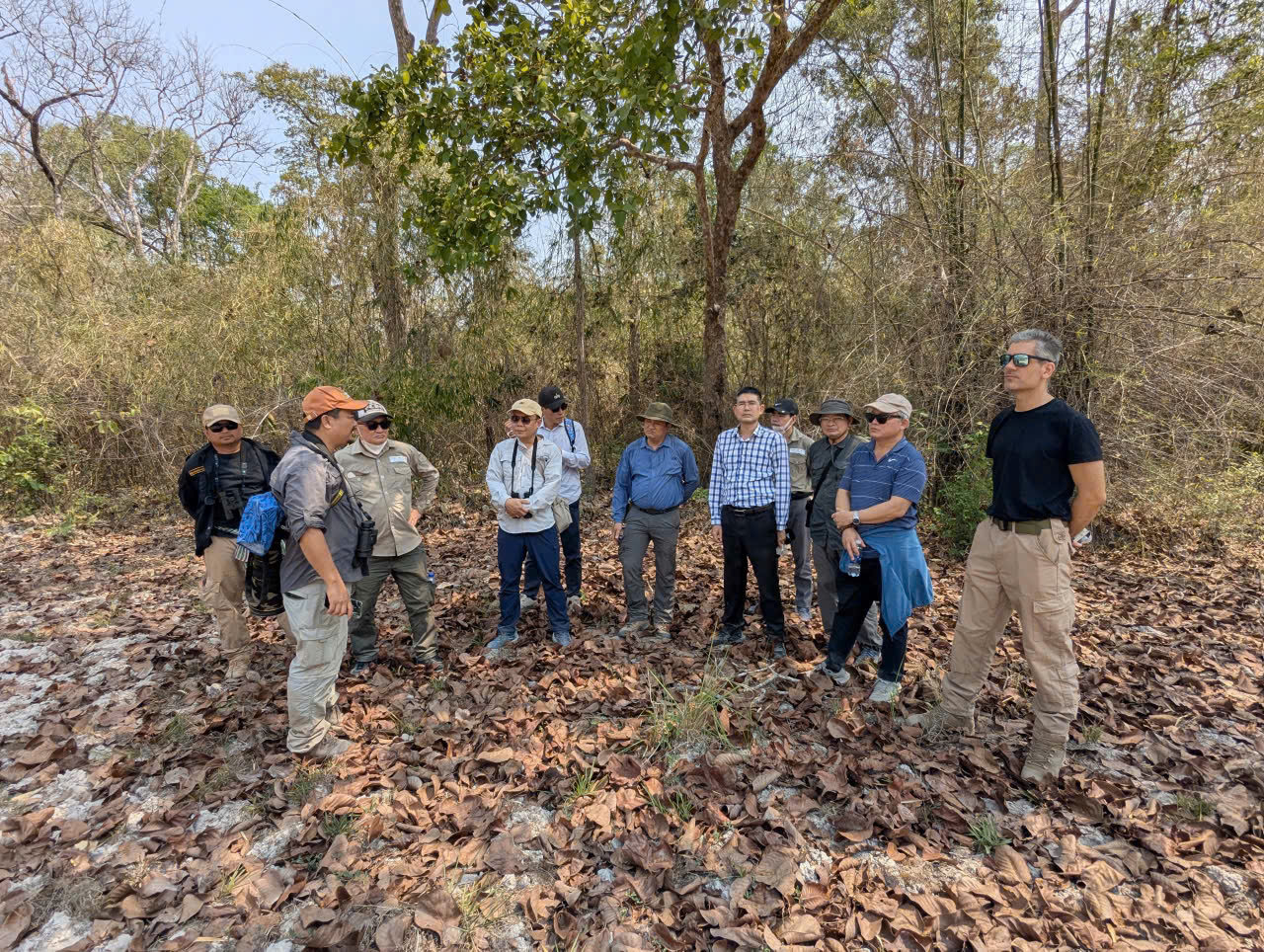
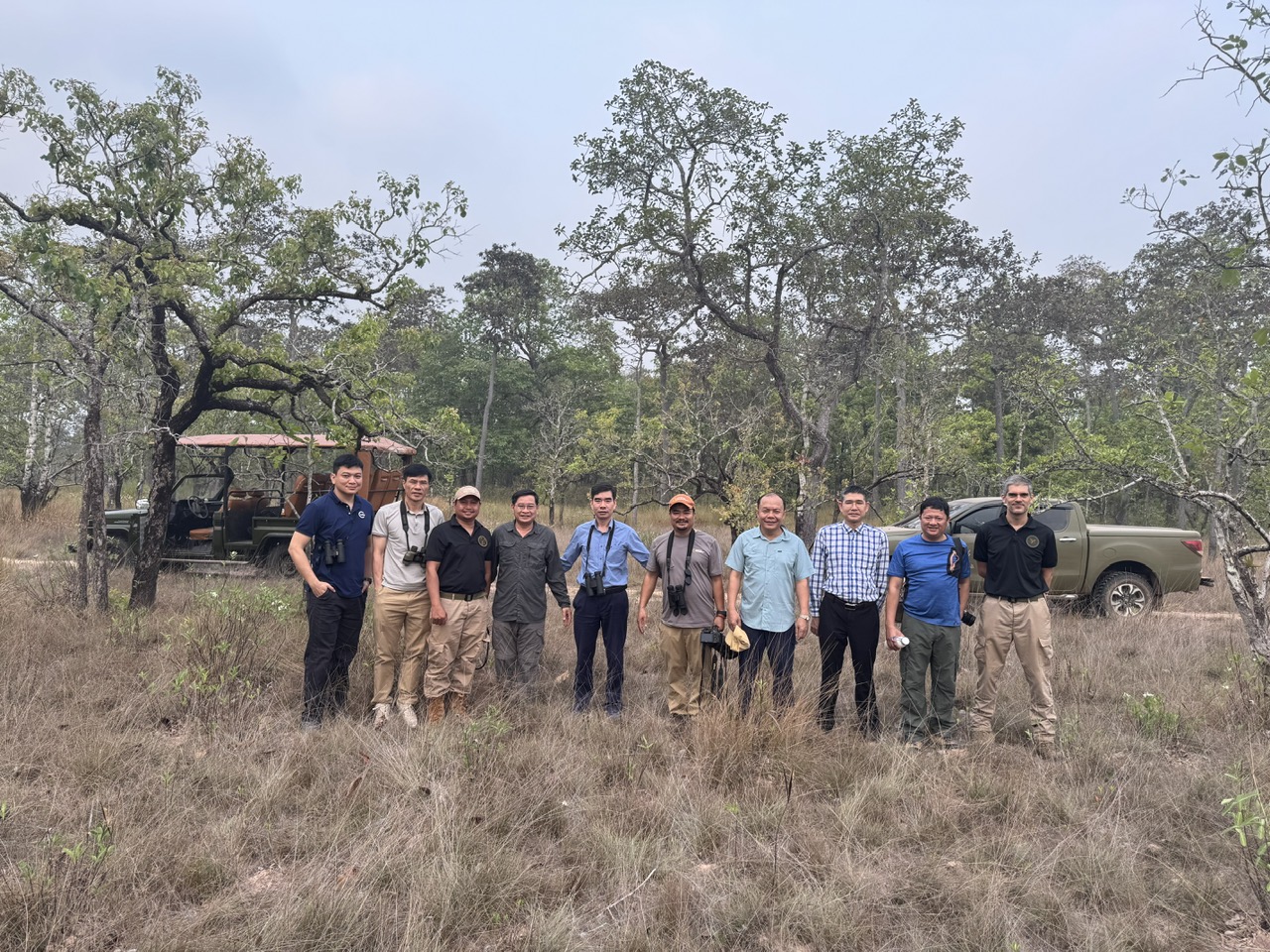
On 7-11 April 2026, the Ministry of Agriculture and Environment’s Department of Forestry and Forest Protection and IUCN organised a visit to Siem Pang Wildlife Sanctuary with leaders from Cuc Phuong, Xuan Lien and Yok Don National Parks, representatives of local authorities in Cambodia, and Rising Phoenix Company.
Siem Pang Wildlife Sanctuary covers more than 132,000 hectares in northeastern Cambodia near the border with Laos. The area is notable for its dry dipterocarp and semi-evergreen forests. Since 2016, the sanctuary has been managed by Cambodia’s Ministry of Environment and was officially established in 2019 through the merger of protected areas.
During the visit, the delegation observed how to restore ecological functions in seasonal wetlands and rewilding efforts for the Siamese crocodile population. They also held technical discussions with staff of Rising Phoenix, the private company that has been granted a concession by the government of Cambodia to manage the sanctuary.
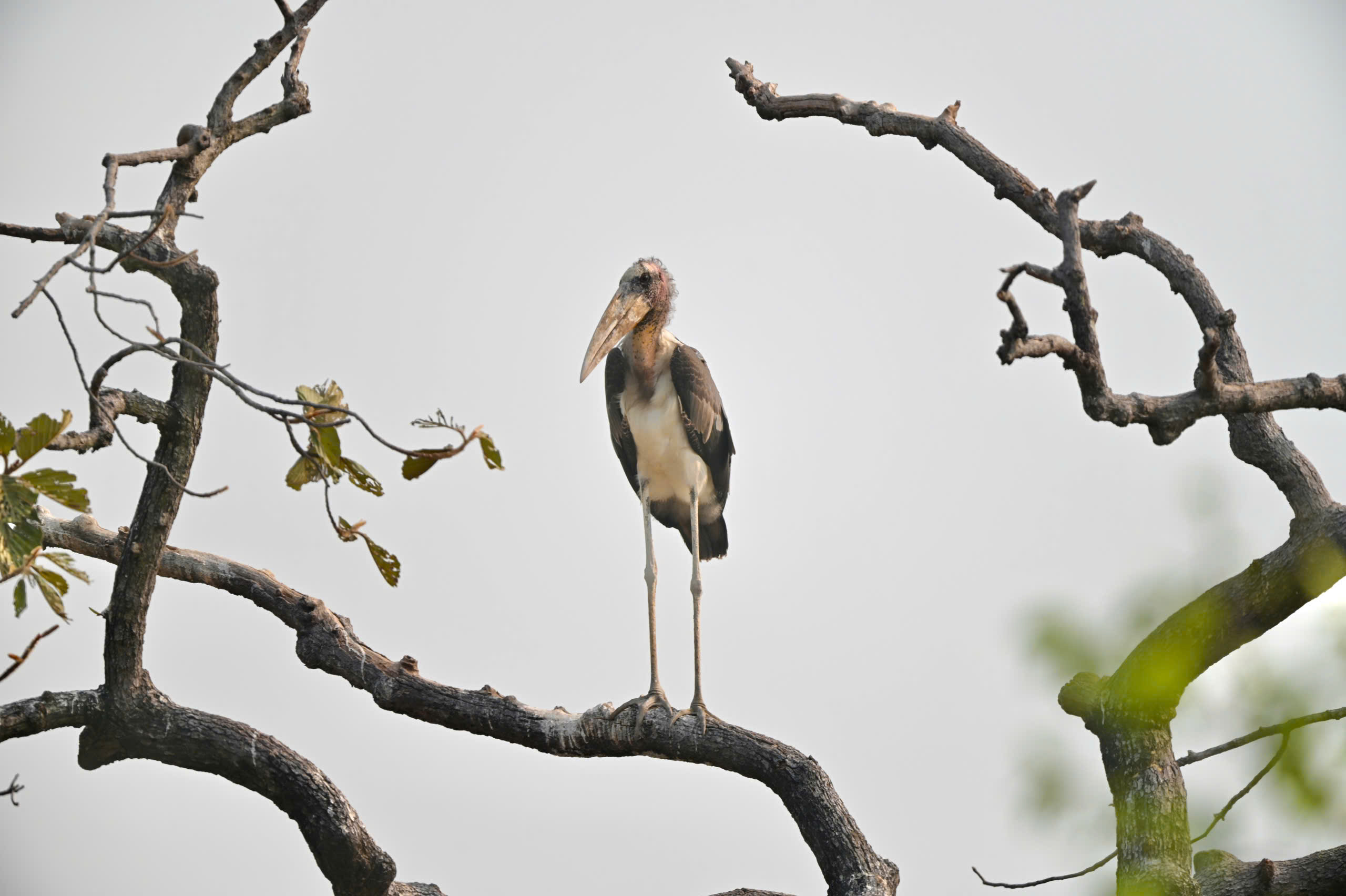
Siem Pang is home to many Critically Endangered and Endangered species, including the Giant Ibis (Thaumatibis gigantea), White-shouldered Ibis (Pseudibis davisoni), Greater Ajutant Stork (Leptoptilos dubius), several vulture species, wild cattle, and Eld’s deer (Rucervus eldii). Conservation efforts are notable for their landscape-scale approach, combining habitat restoration, species rewilding, and community livelihood development. Diversified financing and close public-private partnership have created an effective conservation model.
Based on experiences from Siem Pang Wildlife Sanctuary, some recommendations can be proposed for Viet Nam including:
A comprehensive legal framework for rewilding should be developed, covering habitat assessments through to post-release monitoring.
Public-private partnerships in conservation should be promoted to leverage resources from the private sector.
Conservation livelihood models should be strengthened, including agricultural value chains (such as certified rice and organic products), community-based ecotourism, and benefit-sharing mechanisms that create economic incentives for local communities.
Nature-based solutions for habitat restoration should be piloted in selected protected areas and national parks in Viet Nam such as wetland restoration and the use of animals to restore ecological functions.
Priority should be given to key species and the establishment of semi-wild populations for long-term reintroduction.
Regional cooperation, information exchange, and communication efforts should be enhanced to raise awareness among communities, government agencies and other stakeholders about the importance of rewilding.
The visit was not only an opportunity for learning and exchange between the two countries but also opened practical pathways for developing and implementing Viet Nam’s National Rewilding Plan. Preparation of the National Rewilding Plan is being funded by Re:wild and the visit was co-funded by the Critical Ecosystem Partnership Fund (CEPF).
About Re:wild
Re:wild is a non-profit organization based in the US, established with the mission of protecting and restoring the wild. The organization takes a holistic approach, not only conserving threatened species but also restoring degraded ecosystems through rewilding initiatives.
About CEPF
CEPF is a joint initiative of l’Agence Française de Développement, Conservation International, the European Union, Fondation Hans Wilsdorf, the Global Environment Facility, the Government of Canada, the Government of Japan and the World Bank. A fundamental goal is to ensure civil society is engaged in biodiversity conservation.

The Bangladesh Forest Department (BFD) and IUCN Bangladesh, with support from Agence Française de…

Each year, International Women's Day is an opportunity to recognise the women advancing change in…

On 14 January 2026, in Dhaka, the Bangladesh Forest Department and IUCN Bangladesh formally signed…