A tribute to Dr Robert C. Malpas
The death of Robert Malpas (23 April 1950 – 5 May 2026) marks the loss of a distinguished conservationist who, for over 40 years, made invaluable contributions to the protection of East Africa's ecosystems, providing technical support and advice to government agencies, NGOs and community organisations in conservation management across the region.
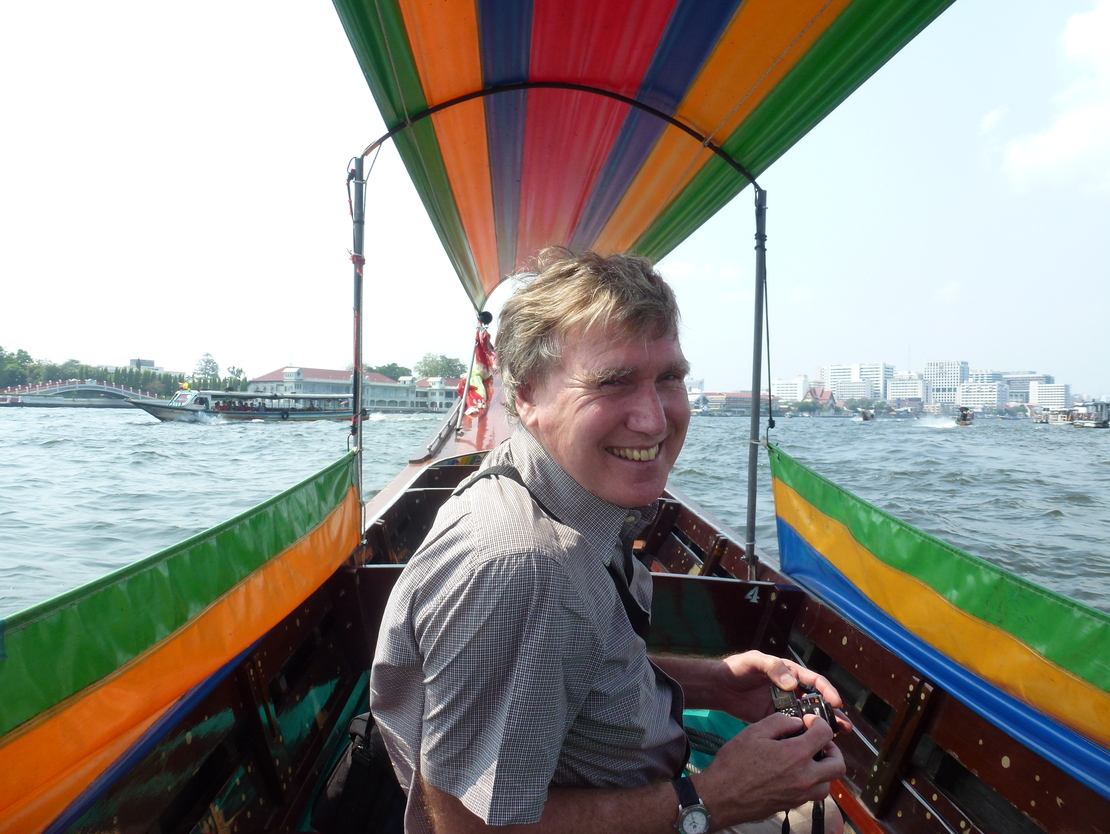
Dr Robert C. Malpas
Rob's intellectual capability and practical aptitude were clear from his childhood, growing up in southeast London. He was always academically gifted, and his renowned ability and dogged determination to solve problems and fix things were evident from an early age. This combination of skills would prove invaluable throughout his career.
Rob read for a BSc in Zoology at the University of Southampton, graduating in 1971. One of his lecturers, Dr Mike Delany, had close contacts with Makerere University in Uganda and the Nuffield Unit of Tropical Animal Ecology (NUTAE, later the Uganda Institute of Ecology). These institutions supported an expedition organised by Dr Delany to the Ssesse Islands in Lake Victoria, in which Rob participated along with many others who were to become lifelong friends and colleagues.
NUTAE was subsequently looking for a researcher to study the diet, condition and growth of elephants in the Queen Elizabeth and Murchison Falls National Parks, and offered the position to Rob. Accepting it enabled him to register for a PhD with the Department of Applied Biology at Cambridge in 1974, before undertaking over two years of fieldwork in Uganda. On returning to Cambridge, he met two other PhD students of large mammals, Rob Olivier (Asian elephants) and Andrew Laurie (Asian rhinos), and the three formed the Pachyderm Research Unit. He obtained his doctorate in 1978, awarded for his thesis The ecology of the African elephant in Rwenzori and Kabalega Falls National Parks. Aspects of the relationship between elephants and their environment in Uganda. During his time at Cambridge, Rob was an active and valued member of Darwin College. He also managed to find time to pursue his interest in flying, and successfully obtained his Private Pilot Licence at the Cambridge Aero Club.
After graduating from Cambridge, Rob returned to Uganda, where he coordinated and implemented surveys of the country's protected areas. In 1981, he became Director of a programme responsible for establishing and managing, on behalf of World Wildlife Fund (WWF) International and the International Union for Conservation of Nature (IUCN), a regional projects operations centre in Nairobi covering Kenya, Uganda, Tanzania and the Democratic Republic of Congo. In this role, he coordinated the design, implementation and monitoring of many field conservation activities, with a focus on protected area management and species conservation.
During his time with WWF/IUCN, he established a well-deserved reputation as an astute, diligent and efficient programme planner and administrator. On the strength of this, he was appointed in 1983 as IUCN's first Regional Representative in Eastern Africa, responsible for establishing and managing a new IUCN Eastern Africa Regional Office (EARO) in Nairobi, which eventually expanded to some 50 technical, administrative and support staff. This represented a major step-change in the scale and scope of his activities and responsibilities.
Rob held this position for 11 years, during which he developed numerous projects throughout the region. He also emerged as a leading advocate for the decentralisation and regionalisation of IUCN’s operations; today, thanks in part to Rob’s dedicated efforts and vision, as well as those of a small number of like-minded colleagues, the decentralisation model has been widely embraced and IUCN has offices in over 50 countries around the world. Due to his early work there, Rob always maintained a particular concern for Uganda, where the project portfolio grew large enough to justify the opening of IUCN's first Country Office in the region, in Kampala.
Rob was an early champion of conservation approaches which sought to work with local communities rather than against them. He played a pivotal role in designing and overseeing the implementation of many integrated conservation and development projects, including pioneering initiatives in the Serengeti, Ngorongoro and the Usambara Mountains in Tanzania. Although widespread today, these approaches were still in their infancy in the 1980s and marked a significant shift in conservation thinking.
Towards the end of his tenure, Rob was also instrumental in the purchase for IUCN of the former house and extensive grounds of Nairobi's leading landscape gardener. That spacious and tranquil property now houses the IUCN Office for Eastern and Southern Africa in a permanent location.
In 1995, Rob took on a major new challenge, stepping away from his IUCN position to enrol for a Master of Science in Management at the Graduate School of Business at Stanford University, for which he secured a highly prestigious Sloan Fellowship. This represented a major shift to unfamiliar academic and social environments, but he showed great determination and tenacity in successfully graduating in 1996.
Returning to Nairobi, Rob established his own conservation consultancy, the Conservation Development Centre, which provided specialist technical support for agencies working to promote nature conservation aligned with human development goals. This allowed him to draw on both his business training and conservation experience to develop specialist areas of interest, including project development (helping to raise significant sums for organisations operating across the region and Africa more broadly), organisational capacity building and working with government agencies on management planning for many of the region's most important and well-known protected areas.
Alongside the highest professional standards and innovations he brought to conservation management and planning, Rob was exceptional in his commitment to the training, mentorship and career development of younger conservationists. He was always generous in sharing his expertise and providing opportunities and support, while being equally uncompromising in expecting the best from his colleagues.
On his retirement in 2021, Rob closed the Conservation Development Centre and made a gradual transition to a new life in Comrie, Scotland. His life in the UK brought new interests and friendships, including at the Comrie Amateur Dramatic Society, where – characteristically – he provided much-valued techie support behind the scenes. However, he remained actively engaged in conservation, both through consultancy work with UNEP and, more locally, through sustainable development initiatives in Comrie. And, as he had throughout his life, Rob continued to derive great pleasure from being in nature, whether it be through spending time in his garden, going on local walks and cycle rides around Comrie, or undertaking travels further afield. He also took great joy in seeing his friends' children grow up. To the end, he was unfailingly generous in his support for friends and in helping them navigate the challenges of daily life. He will be greatly missed.
[Rob is survived by his brother, Emeritus Prof John Malpas, who lives in Hong Kong.]
In Kashkadarya, Khorezm and the Republic of Karakalpakstan, local communities are helping turn…
The third in a five-part series, this webinar brought together speakers from across West and…

This week, the Yerevan Municipality hosted the inaugural ceremony marking the establishment of the…
Rob Malpas
This tribute tells exactly whom I knew Rob to be - warm-hearted, amiable and welcoming even to those he met for a first time or were much junior to him.
Thinking back to the Rwenzori Mountains National Park
It was our privilege to work with Rob when we undertook an evaluation of the Rwenzori Mountains NP management project. It was the first time I had been exposed to such as structured process, led by Antony Ratter, but with Rob as the key specialist on social and community processes. Rob was such a fun colleague and we spent many evenings sipping Laphroaig from his precious steel beakers and the future. I still have some of those bearers Rob and will keep up the tradition in your memory!
Add new comment