Growing a generation of conservation stewards in Myanmar
Conservation needs people, especially youth
Conservation efforts increasingly recognise that addressing the deep interdependency between people and their natural environment requires interdisciplinary approaches and inclusive participation. Yet a gap remains in the participation of youth in conservation research, planning, and decision-making, which limits both the quality and sustainability of conservation outcomes.
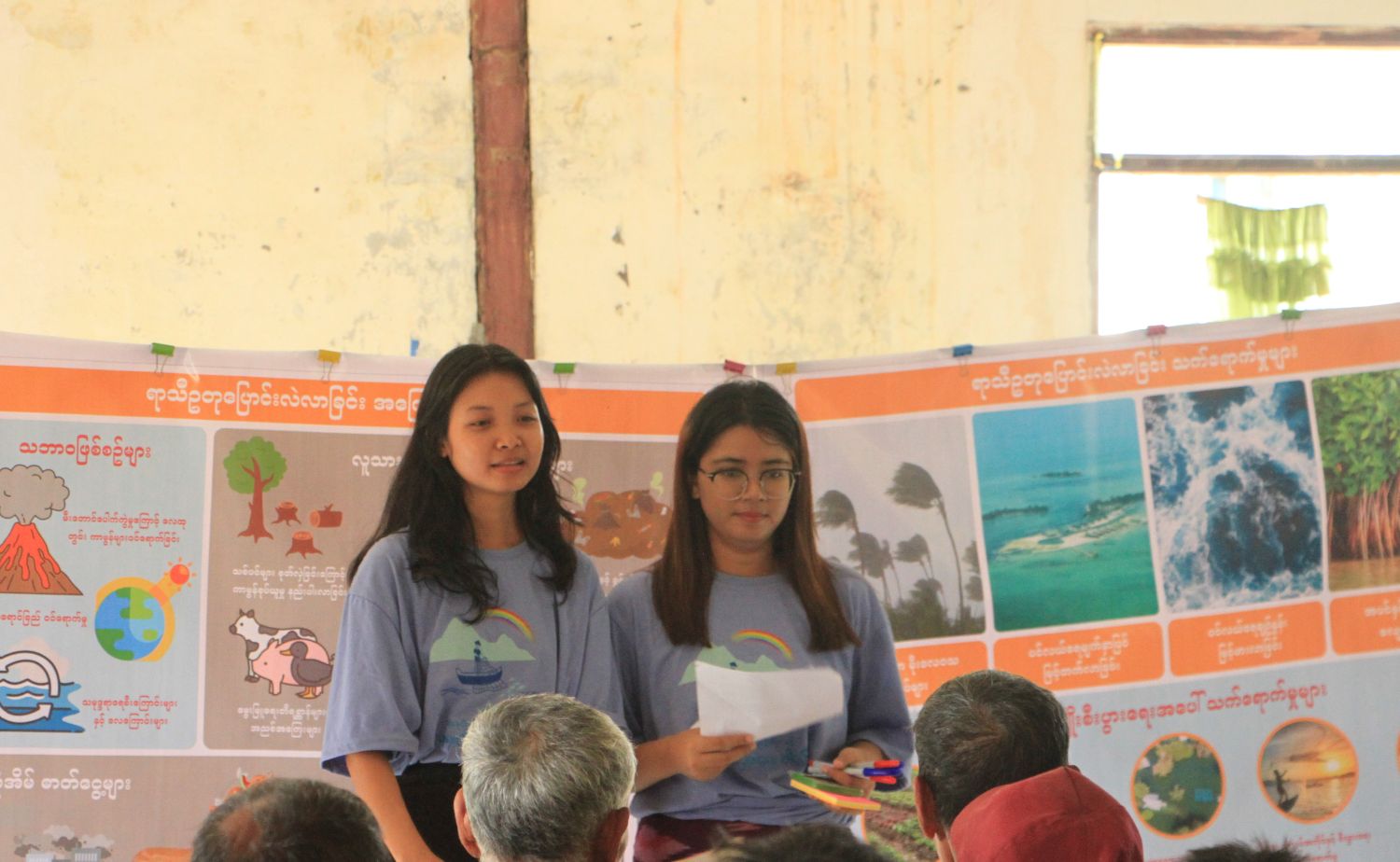
Photo: A participant from the youth programme facilitating a marine mammal community workshop in Kar Te Village, Paung Township © IUCN Myanmar
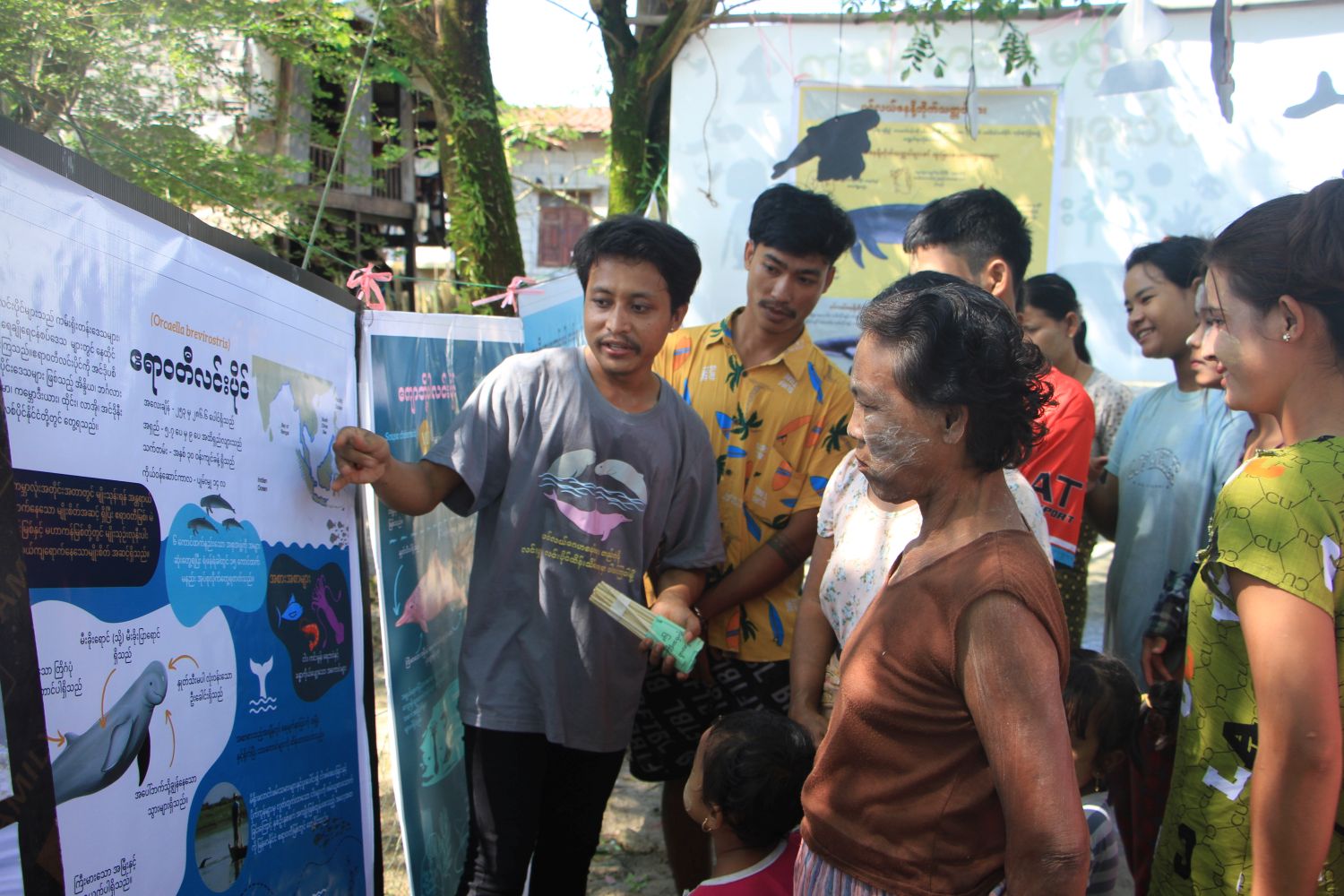
Photo: Youth researchers interviewing a local fisher on community readiness to establish fishery conservation areas in the Gulf of Mottama, Thein Za Yat Village, Kyaikhto Township © IUCN Myanmar

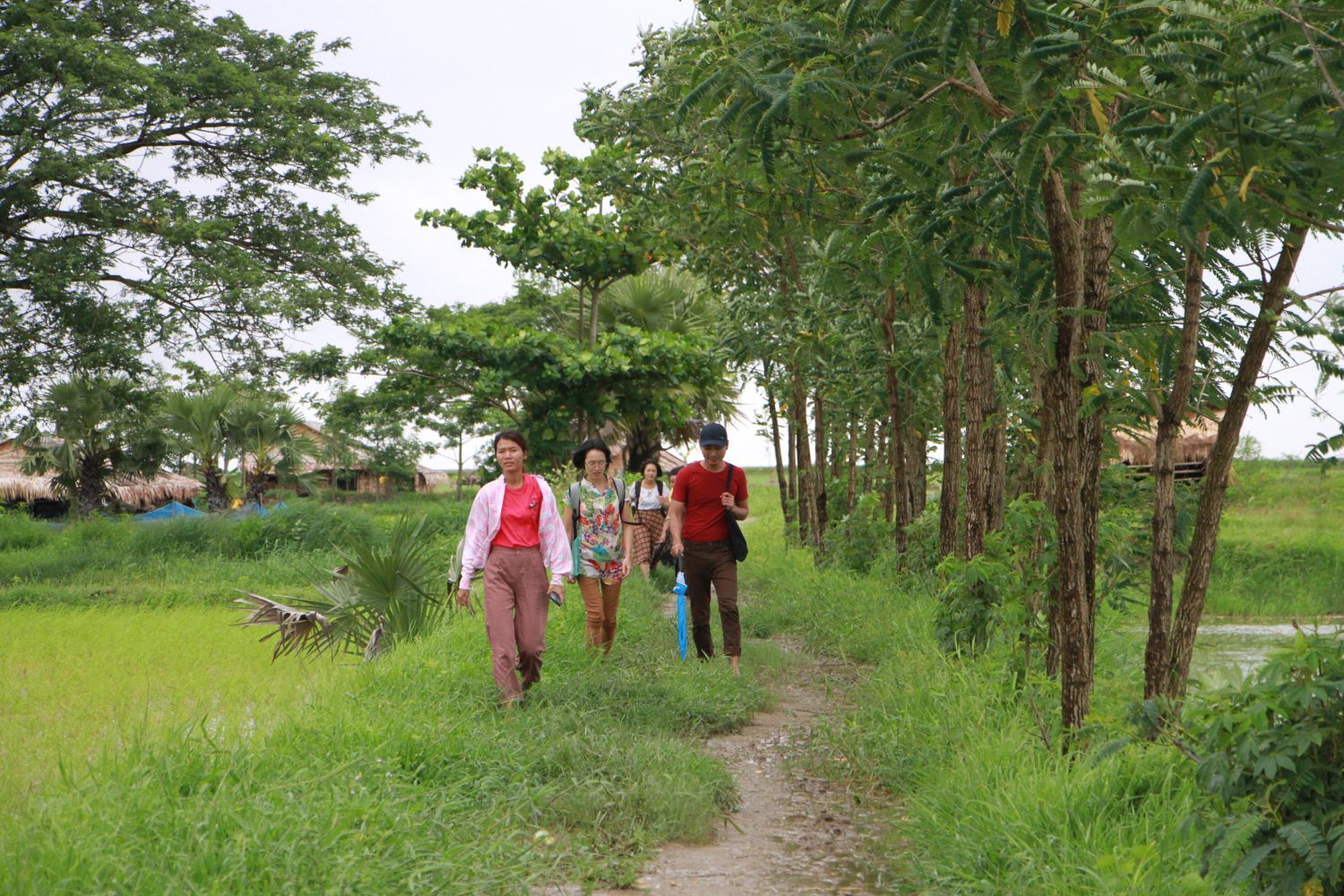
Photo: Youth researchers travelling to interview local fishers about local ecological knowledge of marine mammals in Gwa Thaung Village, Bilin Township © IUCN Myanmar
IUCN Myanmar works at the intersection of biodiversity conservation, community engagement,and policy influence, and believes that embedding youth in our activities strengthens all three dimensions. Youth bring motivation, innovation, and perspectives that enrich conservation actions. They also contribute cultural insights that promote more inclusive conservation. We, therefore, run programmes that provide opportunities for meaningful youth participation in conservation, from planning through implementation to evaluation.
From a university partnership to a young conservationist network
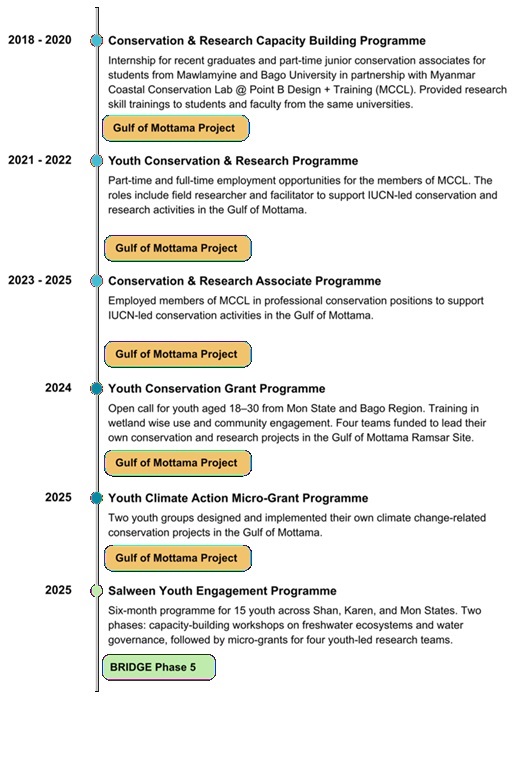
Youth engagement at IUCN Myanmar grew out of the Gulf of Mottama Project (GoMP), a consortium initiative funded by the Swiss Agency for Development and Cooperation (SDC). Through a partnership with the Myanmar Coastal Conservation Lab @ Point B Design + Training (MCCL @ Point B), the project supported conservation and research capacity building at Mawlamyine and Bago Universities. The programme offered part-time and full-time internship opportunities, giving students and recent graduates early-career access to conservation work in the field.
Over time, it evolved into providing longer-term employment for promising young conservationists to support ongoing GoMP activities jointly implemented by IUCN Myanmar and MCCL @ Point B. Beyond professional placement, we also provided small grants to support youth-led conservation initiatives in the Gulf of Mottama and the Salween Basin, enabling youth to design and implement their own ideas, shifting their role from participation to active contribution. This approach creates a growing network of young people with hands-on experience and skills.
The pathway for young conservation stewards
IUCN Myanmar’s youth engagement has several stages. It begins with capacity-building workshops covering biodiversity conservation, natural resources management, community engagement, social research, proposal writing and so on. Knowledge gained in the workshops is then enriched through participation in field work alongside professional staff. The trained youths are then provided with small grants or placements within IUCN Myanmar projects to gain practical experience working within a conservation organisation while interacting with real conservation challenges. Together, this creates a pathway of learning, doing, and leading.
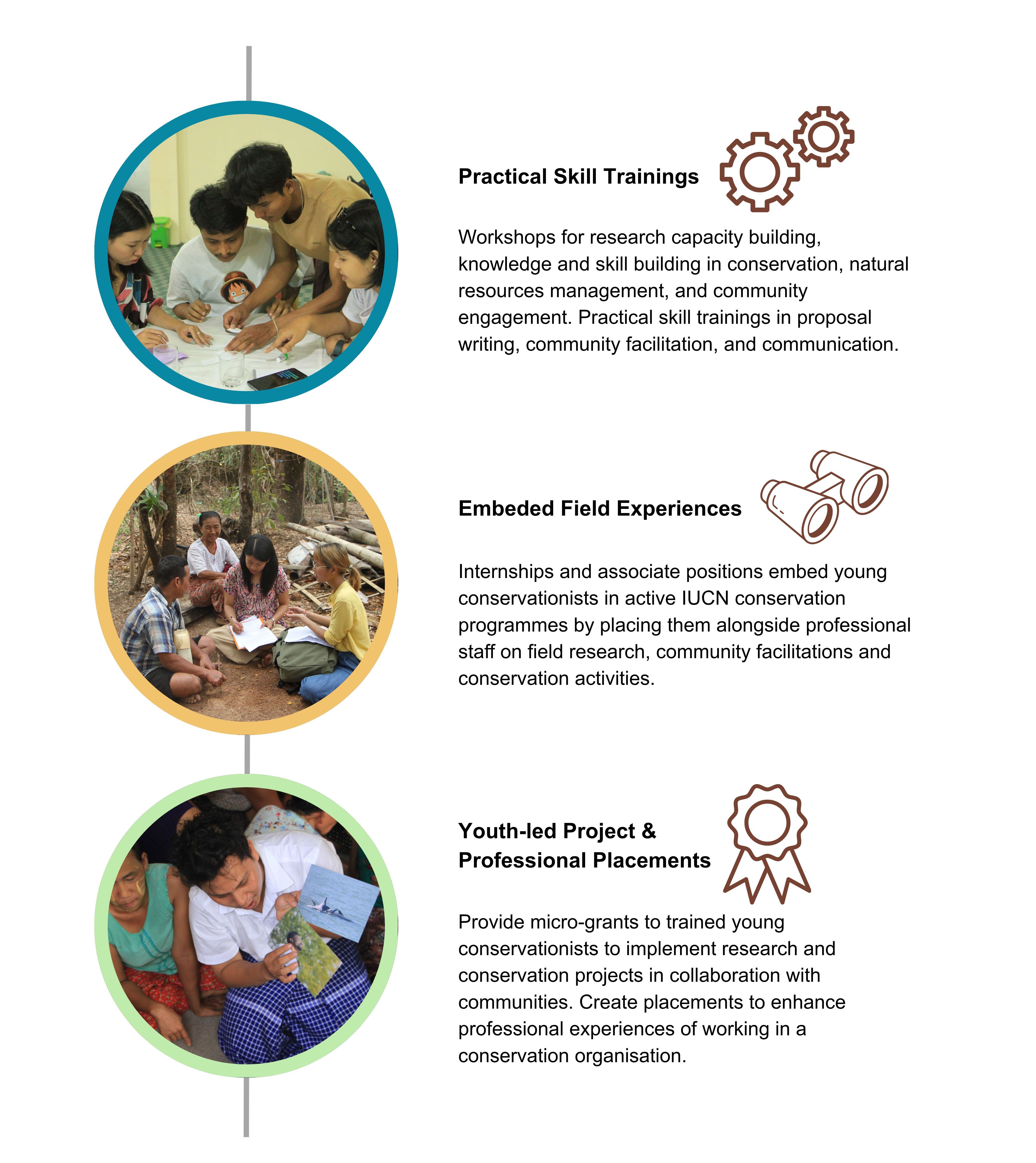
Invest in Myanmar’s Next Generation of Conservation Stewards
The impact of IUCN Myanmar’s youth engagement is already visible. Most young people who passed through the programmes remain active in conservation, working with local and international organisations, conducting research, or leading initiatives on the ground. Some have gone on to receive prestigious international scholarships, including Chevening, Australia Awards, and France Excellence Scholarships, pursuing advanced studies in conservation across the globe.
This shows what becomes possible when young people are given genuine opportunities and trust early in their careers, motivating and equipping them to achieve their goals. Still, the need is far from met. Myanmar’s ecosystems face mounting pressures exacerbated by serious economic and political instability, and the conservation community in Myanmar needs a pipeline of diverse, skilled, committed, and locally rooted conservationists to respond effectively. Investing in youth is essential, and IUCN Myanmar is committed to growing the next conservation generation.