From Mangroves and Seagrass to World Heritage: IUCN and Chery Automobile showcase global conservation portfolio at EU Green Week 2026
International Union for Conservation of Nature (IUCN) and Chery Automobile presented the expanding Cherish the Nature partnership at EU Green Week 2026, unveiling five on-going and potential partnership projects spanning Spain, Malaysia, South Africa, the United Kingdom, and European World Heritage sites.
Members of the public joined a mangrove planting activity at the launch of Cherish the Nature in Malaysia
Photo: IUCN Asia

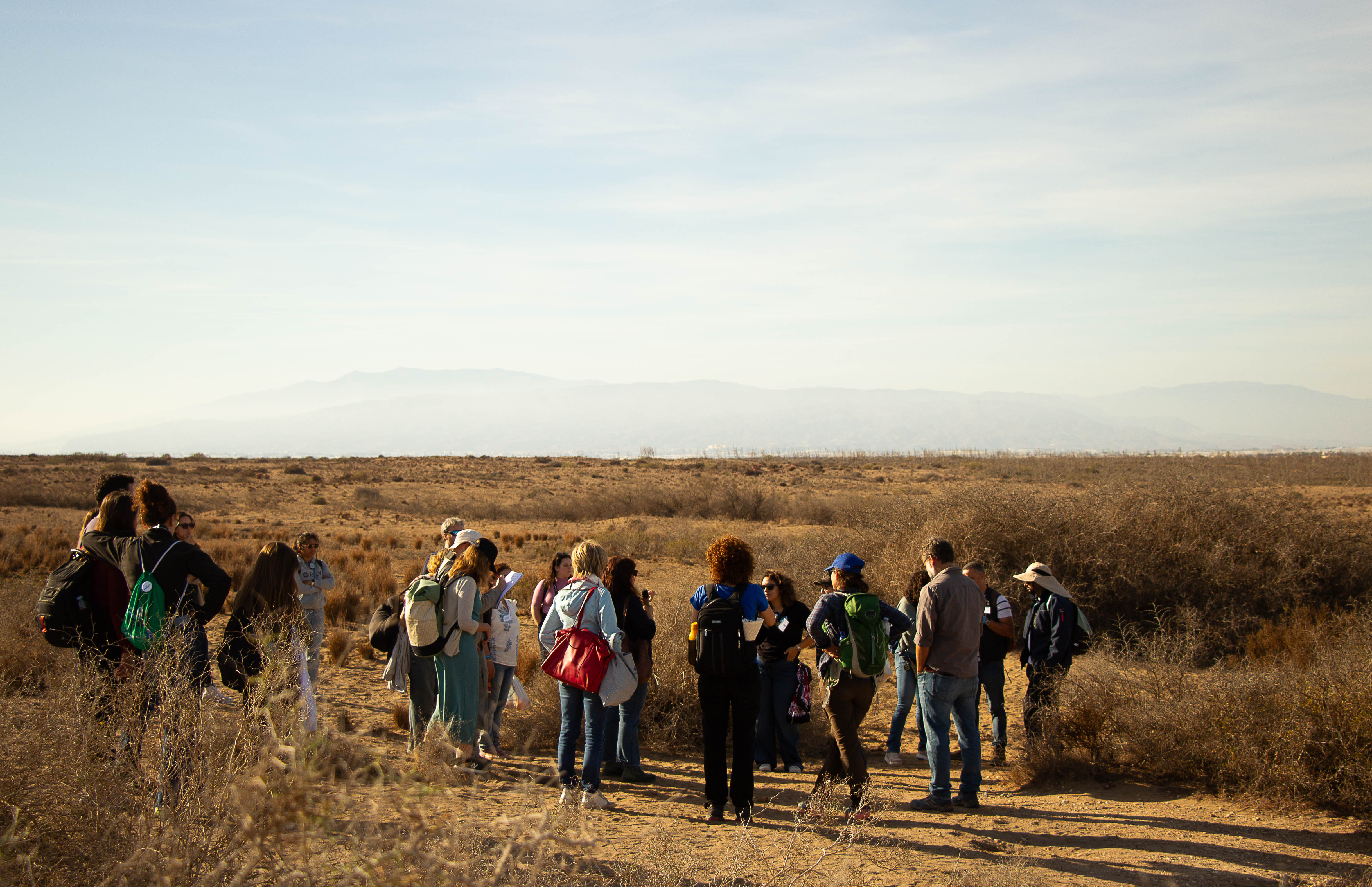
Participants join a beach clean up activity at Playa Torre García, Cabo de Gata-Níjar Natural Park in Spain
Photo: IUCN and Chery Group
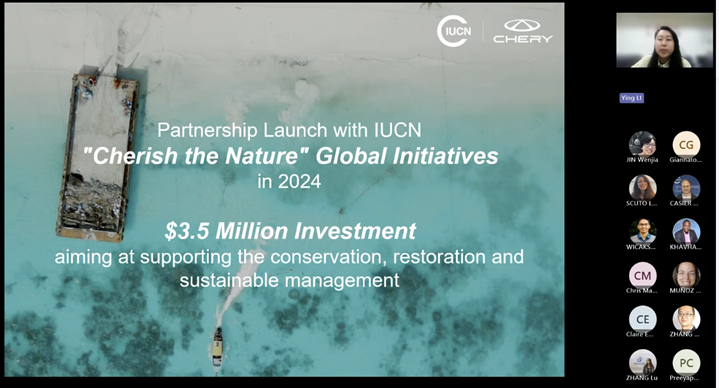
IUCN and Chery Group present the expanding Cherish the Nature at Euro Green Week 2026
Photo: IUCN
A multi-ecosystem, multi-continent approach
The Cherish the Nature partnership, launched in October 2024 with a US$3.5 million commitment from Chery, has grown from an initial seagrass restoration pilot in the Mediterranean into a diversified portfolio of projects addressing mangrove conservation in Malaysia, community-led conservation in Southern Africa, and is also exploring the opportunity of potential peatland restoration in the United Kingdom, and World Heritage stewardship in Europe.
"We aim not only to advance green mobility through electrification in the automotive sector, but also to root ourselves in every market, deeply integrated with local communities, and fulfil our responsibilities as corporate citizens in nature conservation and education empowerment," said Li Ying, Director of Corporate Social Responsibility at Chery International. Chery has set a target to protect, restore, and sustainably manage 10 million hectares of ecosystems worldwide, alongside a carbon neutrality roadmap targeting its own operations by 2037 and its entire value chain by 2047.
Projects in focus
Spain — Seagrass restoration in the Mediterranean. The partnership's pilot focuses on Posidonia oceanica seagrass meadows, combining citizen science, boat monitoring, and eco-mooring solutions. "We're able to bring environment into spaces where people normally don't hear about it," said Mercedes Muñoz Cañas, Programme Manager at the IUCN Centre for Mediterranean Cooperation.
Malaysia — Mangrove conservation in Southeast Asia. Launched in February 2026 with the Malaysian Nature Society, this two-year project targets the North-central Selangor Coast — an Important Bird and Biodiversity Area sheltering over 50,000 migratory shorebirds. "The project is not transactional. It is really leaning into highly technical, science-backed processes," said Satrio Adi Wicaksono, Regional Coordinator at the IUCN Asia Regional Office.
South Africa — Community-led conservation in the Maloti-Drakensberg. At this transboundary World Heritage site, the project integrates alien invasive species control — deploying Chery drone technology — with renewable energy for eco-lodges and citizen science training. "If we start cherishing nature, we can unlock co-ownership, partnerships, and the well-being of communities," said Vhalinavho Khavhagali, IUCN Country Representative for South Africa.
Future opportunities - United Kingdom and European World Heritage
Two additional projects are under development, with IUCN teams and Chery currently exploring scope and timelines. In the United Kingdom, plans are taking shape to connect urban communities with under-recognised peatland ecosystems — a vital yet often overlooked tool for carbon storage and climate mitigation. "Peatlands are not as well known as other ecosystems, and we really want to place importance on them," said Loredana Scuto, Senior Programme Officer at the IUCN European Regional Office.
Meanwhile, through the IUCN-ICCROM World Heritage Leadership Programme, discussions are advancing on a European World Heritage component that would strengthen management of some of Europe’s most special landscapes. "We aim to ignite a global coalition of corporate engagement to support the conservation of some of Europe’s most special places," said Robbert Casier, IUCN World Heritage Programme Development Officer.
Linking local action to global frameworks
During the panel discussion, speakers mapped their projects to targets under the Kunming-Montreal Global Biodiversity Framework. Seagrass and mangrove restoration projects contribute directly to Target 2 (ecosystem restoration) and Target 3 (30x30 protected and conserved areas). The peatland project advances climate mitigation targets alongside Target 2, while the South Africa project spans multiple targets, including invasive species control and community-based management.
"Across these projects, we are contributing directly to Targets 2 and 3 of the Global Biodiversity Framework — but the reach goes further, touching climate mitigation and adaptation, urban green and blue spaces, and more," said Zhang Yan, Head of IUCN China Country Office. "Ultimately, our ambition is simple: join hands, do good work on the ground, and help everyone on this planet cherish the nature."
As the session drew to a close, panelists offered their closing hopes in turn. Mercedes Muñoz Cañas looked forward to continuing work in spaces beyond the conservation bubble. Satrio Adi Wicaksono spoke of lasting success measured not in hectares alone, but in changed relationships and mindsets. "If we start cherishing nature, we can unlock co-ownership, partnerships, and the wellbeing of communities," noted Vhalinavho Khavhagali. Loredana Scuto expressed eagerness to make a difference in ecosystems and countries where IUCN's reach is still growing, while Robbert Casier set his sights on the long game. "I hope we can ignite, with Chery's support, a new movement for corporate engagement in protecting the world's most special places," he said.
Li Ying, from the corporate partner's perspective concluded, "We look forward to this partnership blossoming everywhere."

The Bangladesh Forest Department (BFD) and IUCN Bangladesh, with support from Agence Française de…

Each year, International Women's Day is an opportunity to recognise the women advancing change in…

On 14 January 2026, in Dhaka, the Bangladesh Forest Department and IUCN Bangladesh formally signed…