IUCN and the UN Decade Ecosystem Restoration Hub: Success Stories and Guidance from Africa
Held on June 23rd, 2026, as the second session in a five-part series, this webinar centred on IUCN contributions to the UN Decade Ecosystem Restoration Hub, highlighting successful restoration initiatives from across Africa and providing guidance on how best to get involved with the UN Decade on Ecosystem Restoration’s digital community.
Started in 2021 and led by the United Nations Environment Programme (UNEP) and the Food and Agriculture Organization (FAO) of the United Nations, the UN Decade on Ecosystem Restoration is a broad-based global movement to ramp up restoration and put the world on track for a sustainable future for the benefit of people and nature. The UN Decade Ecosystem Restoration Hub is the digital meeting place for this movement; it provides a place to discover new initiatives, connect with partners, and support restoration work. As a Global Partner of the UN Decade, IUCN is dedicated to amplifying successful restoration work. This webinar series thus provides a space to connect and initiate conversation between the Union and the Hub.
The session opened with a presentation by UNEP Digital-Ecosystems Interface Specialist, Emilly Niringiye, who presented on the mission of the Decade and the Hub. Importantly, she established that Decade’s goal of one billion hectares restored cannot be achieved by any single institution or individual—it requires collaboration by many actors working together. Thus, she encouraged webinar participants to share in the responsibility of restoration and get involved in the Hub by reporting their own successes.
Following this discussion on how to engage with the Hub, IUCN Secretariat members from across Africa presented on restoration around the region. This segment began with speakers from West and Central Africa. To open, IUCN Central and West Africa (PACO) Regional Director, Balla Sidibe spoke on restoration at a regional level, highlighting the importance of connecting local priorities to global goals. He emphasized that West and Central Africa is characterized by a diversity of ecosystems, and thus faces an array of ecosystem degradation challenges, from desertification to coastal erosion. These combined challenged call for integrated solutions that address climate change, biodiversity loss and human wellbeing together.
Following this presentation, IUCN Burkina Faso Country Head, Félicité Chabi Gonni highlighted one example of effective restoration in the West and Central Africa Region. The “Sahelian Landscapes, a Land of Opportunities” projects (LOGMe I and LOGMe II) are dedicated to turning degraded land into nature- based jobs. Taking place across Burkina Faso, Ghana, Niger, Senegal, and Benin, the project has already brought 34,910 hectares of watersheds, drylands, and rangelands under restoration through the creation of green income opportunities and aims to continue this success in the second phase of the project.
Next, the conversation shifted to Eastern and Southern Africa with a presentation by Alain Ndoli, IUCN Eastern and Southern Africa (ESARO) Regional Programme Manager. His intervention highlighted the cross-cutting barriers and triumphs of restoration work across Eastern and Southern Africa. He also emphasised the importance of building capacity within communities for landscape approaches to restoration to ensure long term success.
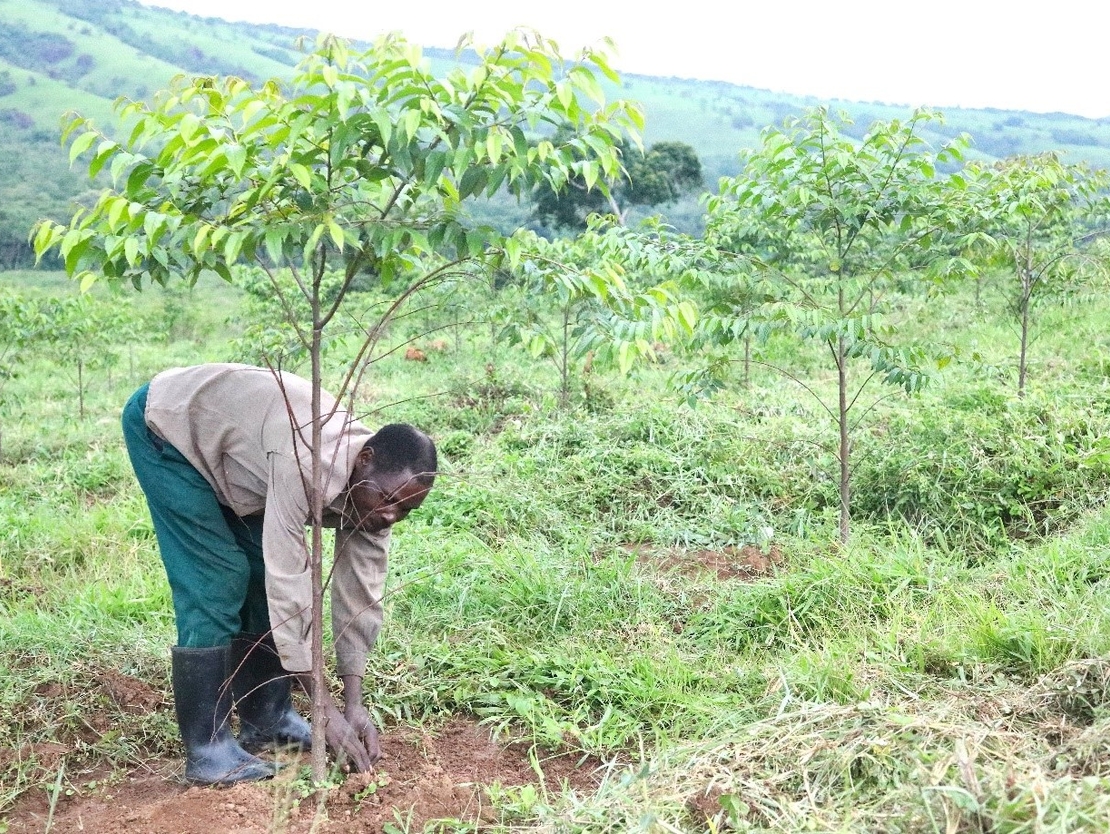
Building on these ideas, Olivier Habimana, IUCN ESARO Regional Programme Delivery Manager, presented on the Transforming Eastern Province Through Adaptation (TREPA) project. Focusing on restoration at a landscape level, the project has already restored 58,626 hectares of land in Rwanda in ecosystems ranging from degraded croplands to buffer zones to pastureland. These actions have not only increased livelihood opportunities and ecosystem resilience in restored regions but have also had cascading positive effects across the area, displaying the power of restoration.
The session was concluded by a presentation on the Austrian Development Agency-funded projects “Restoring Ecosystems to Reduce Drought Risk and Increase Resilience” and “Accelerating Action for Resilience and Innovation in Drought Risk Management” https://hub.decadeonrestoration.org/initiatives/nature-based-solutions-drought by IUCN ESARO Senior Programme Officer, Catherine Mungai. These initiatives conduct work in Kenya to strengthen drought resilience by integrating Nature-based Solutions (NbS) into community restoration efforts. The project aims to bring at least 200 hectares under restoration in Kajiado County in the coming years through inclusive governance, stakeholder mobilisation, and technical capacity building.
These case studies are just a small sample of the restoration work being done to advance the UN Decade on Ecosystem Restoration in Africa. Over the coming weeks, IUCN will continue to discuss contributions to the UN Decade on Ecosystem Restoration across the Union through webinars focused on restoration in Europe, the Americas, and West, Central, and South Asia. Additionally, the full library of restoration initiatives submitted to the Decade, in Africa and beyond, can be found on the UN Decade Ecosystem Restoration Hub.
The full webinar recording is available to view online, as are the presentation materials.


In Kashkadarya, Khorezm and the Republic of Karakalpakstan, local communities are helping turn…
The third in a five-part series, this webinar brought together speakers from across West and…

This week, the Yerevan Municipality hosted the inaugural ceremony marking the establishment of the…