Why water resilience starts with restoring nature and strengthening cooperation
At a time when climate change, biodiversity loss and growing inequalities are increasing the urgency of action, the IUCN European Regional Office brought together policymakers, international organisations, diplomats and experts for “Blue Threads: Water resilience, ecosystem restoration and global leadership” at the Royal Belgian Institute of Natural Sciences. The event explored how to move from ambition to implementation by strengthening water governance, restoring ecosystems and scaling up solutions that already exist.
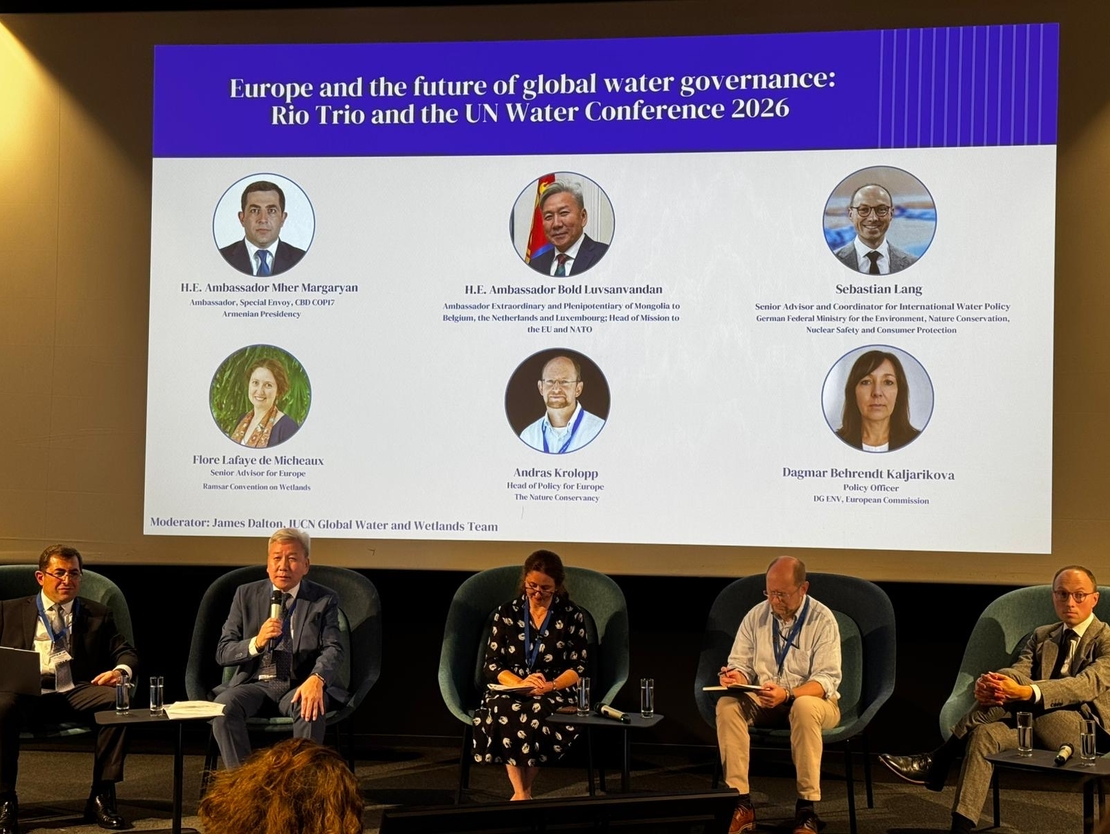
A central message emerged throughout the discussions: water resilience cannot be treated as an environmental issue alone. It is also an economic, social and security challenge. Building resilient water systems means protecting the ecosystems that sustain them while ensuring that communities, institutions and decision-makers work together. These themes were central in the opening speeches of Mr. Argyrides, speaking on behalf of the Cyprus Presidency of the Council of the EU, and Mr. Child, Deputy Director General at the EU Directorate-General for Environment.
As highlighted by H.E. Tanja Miškova (Ambassador-at-Large for Water Diplomacy of Slovenia), Ms. Dejmek (Head of Cabinet of EU Commissioner Roswall) and Ms. Hunt-Šafránková (Head of UNEP Brussels Office) during first panel on women’s role in water diplomacy, water challenges are not only technical, but they also are societal and environmental. Addressing them requires inclusive governance, dialogue and cooperation across borders and sectors. Water scarcity does not automatically lead to conflict; it is often linked to deeper questions of inequality, access and power. Strengthening resilience therefore requires tackling the systemic challenges that shape how water is managed and shared.
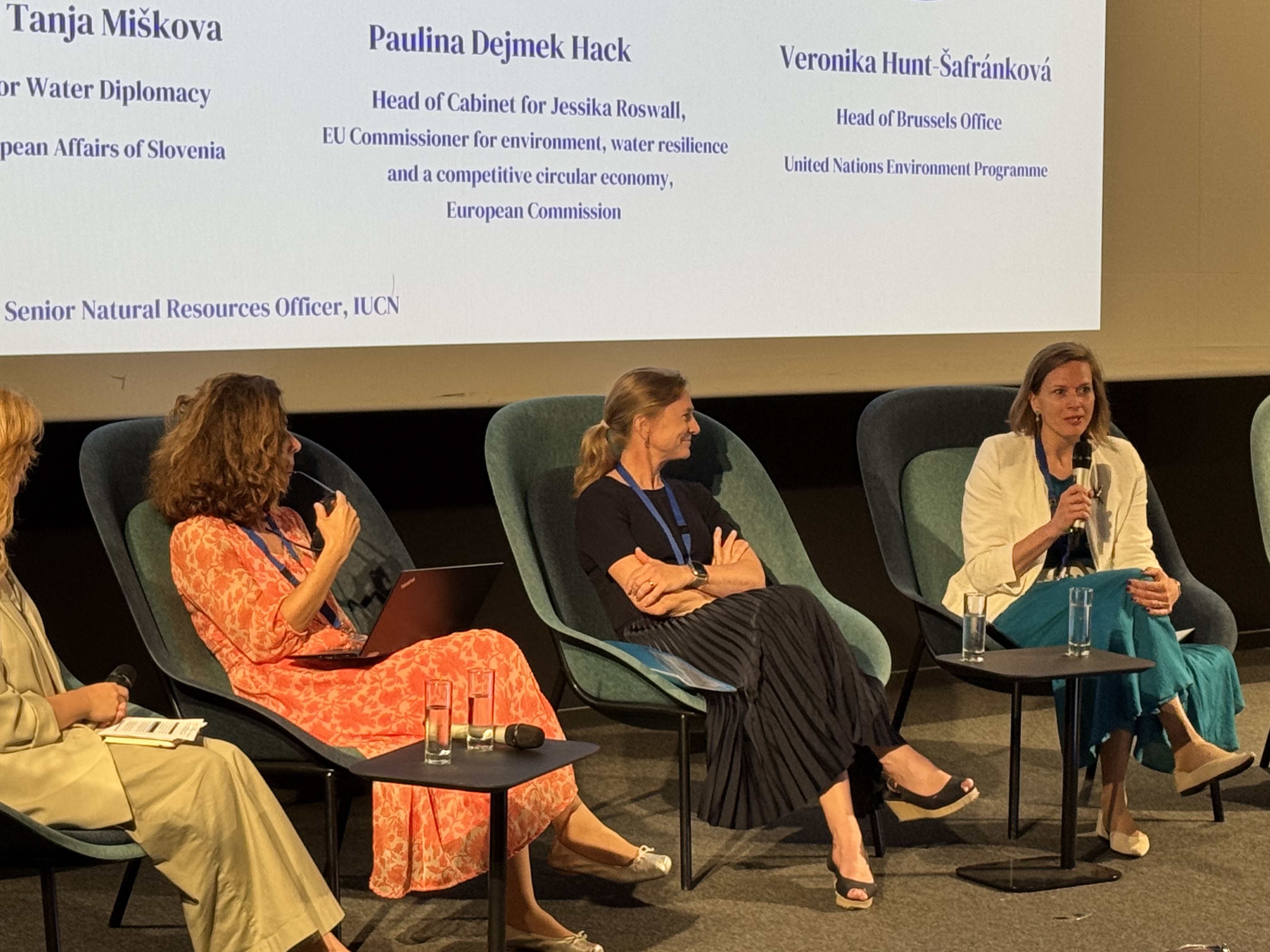
The conversation also highlighted the importance of ensuring that all relevant voices are part of the process. Effective water governance depends on bringing different perspectives together, including those of women leaders, local communities, policymakers and young generations. Diverse participation is not only a matter of inclusion, but also essential to achieving stronger and more durable outcomes.
Looking towards the future of global water governance, speakers stressed that the priority is no longer only developing new commitments but implementing what has already been agreed. Science and evidence must remain the foundation for decision-making, while cooperation and accountability are needed to translate knowledge into action. The Ambassadors of Armenia and Mongolia, respectively host-countries of UN CBD COP17 and UNCCD COP17, highlighted how the Rio Conventions must move forward the synergies agenda and water can be a key tool.
Water must become a space for collaboration rather than competition. Protecting freshwater ecosystems, wetlands and landscapes is fundamental not only for biodiversity, but also for climate resilience and human well-being. As it was highlighted during the second panel on the future of water governance, biodiversity objectives cannot be reached without freshwater ecosystems conservation, and vice versa.
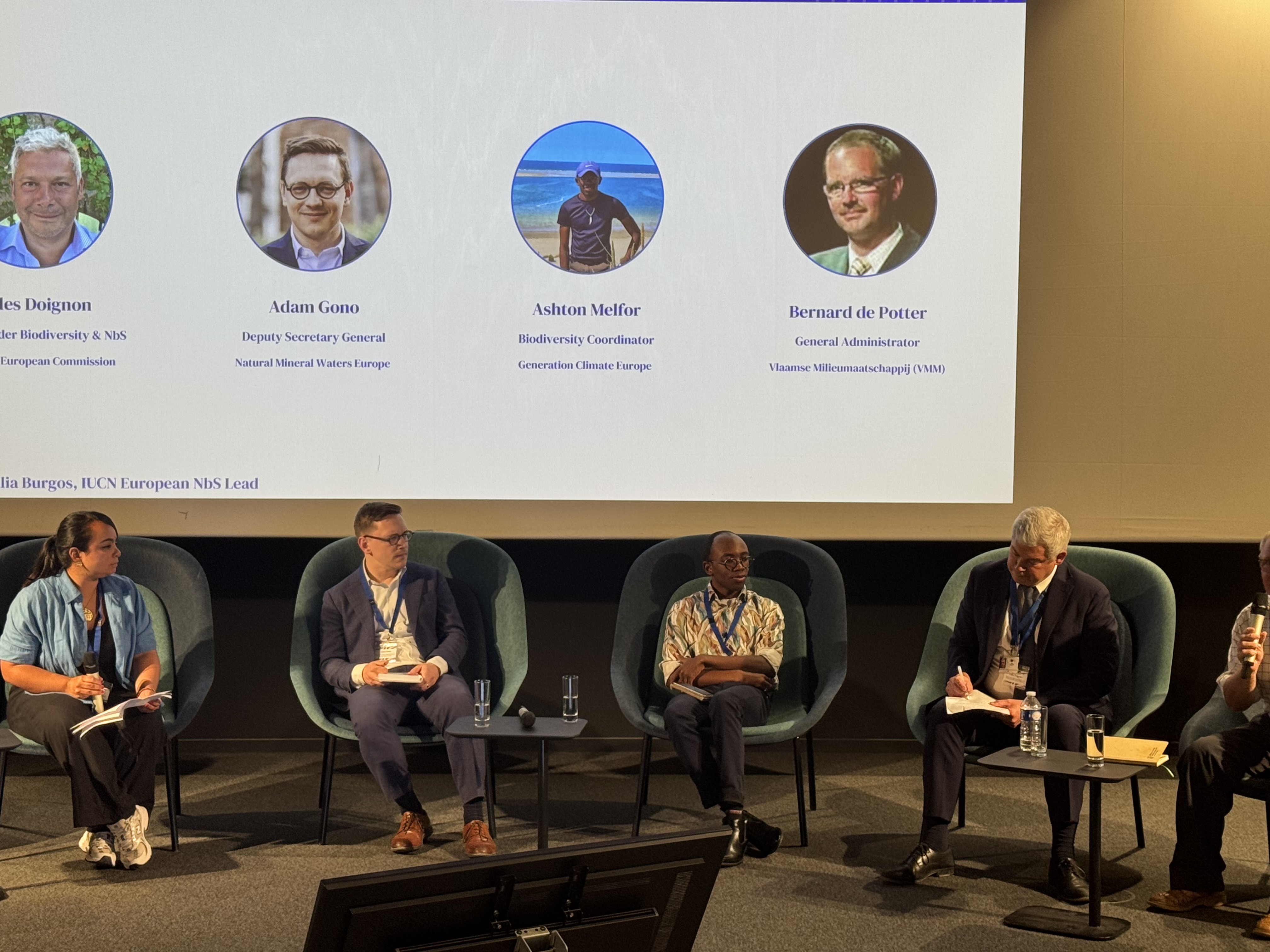
Nature-based Solutions are at the heart of this transformation, as highlighted by Gilles Doignon (Team Leader Biodiversity & NbS at DG Research and Innovation). Restoring ecosystems is one of the smartest investments for water resilience because healthy ecosystems naturally support water cycles, reduce risks and provide benefits for societies. However, scaling up these solutions requires more than individual projects: it requires long-term investment, innovation, enabling policies and collaboration between public authorities, civil society and the private sector.
The discussions also underlined the importance of moving beyond short-term approaches. Building lasting resilience requires infrastructure, knowledge and partnerships that can deliver benefits over decades. As one reflection captured during the last panel on ecosystem restoration and NbS in Europe as a pillar of water resilience, the challenge is not a lack of solutions, it is ensuring that existing solutions are implemented at the scale needed.
A final question offered a powerful reminder of the value of nature: if one hand holds a diamond and the other a drop of water, which one is truly more valuable?
Blue Threads showed that the future of water resilience depends on how societies answer that question, on a whole-of-society and a collaborative approach, and on whether we are ready to recognise water and ecosystems as the foundations of a sustainable future.

The Bangladesh Forest Department (BFD) and IUCN Bangladesh, with support from Agence Française de…

Each year, International Women's Day is an opportunity to recognise the women advancing change in…

On 14 January 2026, in Dhaka, the Bangladesh Forest Department and IUCN Bangladesh formally signed…