New publication by CEESP-SEAPRISE members - "Extractive Industries & Sustainable Development for Offshore Oil and Gas operations in the West African Marine Eco Region"
CEESP SEAPRISE Members Clive Wicks and Sandra Kloff and Paul Siegel have just published a best practice guide 'Extractive Industries and sustainable development'. Available in English and French.
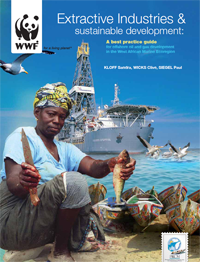
Normal 0 false false false EN-NZ X-NONE X-NONE /* Style Definitions */ table.MsoNormalTable {mso-style-name:"Table Normal"; mso-tstyle-rowband-size:0; mso-tstyle-colband-size:0; mso-style-noshow:yes; mso-style-priority:99; mso-style-qformat:yes; mso-style-parent:""; mso-padding-alt:0cm 5.4pt 0cm 5.4pt; mso-para-margin:0cm; mso-para-margin-bottom:.0001pt; mso-pagination:widow-orphan; font-size:11.0pt; font-family:"Calibri","sans-serif"; mso-ascii-font-family:Calibri; mso-ascii-theme-font:minor-latin; mso-fareast-font-family:"Times New Roman"; mso-fareast-theme-font:minor-fareast; mso-hansi-font-family:Calibri; mso-hansi-theme-font:minor-latin; mso-bidi-font-family:"Times New Roman"; mso-bidi-theme-font:minor-bidi;} They write, "Some of the world’s most valuable coastal and marine ecosystems are found in the West African Marine Ecoregion and these are being threatened by a range of factors – notably fi shing, land-based pollution, coastal development, dam building in river basins, tourism, climate change and, more recently, by a renewed interest on the part of the oil and gas industry. Virtually the whole coastal and marine zones – including hotspots of biodiversity, key fishing grounds and important tourism areas – have been divided into blocks open for oil and gas exploration. Many companies are looking for oil and gas and one consortium is already producing.
For national governments to better understand plastic waste and leakage, as well as solutions to…
American Humane, the US' first national humane organization and the world’s largest certifier of…
The BIODEV2030 project, launched in early 2020 supports the country's development ambition, while…