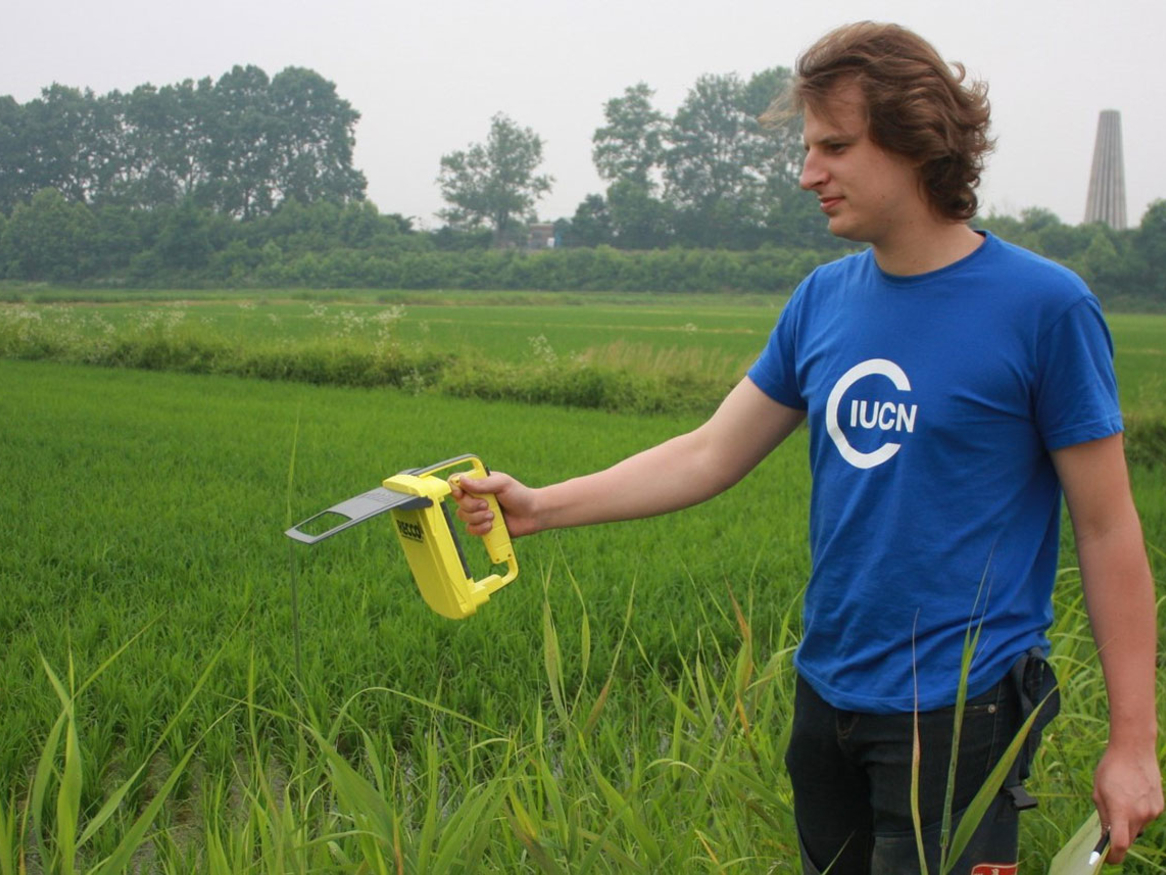
I am the co-chair of the IUCN SSC Amphibian Specialist Group. I am also a professor at Nanjing Forestry University, and my principal research interest is behavioural ecology and wildlife conservation ...
GROUPE DE COMMISSION DE L'UICN
Groupe de spécialistes des amphibiens de la CSE de l'UICN
Leadership de groupe

Prof Amaël BORZÉE
I am the co-chair of the IUCN SSC Amphibian Specialist Group. I am also a professor at Nanjing Forestry University, and my principal research interest is behavioural ecology and wildlife conservation. My original focus is on understanding the reasons behind the amphibian decline, the links with their behavioural ecology, and their conservation through research. I am now however shifting towards the breeding behaviour and conservation of species in general, in East Asia. My primary experience was with amphibians in Korea, until I started my lab in China in 2019. I now wish to address broader questions aimed at the conservation of multi-species populations over large landscapes, including multiple types of approaches and analytical tools.

Ms Sally WREN
Sally joined the ASG as a Programme Officer in 2013, and had roles as Conservation Planning Officer, then Deputy Chair, before becoming Co-Chair in 2024. One of Sally’s main roles to date was leading the update of the global Amphibian Conservation Action Plan (ACAP), a key document to bridge the gap between scientific research and conservation implementation published in 2024. Prior to working with the ASG Sally spent several years at the Zoological Society of London; there she worked on IUCN Red List assessments of freshwater fish and reptile species for the Red List Index, helped develop the EDGE Amphibians conservation initiative, and managed both the EDGE Fellows Programme and ZSL’s Mongolia Programme. Sally has has expertise in improving conservation methods for amphibians, with particular emphasis on effective conservation planning and translocations.
Sally joined the ASG as a Programme Officer in 2013, and had roles as Conservation Planning Officer, then Deputy Chair, before becoming Co-Chair in 2024. One of Sally’s main roles to date was leading ...
En savoir plus sur le groupe de spécialistes
Le déclin et l'extinction des amphibiens sont une préoccupation constante depuis des décennies, mais ce n'est qu'en 2004 que nous avons obtenu une image beaucoup plus claire de l'étendue du problème, lorsque l'évaluation mondiale des amphibiens (GAA) a fourni la première vue d'ensemble du risque d'extinction des amphibiens dans le monde. Les résultats obtenus étaient tout simplement alarmants : une espèce d'amphibiens sur trois était menacée d ...
MISSION
L'ASG fournit la base scientifique pour informer les actions de conservation des amphibiens dans le monde entier. Plus précisément, le GSA stimule, développe et mène des recherches scientifiques pour informer la conservation des amphibiens et de leurs habitats dans le monde entier, soutient l'évaluation de l'état de conservation de la biodiversité des amphibiens et informe le grand public sur les questions et les priorités liées à la conservation des amphibiens.
Travail des groupes de spécialistes
Compte tenu de la portée taxonomique et géographique (mondiale) très large du GSA, nos priorités sont régionales (groupes régionaux), thématiques (groupes de travail thématiques de l'ACAP) et liées au risque d'extinction (Autorité de la liste rouge des amphibiens).
Notre plan stratégique

Nous soutenons et mobilisons un réseau mondial pour atteindre des objectifs stratégiques communs en matière de conservation des amphibiens.
Rapport annuel
Découvrez le travail et les résultats du GSA en 2023 et les années précédentes.
Rapports précédents :
Rapport annuel 2022 du GSA
Rapport annuel 2021 du GSA
Rapport annuel 2019 du GSA
Rapport annuel 2018 du GSA
Rapport annuel 2016-2017
Projets du Groupe de spécialistes
Le GSA a plusieurs composantes stratégiques qui lui permettent d'adopter une approche multidimensionnelle de la recherche et de la conservation des amphibiens à l'échelle mondiale. Vous trouverez ci-dessous des liens vers certaines des principales composantes du GSA.
Photo: Amael Borzee

Photo: Debbie Bishop

Photo: IUCN SSC ASG