Edna Cabecinha is an Assistant Professor at the University of Tras-os-Montes and Alto Douro (UTAD) in the Department of Biology and Environment. She completed her PhD in Environmental Sciences in 2008 ...
IUCN COMMISSION GROUP
IUCN CEM Nature Based Solutions Thematic Group

Group leadership

Prof Edna CABECINHA
Edna Cabecinha is an Assistant Professor at the University of Tras-os-Montes and Alto Douro (UTAD) in the Department of Biology and Environment. She completed her PhD in Environmental Sciences in 2008 (UTAD), MSc in Environmental Technology in 2002 at the University of Minho (School of Engineering), and BSc in Biophysical Engineering in 1998 at the University of Évora. She has been a member of the Centre for Research in Agro-Environmental and Biological Technologies (CITAB) since 2009, and from January 2025, she coordinates the Thematic Group ‘R&D1: Natural Resources, Biodiversity & Climate Challenges’. She is also a collaborator at the Biodiversity and Genetic Resources Research Centre (CIBIO/InBIO) in the ‘Sustainability, Ecosystems & the Environment’ Research Group in the ‘FRESHCODE - Freshwater Conservation, Diversity and Evolution’ Sub-Group. She is the Director and Member of the Academic and Executive Committee of the International Doctoral Program in Marine Science, Technology, and Management (Do*Mar) and the Vice-Director of the Doctoral College of UTAD. She was Director of the MSc in Environmental Engineering (2013-2021) and BCs in Environmental Sciences at UTAD (2013-2021). Member of the Pedagogical Council of the School of Life and Environmental Sciences in UTAD (2013-2021). She is the Lead of the Nature-based Solutions Thematic Group of the Commission on Ecosystem Management of IUCN (International Union for Conservation of Nature) (2026-2029) and was the co-lead during 2021-2025. IUCN CEM Western Europe Regional Co-Chair (2022-2025). . Member of the Ecosystem Services Partnership (ESP), ESP Working Group on Modelling ES, Member of the International Council for Exploration of the Sea, ICES Working Group on Resilience and Marine Ecosystem Services (ICES WG RMES), and Member of the Society for Ecological Restoration (SER). She served as an Evaluator in International, European and National funding agencies and participated in several International and National projects (competitive fundraising, 59 M€). She has 40 publications in ISI journals (15 h-index), 7 book chapters, 6 books and 1 patent. She has successfully supervised 3 PhD theses and has 7 ongoing. Supervised several MSc dissertations (28) and BSc reports (23). Her main research interests are Ecosystem approach management, Climate change mitigation and adaptation, Ecosystem services and Nature-based Solutions. Orcid: https://orcid.org/0000-0001-7308-5840

Mr Pascal AHOUANVOEGBE
For over 7 years, Pascal has been at the forefront of conservation efforts, leading initiatives that protect biodiversity and ecosystems while promoting sustainable development. His work focuses on a practical vision:
Leveraging Nature-based Solutions to strengthen climate resilience and ensure ecosystems thrive for generations to come.
For over 7 years, Pascal has been at the forefront of conservation efforts, leading initiatives that protect biodiversity and ecosystems while promoting sustainable development. His work focuses on a ...
Aims and objectives
Nature-based Solutions (NbS) were defined by IUCN in 2016 as “actions to protect, sustainably manage, and restore natural or modified ecosystems, that address societal challenges effectively and adaptively, simultaneously providing human well-being and biodiversity benefits”. Eight guiding principles were also adopted to provide a fuller understanding of NbS and to support their effective design and implementation.
The IUCN Commission on Ecosystem Management (CEM) Nature-based Solutions Thematic Group (NbS TG), established in January 2017, works to advance both the conceptual and operational development of NbS. It aims to support the effective scaling and transformative integration of NbS by strengthening the knowledge base, reinforcing quality, and enabling the conditions needed for uptake across sectors and governance.
The NbS TG promotes the development, consolidation, and dissemination of knowledge on NbS, while supporting their integration into planning, decision-making, policy frameworks, and practical implementation. A key area is to support the International Standard Committee in the consistent application, continuous improvement, and strategic positioning of the IUCN Global Standard for NbS (GS-NbS) as a science-based and policy-relevant framework for addressing societal challenges, advancing climate action, enhancing ecosystem resilience, contributing to biodiversity conservation, and promoting human well-being and sustainable development in line with the IUCN Programme.
To strengthen regional representation and active member engagement, the NbS TG has established a Core Group composed of both senior experts and Young Professionals, fostering intergenerational exchange and supporting the wider dissemination and mainstreaming of NbS and the IUCN Global Standard for NbS.
Projects and Initiatives
- Compile and assess NbS case studies (IUCN Global Standard v2): Development of a case-study database across regions, identification of lessons learned and best practices to strengthen the evidence base.
- Global Standard development and application: Support for the application, improvement, and uptake of the new version of the GS-NbS.
- Supporting the development of national interpretation guidelines: Preparation of guidance to support the application of the Global Standard for NbS in national contexts, in close collaboration with the CEM Chair, International Standard Committee (ISC), and Secretariat.
- Knowledge exchange and capacity building: Publications, guidance, and events to strengthen understanding of NbS and the GS-NbS and their links to key policy areas.
Credit: E. Cohen-Shacham, Mangroves, Sian Ka'an Biosphere Reserve, Mexico.

Credit: E. Cohen-Shacham, Hula Wetland, Israel.

Credit: E. Cohen-Shacham, Viticultural landscape, Alsace, France.

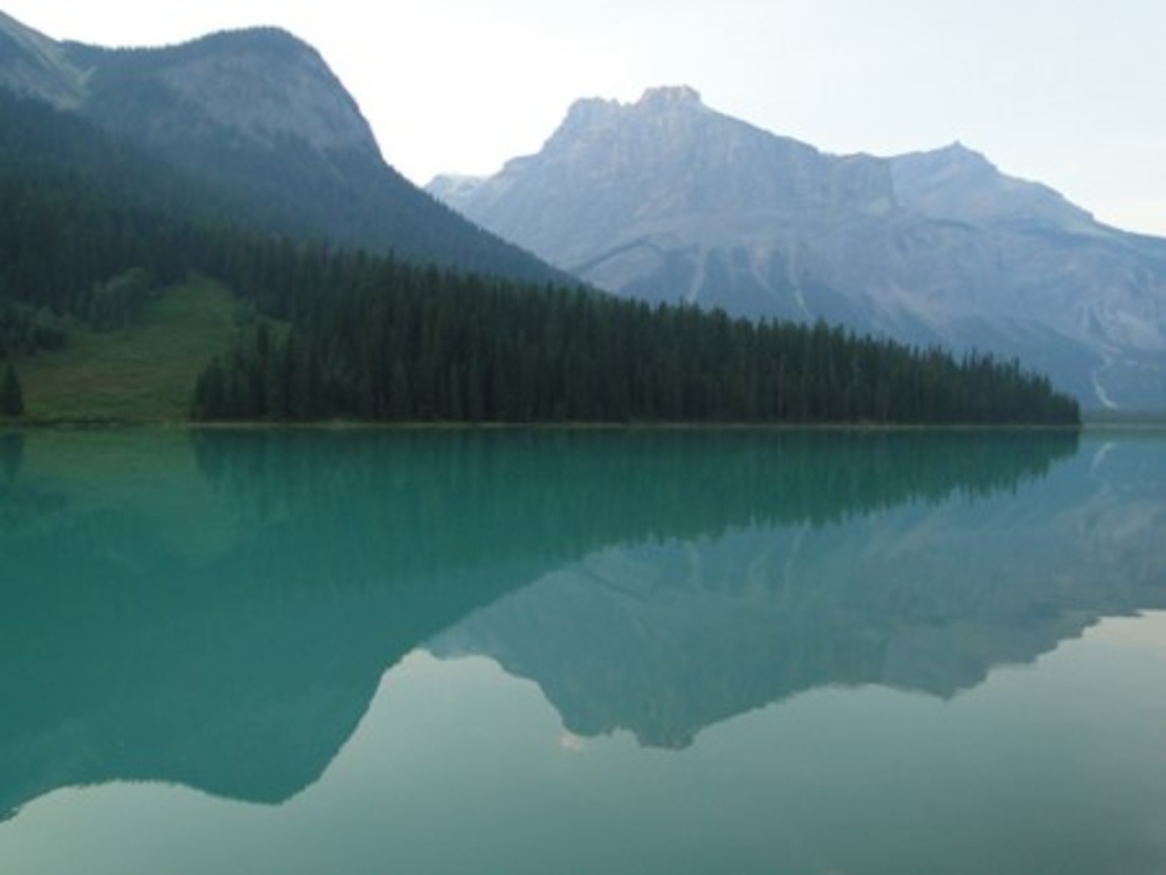
Credit: E. Cohen-Shacham, Canadian Rockies.
Photo: E. Cohen-Shacham