Hydro-diplomacy: a driver of regional cooperation and transboundary water management in West Africa
West Africa is at a pivotal moment in its hydro-political history. The institutional achievements of previous decades provide a solid foundation, but they must be consolidated and adapted to an environment of growing uncertainty. The current challenges are not isolated obstacles; they form a system of interconnected constraints. The response cannot, therefore, be fragmented. It must be systemic, integrated and resilience-oriented. The region’s ability to transform these constraints into opportunities will depend on its capacity to strengthen the following four pillars: (i) ongoing water diplomacy, (ii) the generation of regional scientific knowledge, (iii) the inclusion of local communities, and (iv) institutional and financial innovation.
Armel MEWOUTH
Regional Water Focal Point
Central and West Africa Programme (PACO), IUCN
1. Regional context of water security
The West African region has one of the highest population growth rates in the world. According to United Nations projections, the population could double by 2050 (UN DESA, 2022). This trend is leading to a significant increase in: (i) food demand, (ii) irrigated land area, (iii) urban drinking water requirements, and (iv) energy consumption.
Added to this is climate change, which is significantly altering rainfall and hydrological patterns. IPCC projections indicate an increase in the frequency of droughts in Sahelian regions, an intensification of extreme rainfall events and greater inter-annual variability in river flows. The consequences include the exacerbation of agro-pastoral conflicts, pressure on rural livelihoods, environmental migration and the weakening of local economies.
Furthermore, West African hydrological systems are strongly influenced by regional climate dynamics, particularly by the variability of the West African monsoon. The spatial and temporal distribution of rainfall varies greatly between the Sahelian, Sudanese and Guinean zones. This variability directly influences river flows and groundwater recharge.
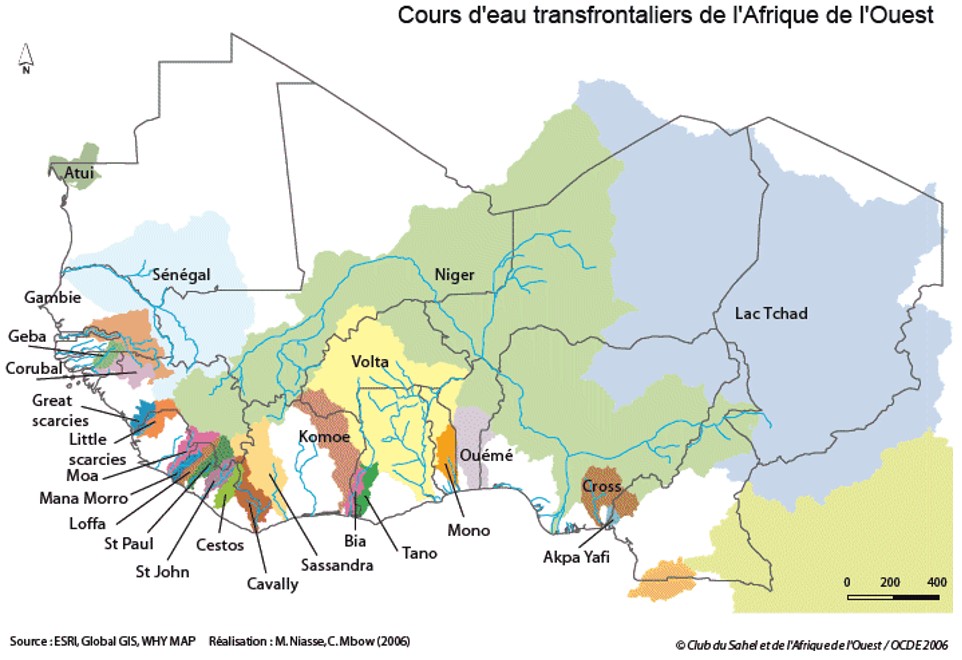
Figure 1: Transboundary watercourses in West Africa
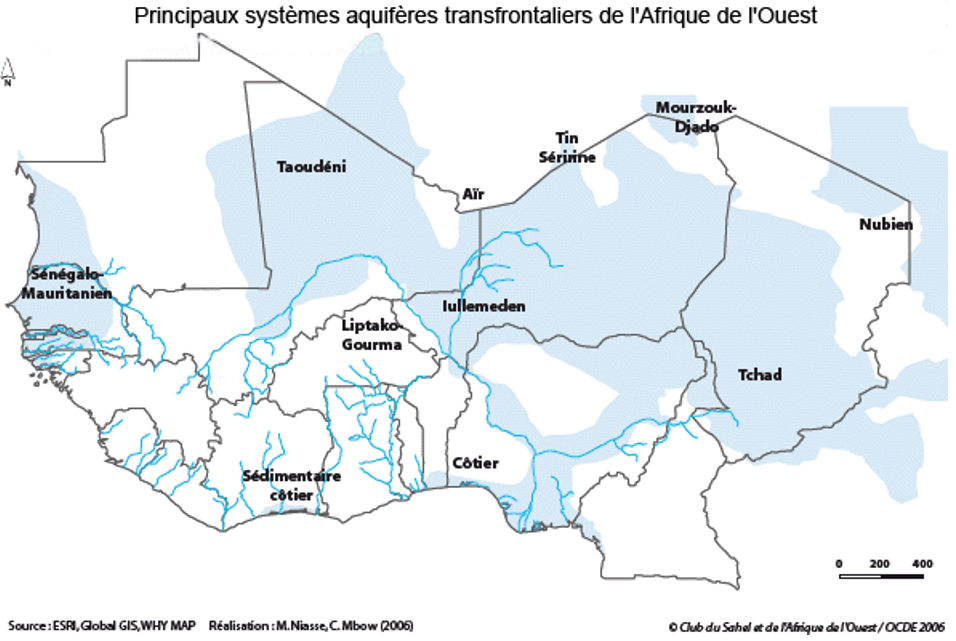
Figure 2: Transboundary aquifer systems in West Africa
Over the past few decades, the region has experienced several periods of prolonged drought, particularly in the 1970s and 1980s, which have profoundly altered hydrological patterns and affected the livelihoods of rural communities. Furthermore, changes in land use, particularly deforestation and agricultural expansion, have contributed to altering local hydrological dynamics by increasing soil erosion and sedimentation in watercourses. Sustainable water resource management therefore requires an in-depth understanding of the interactions between climate, hydrology, human activities and ecological dynamics.
2. Défis de la coopération autour des ressources en eau en Afrique de l’Ouest
Growing pressure on water resources: According to several population projections, the population of West Africa could exceed 500 million by 2050 (UNEFA, 2016). This population growth will be accompanied by a significant increase in water demand across several strategic sectors, notably irrigated agriculture, drinking water supply to urban areas, energy production and industrial activities.
Impacts of climate change on hydrological systems: Climate projections indicate increased variability in rainfall as well as an intensification of extreme hydrological events (IPCC, 2022). These changes are reflected, in particular, in more frequent droughts in the Sahelian regions, an increase in flooding episodes in certain regions, changes to the flood regimes of major rivers, and a reduction in groundwater recharge in certain areas.
Limited institutional and financial capacity: The most frequently identified challenges include insufficient financial resources to ensure the sustainable operation of institutions, disparities in technical capacity between Member States, the limitations of regional systems for collecting and sharing hydrological data, and difficulties in coordinating national policies with regional governance mechanisms.
Information asymmetries and diplomatic trust: Cross-border cooperation relies heavily on the transparency of hydrological data. However, technical capacities and data collection infrastructure remain inadequate and unevenly distributed amongst states.
3. Cooperation and hydro-diplomacy in West Africa
Cooperation on transboundary waters
Cooperation on transboundary waters in West Africa is a key issue for stability and development. This cooperation centres on the creation of Transboundary Basin Organisations (TBO), hydro-diplomacy and the joint management of infrastructure to address resource scarcity, climate change and development needs. Basin organisations play a major role in sustainable management and regional cooperation, food and energy security, adaptation to climate change, the protection of ecosystems and dialogue with local stakeholders.
Hydro-diplomacy: a lever for cooperation and the prevention of hydro-political tensions
Hydro-diplomacy is a strategic tool for preventing tensions over water resources and promoting collaborative governance of transboundary river basins. It relies on several institutional and political mechanisms: cooperation agreements between riparian states, transboundary river basin management organisations, mechanisms for sharing hydrological data, and regional consultation frameworks. Water diplomacy is crucial in West Africa for ensuring stability, sustainable development and peace in the face of climate-related challenges.
Although no ‘water war’ has broken out, water scarcity, agricultural and pastoral uses, and climate change are fuelling local and cross-border tensions over water resources. Ensuring the long-term sustainability of water diplomacy in West Africa is essential for peace and development in a region rich in transboundary river basins. This requires major initiatives, including strengthening the technical and operational capacities of key stakeholders, integrating data and climate change considerations, and the effective implementation of IWRM. In this way, water diplomacy helps to transform a potentially contentious resource into a catalyst for rapprochement and to promote cooperative solutions based on dialogue and the sharing of benefits. In this context, regional institutions such as ECOWAS play a vital role in coordinating regional policies relating to water, climate and security.
Towards an Afro-centred water diplomacy (ACHD)
In the African context, water diplomacy cannot be effectively conceptualised or implemented simply by transposing institutional models developed in other regions of the world. The continent’s hydrological, socio-ecological and political dynamics require the development of a specific conceptual and operational framework capable of integrating the historical, cultural and institutional realities unique to African societies. It is against this backdrop that the concept of Afro-centred Hydro-Diplomacy (ACHD) has emerged, proposing a contextualised approach to the transboundary governance of water resources in Africa.
Afro-centred Hydro-Diplomacy is based on the premise that African river basins must be regarded not only as shared hydrological systems, but also as complex socio-ecological spaces where economic, environmental and cultural dynamics deeply rooted in the territories interact. Unlike strictly technocratic approaches centred on the volumetric allocation of water, ACHD favours a more holistic vision of water cooperation based on the integrated management of benefits, regional solidarity and the co-construction of governance solutions. Within this framework, three fundamental principles underpin the Afro-centred approach to hydro-diplomacy.
- The first principle is that of regional water solidarity, which recognises the structural interdependence of the states sharing Africa’s major river basins.
- The second principle concerns the involvement of local communities in water governance processes.
- The third principle is based on the promotion of traditional knowledge and local water management practices.
Finally, the ACHD attaches central importance to strengthening scientific diplomacy and regional technical cooperation. The generation of shared hydrological knowledge, the development of regional hydrological information systems, and the creation of platforms for dialogue between researchers, decision-makers and river basin organisations are essential tools for preventing hydro-political tensions and promoting solutions based on scientific evidence. From this perspective, Afro-centred Hydro-Diplomacy helps to transform African transboundary river basins into strategic spaces for cooperation, regional integration and peace-building. By bringing together the scientific, institutional and societal dimensions of water governance, this approach offers a conceptual framework that is particularly relevant to addressing the continent’s contemporary hydro-political challenges.
4. The West African Regional Water Forum: a platform for dialogue and engagement
With a view to promoting regional cooperation and integration, the Economic Community of West African States (ECOWAS), through its Centre for Water Resources Management (CGRE), aims to make the West African Regional Water Forum (FREAO) the leading event on water in West Africa, fostering the development of a regional community of practice and strengthening public policies on water. Its institutionalisation aims to provide the region with a unified and influential voice in global water dialogues, incorporating local, national and regional issues. This Forum is intended to serve as a framework for strengthening West Africa’s growing role in global water governance, building on the momentum of the 9th World Water Forum in Dakar in 2022. Indeed, this first event of its kind organised in sub-Saharan Africa will strengthen African leadership on water issues by driving an unprecedented political and civic momentum, embodied by the adoption of the African ‘Blue Deal’.
The overall objective of FREAO is to bring together, every two years, stakeholders involved in the water and sanitation sector in West Africa in order to exchange knowledge, foster political commitment and find solutions to the challenges relating to water resource management and sanitation in West Africa and the Sahel. The aim is to provide the region with a regular framework for high-level dialogue, political mobilisation, strategic guidance and the sharing of innovations in the field of water resources management and sanitation. The first edition will take place on 25–26 September 2026 in Abidjan (Côte d’Ivoire) under the theme ‘Valuing water to transform West Africa’. This event will bring together all stakeholders involved in water resources management and sanitation in West Africa, including, in particular, policy-makers (ministers, parliamentarians, local authorities), technical bodies responsible for water resources management and sanitation at national level, academics and researchers, and sub-regional, regional and international institutions, etc.
5. BRIDGE: supporting water diplomacy in West Africa for over 10 years
 Launched in 2011 and currently in its fifth phase, the Building River Dialogue and Governance (BRIDGE) initiative aims to strengthen water governance capacities through learning, demonstration, leadership and consensus-building in transboundary contexts. Funded by the Water Diplomacy Programme of the Swiss Agency for Development and Cooperation (SDC), IUCN has been supporting the development and strengthening of transboundary water management agreements in West Africa for a decade, as well as improving the technical and institutional capacities of transboundary basin organisations, the development of knowledge and practices relating to hydro-diplomacy, and the strengthening and recognition of the role of women and young people in decision-making and Integrated Water Resources Management (IWRM).
References
UN DESA. (2022). World Population Prospects
UNEFA (2016). Profil démographique de l’Afrique
IPCC (2022). Sixth Assessment Report.
N.B.: This article is a summary of the report by Regional Working Group No. 4 (GTR4), entitled ‘Regional Cooperation and Hydro-Diplomacy’, produced as part of the first West African Regional Water Forum.


The Bangladesh Forest Department (BFD) and IUCN Bangladesh, with support from Agence Française de…

Each year, International Women's Day is an opportunity to recognise the women advancing change in…

On 14 January 2026, in Dhaka, the Bangladesh Forest Department and IUCN Bangladesh formally signed…