IUCN President and Director General Statement on International Women’s Day 2026
Ahead of International Women’s Day, IUCN reaffirms its unwavering commitment to protecting and advancing the rights of women and girls as a matter of justice, dignity and human rights.
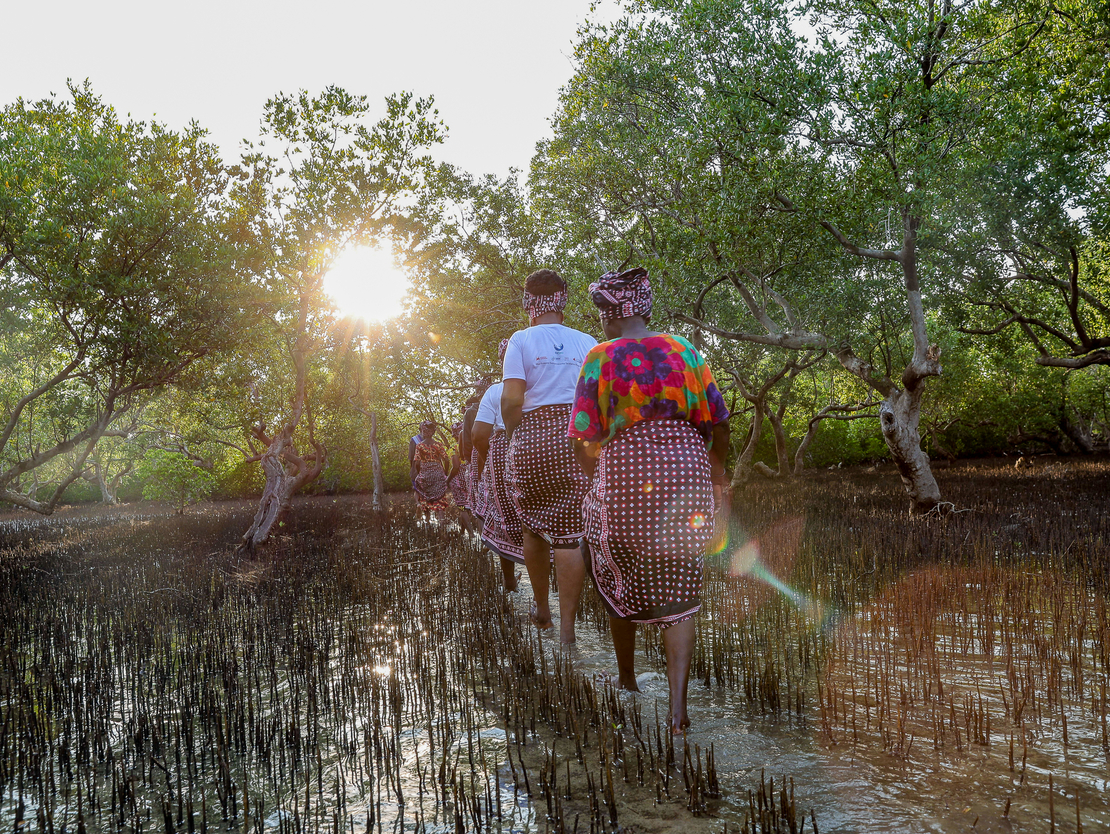
As the international community unites under the theme “Rights. Justice. Action. For ALL Women and Girls”, IUCN joins the urgent call for gender equality around the world.
Women and girls, especially among Indigenous Peoples and local communities, are key stakeholders and rights-holders in biodiversity conservation and sustainable use. As critical stewards of the environment, they bring a wealth of traditional ecological knowledge, unique skills and experiences in ecosystem management – all while playing a vital role in passing this wisdom down to future generations.
Women’s empowerment in environmental work has been linked to numerous positive environmental and economic outcomes, including stronger ecosystem protection and greater agricultural production.
Despite this, women’s right to use, manage and own land and natural resources they depend on continues to be consistently denied – whether in the form of discriminatory laws, weak legal protections or other harmful practices.
Projections show that over 160 years would be required to achieve gender parity in environmental policy, with women still missing from top decision-making positions in environment-related ministries across the world. Meanwhile, at the local level, gender-based violence and discrimination are an everyday, harsh reality for women and girls in vulnerable communities, acting as barriers to their participation and leadership in natural resource governance and value chains.
Women often suffer disproportionately from biodiversity loss, which exacerbates gender-based violence, deepens inequalities, deprivation, conflicts and displacement, reinforcing privileges and control over resources and undermining efforts to ensure a healthy environment.
Advancing gender equality and women’s empowerment is thus not optional. It is a political and moral imperative that also delivers measurable benefits for people and the planet.
Women and girls must have the right to lead lives free from violence and the right to access, use, benefit from and control the lands and natural resources over which they have traditionally exercised stewardship.
IUCN is committed to leading efforts to address the inequalities that drive unsustainable practices and deny communities and individuals their fundamental rights. Through a diverse portfolio, the Union is integrating gender-based violence prevention and response into environmental projects; advancing women’s leadership in natural resource management; and promoting women’s economic empowerment in sustainable value chains. We also provide financial support and grants to environmental programmes and projects that support survivors of gender-based violence, and support women in scaling up climate responses in vulnerable regions.
At the 2025 World Conservation Congress in Abu Dhabi, IUCN Members adopted Resolution 51, which calls on States, decision-makers, funders and practitioners to mainstream gender equality into biodiversity policies, programmes, actions and funding.
The Union remains fully committed to bolstering women’s leadership in biodiversity policy and action, ensuring women and girls are at the centre of conservation and sustainable development efforts – not only as beneficiaries but as rights-holders and agents of transformative change.



The Bangladesh Forest Department (BFD) and IUCN Bangladesh, with support from Agence Française de…

Each year, International Women's Day is an opportunity to recognise the women advancing change in…

On 14 January 2026, in Dhaka, the Bangladesh Forest Department and IUCN Bangladesh formally signed…