Nature at the Nexus: COP30 FEBA Event Champions Ecosystem-based Adaptation as a Pathway to Resilience
At COP30 in Belém, the Friends of Ecosystem-based Adaptation (FEBA) network spotlighted Ecosystem-based Adaptation as a transformative, nature-driven solution linking climate resilience, biodiversity, and sustainable development—underscoring the urgent call to scale up finance and action for EbA across the Rio Conventions.
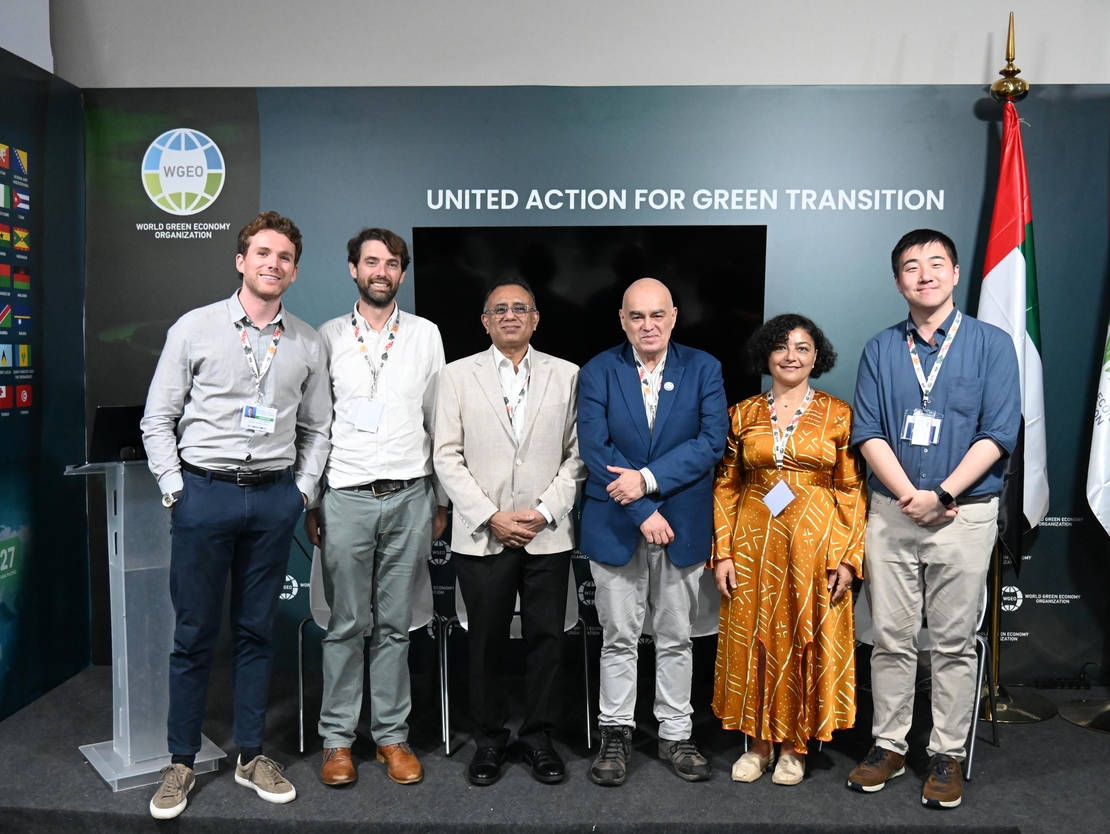
Gregory Davies-Jones, IUCN; Tristan Tyrrell, CBD Secretariat; Ali Raza Rizvi, IUCN; Gabriel Quijandría, IUCN; Mirey Atallah, UNEP; Jeffrey Qi, IISD
17 November 2025, Belém, Brazil, IUCN – At COP30, the side event “Nature at the Nexus: Accelerating Ecosystem-based Adaptation at COP30 and Beyond” convened leading voices from across the climate, biodiversity, and sustainable development communities to highlight the central role of Ecosystem-based Adaptation (EbA) in strengthening resilience and reducing climate vulnerability. Organised by the IUCN-led Friends of Ecosystem-based Adaptation (FEBA) network, the session provided evidence of how integral approaches to protecting and restoring ecosystems for climate resilience are a cornerstone solution to the interconnected crises of climate change, biodiversity loss, and land degradation.

The event opened with Ali Raza Rizvi, Director of the Global Climate Change and Energy Transition team at IUCN, who reflected on FEBA’s evolution over the past decade. He noted that while synergies among the Rio Conventions have only recently begun to deepen, FEBA was created precisely to foster this collaboration. Larissa Stiem-Bhatia, Policy Advisor at Germany’s Federal Ministry for the Environment, Nature Conservation, Nuclear Safety and Consumer Protection (BMUKN), affirmed that COP30 is a “COP of action,” focused on scaling existing initiatives, and emphasised that EbA embodies this integrated approach. She praised FEBA’s instrumental role in advancing Nature-based Solutions (NbS) for adaptation and highlighted the alignment between FEBA’s work, the IUCN’s Global EbA Fund, and BMUKN’s priorities.

Greg Davies-Jones, Programme Officer at IUCN’s Global Climate Change and Energy Transition team, presented recent FEBA milestones, highlighting FEBA’s recommendations for COP30 distilled from the 2025 EbA Knowledge Day and the establishment of the new Loss and Damage Working Group in collaboration with the Partnership for Environment and Disaster Risk Reduction (PEDRR). He also showcased recent knowledge products, including: a policy guidance brief supporting indicator selection for the Global Goal on Adaptation, developed with the Mangrove Breakthrough NDC Task Force, as well as officially launched of a set of case studies by the Targets 8&11 Working Group demonstrating how EbA embodies many of the Section C considerations that guide the implementation of the Kunming-Montreal Global Biodiversity Framework (KMGBF). These insights set the stage for a dynamic panel discussion moderated by Rizvi.

Tristan Tyrrell, Programme Management Officer at the CBD Secretariat, stressed the importance of integrating cross-cutting approaches such as EbA into the implementation of the KMGBF and the Paris Agreement. He emphasised that headline targets must be pursued “the right way,” ensuring that solutions are grounded in the realities of those most affected. Mirey Atallah, Chief of the UN Environment Programme’s (UNEP) Adaptation and Resilience Branch, addressed the urgent need to unlock nature-based finance. Citing the UNEP Adaptation Gap Report, she noted that the challenge is not a lack of capital, but misaligned financial flows—less than 2 percent reaching Indigenous Peoples and less than 20 percent flowing to the communities most affected. Atallah called for simplified, trust-based financing mechanisms, with Rizvi adding that demonstrating nature’s long-term value is essential to mobilising sustained investment.
Jeffrey Qi, Policy Advisor at the International Institute for Sustainable Development (IISD), outlined the defining characteristics of EbA as a catalyst for transformational change. He cautioned against prioritising short-term material gains over long-term resilience, framing EbA as an approach that protects and restores nature for its intrinsic value while generating multiple benefits for people. He noted that genuine transformation requires shifts in knowledge, policy structures, and social behaviours. Tyrrell added that adopting Global Goal on Adaptation indicators would mark a major step forward, with EbA integral to this process and international cooperation creating vital spaces for exchange.

Bringing a regional lens, Gabriel Quijandría, IUCN Regional Director for South America, illustrated nature’s economic and social value through the example of Gunnar Vingren Park in Belém. The 38 hectares of intact Amazon rainforest at the city’s centre store water, reduce flooding, and offer shade and cooling—demonstrating nature’s role as a key partner in urban resilience. Quijandría reminded participants that societies throughout history have thrived or collapsed based on their relationship with nature and underscored the need to recognise who EbA is for and who is implementing it, ensuring meaningful engagement of diverse actors.
The event concluded with a clear message: Ecosystem-based Adaptation is not simply a technical solution—it is a paradigm shift. By elevating nature as a partner, realigning finance with frontline needs, and embedding cross-cutting approaches into global frameworks, EbA provides a powerful pathway to resilience that simultaneously advances climate, biodiversity, and sustainable development goals. The COP30 side event reaffirmed that accelerating EbA across the Rio Conventions is essential to safeguarding ecosystems, empowering communities, and securing a resilient future for all.
Learn more about these IUCN initiatives:
Coordinated by IUCN and supported by Germany through the International Climate Initiative (IKI), Friends of EbA (FEBA) connects 115+ organizations advancing Ecosystem-based Adaptation, including government ministries, UN bodies, CSOs, NGOs, and research centres. As a global hub, it provides knowledge products, convenes expert groups, and hosts events that strengthen the role of nature in climate adaptation policies and strategies worldwide.
With a portfolio of over 50 projects, the Global EbA Fund provides catalytic financing for innovative projects that scale Ecosystem-based Adaptation. By bridging knowledge gaps and enabling policy and private sector investment, it strengthens resilience for communities and ecosystems worldwide. It is financed by the International Climate Initiative through Germany, and co-managed by IUCN and UNEP.
See additional resources:
Friends of EbA (FEBA) (2025). Ecosystem-based Adaptation Knowledge Day 2025: Key Messages and Policy Recommendations for COP30. International Union for Conservation of Nature (IUCN), Federal Ministry for the Environment, Nature Conservation, Nuclear Safety and Consumer Protection (BMUKN), International Climate Initiative (IKI).
Friends of EbA (FEBA) KMGBF Targets 8 & 11 Working Group. Centering Equity in Adaptation: Linking Section C and Targets 8 & 11 of the KMGBF with EbA – StoryMaps. International Union for Conservation of Nature (IUCN), Federal Ministry for the Environment, Nature Conservation, Nuclear Safety and Consumer Protection (BMUKN), International Climate Initiative (IKI).
Qi, J., Terton, A., Jang, N. (2025). Delivering Transformative Change and Multiple Benefits: The evidence base of nature-based solutions and ecosystem-based adaptation. Deutsche Gesellschaft für Internationale Zusammenarbeit (GIZ), International Institute for Sustainable Development (IISD).


The Bangladesh Forest Department (BFD) and IUCN Bangladesh, with support from Agence Française de…

Each year, International Women's Day is an opportunity to recognise the women advancing change in…

On 14 January 2026, in Dhaka, the Bangladesh Forest Department and IUCN Bangladesh formally signed…