Inaugural meeting of Western Balkans Thematic Groups on Ecosystem Restoration and Biodiversity Conservation
The International Union for Conservation of Nature (IUCN) convened the inaugural meeting of the Thematic Group on Ecosystem Restoration (TG-ER) and the Thematic Group on Biodiversity Conservation (TG-BC) in Belgrade on 27 and 28 January 2026.
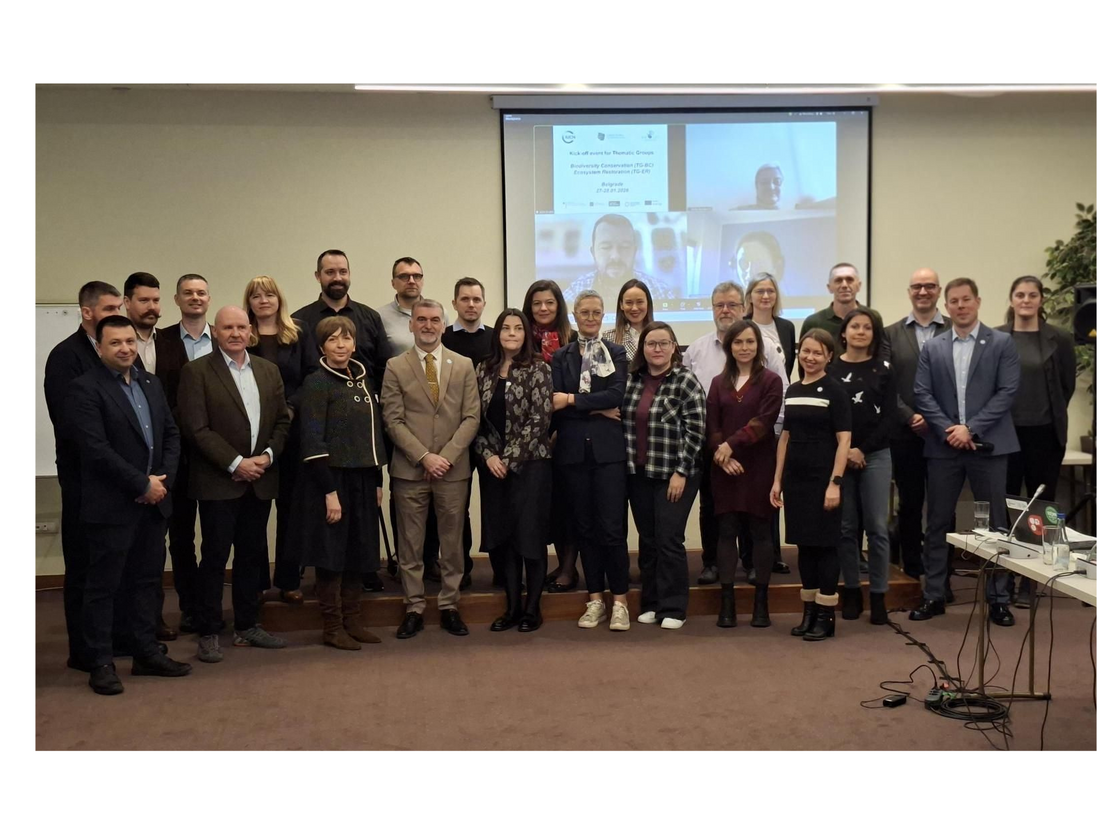
This landmark gathering brought together experts from across the Western Balkans to advance the implementation of the Green Agenda for the Western Balkans and strengthen collaboration on ecosystem restoration and biodiversity conservation. Both groups are established under the Biodiversity Task Force of the Western Balkans (BDTF WB) to strengthen evidence-based policy and practice, and to provide strategic guidance and technical insight for regional biodiversity and restoration efforts.
Participants reflected on the interconnectedness of restoration and conservation, recognising that degraded ecosystems cannot be revived without safeguarding biodiversity, and biodiversity cannot thrive without healthy ecosystems. Over two days, experts established priorities, shared knowledge, and set the foundations for long-term cooperation.
“The creation of these thematic groups will support the effective implementation of the Green Agenda for the Western Balkans. By mobilising the region’s scientific and technical expertise, TG‑ER and TG‑BC will strengthen the evidence base for decision‑making and help ensure that restoration and biodiversity actions are aligned with EU environmental standards. Their collective knowledge will provide valuable guidance as we work together to advance nature conservation across the region,” emphasised Oliver Avramoski, Director, IUCN Regional Office for Eastern Europe and Central Asia.

Thematic Group on Ecosystem Restoration (TG-ER)
TG-ER was established to provide scientific and strategic guidance for ecosystem restoration in line with key regional policy documents, particularly the Western Balkans Six (WB6) Forest Landscape Restoration (FLR) Plan. This plan will offer a regional framework for restoring degraded lands, strengthening climate resilience, and ensuring ecosystem services continue to support communities and economies. It will also identify priority sites for restoration through a comprehensive Restoration Opportunities Assessment Report (ROAR) and set measurable targets for biodiversity gains and ecosystem resilience. TG-ER aligns restoration efforts with global initiatives such as the UN Decade on Ecosystem Restoration, aiming to accelerate restoration and promote sustainable landscape management across the region.
The implementation of the WB6 FLR Plan, once adopted, is expected to strengthen regional cooperation and advance global commitments under the EU Biodiversity Strategy for 2030, the Kunming-Montreal Global Biodiversity Framework, and the Paris Agreement.
Thematic Group on Biodiversity Conservation (TG-BC)
TG-BC was launched to provide guidance for biodiversity conservation initiatives across the region. The group will support the development and implementation of key regional policy documents, including the Western Balkans Biodiversity Report, Western Balkans 2030 Biodiversity Strategic Plan (BSP), the Biodiversity Monitoring and Evaluation (M&E) Framework, and other conservation-related activities under the Green Agenda for the Western Balkans (GAWB). Its members, drawn from academia, NGOs, research institutions, and the private sector, will provide independent expertise to address emerging challenges, strengthen conservation methodologies, and contribute to expert knowledge exchange and capacity development.
Joint role in the Green Agenda for the Western Balkans
Both TG-ER and TG-BC are closely linked to the implementation of the Green Agenda for the Western Balkans, adopted in 2020 to align with the European Green Deal and advance the goal of carbon neutrality by 2050. Within this framework, Pillar 5 on the Protection of Nature and Biodiversity calls for stronger measures to safeguard ecosystems and species.
Together, TG-ER and TG-BC will support the work of the Biodiversity Task Force for the Western Balkans (BDTF WB), established under the Regional Cooperation Council (RCC) and coordinated by IUCN Regional Office for Eastern Europe and Central Asia (ECARO).
Their expertise will inform several cornerstone documents, including the Western Balkans Six Biodiversity Strategic Plan 2030, the State of Nature in the Western Balkans Report, the Western Balkans Six Forest Landscape Restoration Plan, and the Biodiversity Monitoring and Evaluation Framework. These strategies provide the roadmap for integrating biodiversity and restoration into the Green Agenda’s implementation and EU accession processes. The joint goal is to strengthen ecosystem resilience, enhance biodiversity outcomes, and support the Western Balkans in meeting EU environmental standards and global conservation commitments.
The inaugural meeting was organised within the framework Nature Aligned Western Balkans, funded by the German Federal Environment Ministry’s Advisory Assistance Programme (AAP) for environmental protection in Central and Eastern Europe, the Caucasus, Central Asia, and EU neighbouring countries. It is supervised by the German Federal Agency for Nature Conservation and the German Environment Agency. The meeting was co-led and organised jointly with the ADAPT 2.0: Nature-based Solutions for Climate Change Mitigation and Adaptation in the Western Balkans, funded by Sweden (the Swedish International Development Cooperation Agency (SIDA)). Additional contributions were made through Greening the Western Balkans supported by the International Partnerships Austria.


The Bangladesh Forest Department (BFD) and IUCN Bangladesh, with support from Agence Française de…

Each year, International Women's Day is an opportunity to recognise the women advancing change in…

On 14 January 2026, in Dhaka, the Bangladesh Forest Department and IUCN Bangladesh formally signed…