New PANORAMA Solutions in Focus publication demonstrates the impacts of Model Forests
The conservation and sustainable livelihood initiatives of Model Forests from around the world represent the theme of a new PANORAMA Solutions in Focus publication released this month. From agroforestry and green value chain development to community natural resource governance, the publication provides a glimpse into how Model Forests are at the forefront of locally-led landscape conservation and restoration.
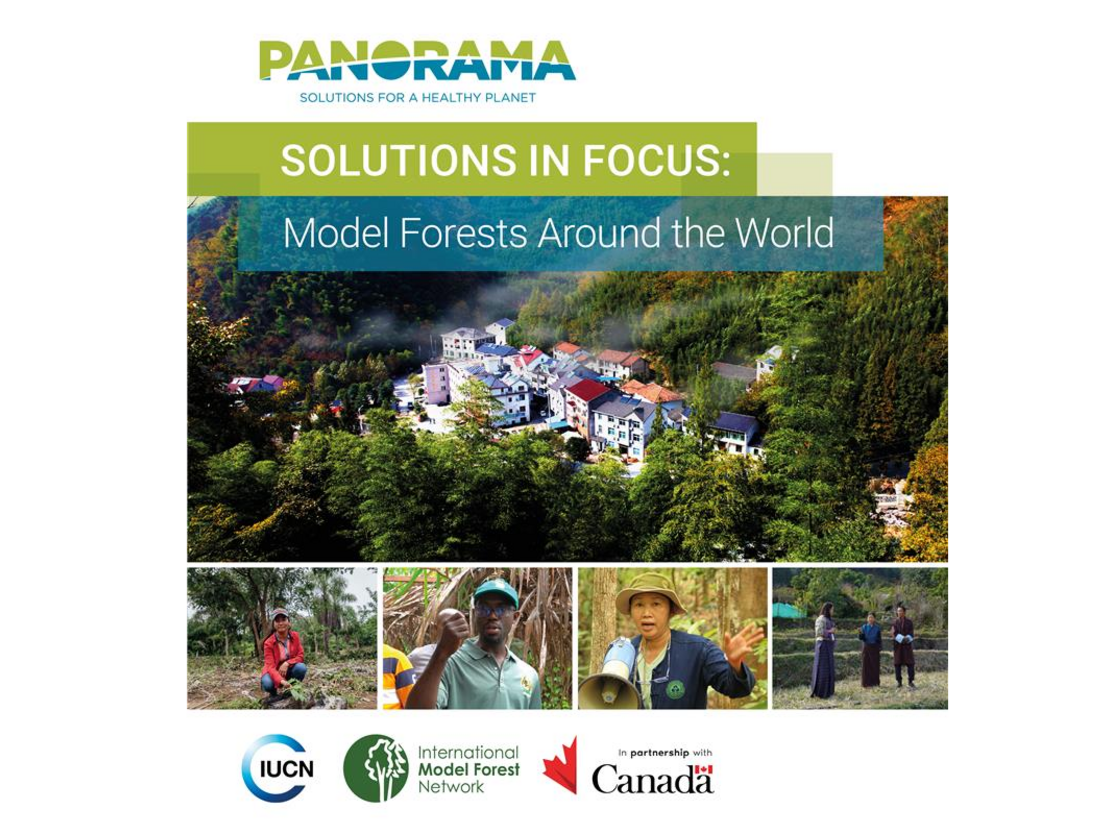
The International Model Forest Network (IMFN) is the world’s largest network dedicated to sustainable landscape governance, encompassing more than 60 Model Forests, 35 countries, and 70 million hectares. The Model Forest approach is best understood as a process for bringing a diverse partnership of individuals and groups together to realize a common vision of sustainable development in a large landscape. In practice, a Model Forest is a fully working landscape of forests, farms, protected areas, rivers and towns where diverse stakeholders cooperate to collectively govern, manage, conserve, and restore their landscape’s natural resources.
PANORAMA – Solutions for a Healthy Planet is a partnership initiative, grounded in the vision of a global community where changemakers share, adopt, and scale-up inspiring Solutions for a healthy planet. PANORAMA brings to life the ideal of global learning through local Solutions, fostering an environment where cross-sectoral inspiration and global innovation thrive. For over a decade, PANORAMA has stood as a beacon of education and a testament to the power of shared knowledge in overcoming environmental challenges. PANORAMA aligns with major global directives like the Kunming-Montréal Global Biodiversity Framework (GBF), the Paris Agreement, and the UN Agenda 2030, turning local and regional Solutions into global changemakers.
This PANORAMA Solutions in Focus publication highlights 13 Solutions from across Asia, Africa, Europe, and South America. The Solutions are sorted into three major sections focused on agroforestry, value chain development, and community-led governance. Individual Solutions explore pertinent conservation topics, including regenerative agriculture, sustainable farming techniques, fire management, and climate resilience. The Solutions also highlight the social dimensions of the Model Forest approach, including how women, youth, Indigenous Peoples, and local communities are engaging in community-based governance of natural resources and conservation leadership.
Within the Solutions developed by these Model Forests, several key lessons on effective forest landscape management stand out. In particular, reinforcement of governance principles (by both communities and partner organisations), investment in capacity and knowledge development, adoption of innovative practices and technologies, and development of economic opportunities are critical for driving successful outcomes. The Model Forest approach successfully integrates these considerations in an adaptable, sustainable way, empowering communities to conserve and restore the ecosystems on which they depend while also building durable livelihood opportunities.
The lessons in this document not only capture existing successes, but provide a framework through which other communities can draw knowledge from Model Forests and apply those lessons to their own landscapes. This kind of knowledge sharing is fundamental to the principles of both the IMFN and the PANORAMA platform.
The publication is available to read in full on IUCN’s website in English, French, and Spanish.


The Bangladesh Forest Department (BFD) and IUCN Bangladesh, with support from Agence Française de…

Each year, International Women's Day is an opportunity to recognise the women advancing change in…

On 14 January 2026, in Dhaka, the Bangladesh Forest Department and IUCN Bangladesh formally signed…