From local knowledge to local action: Communities shape restoration in three regions of Uzbekistan
In Kashkadarya, Khorezm and the Republic of Karakalpakstan, local communities are helping turn restoration assessments into practical plans that respond to the needs of both people and nature.
Restoring degraded land is not only about improving soil health or planting trees. It is also about securing water for restoration sites, farmland and households; protecting seedlings and crops; creating new sources of income; conserving biodiversity; and making landscapes more resilient for the people who depend on them. This is why land restoration cannot be planned from a distance. It must reflect local realities and involve the communities who live in and care for these landscapes.
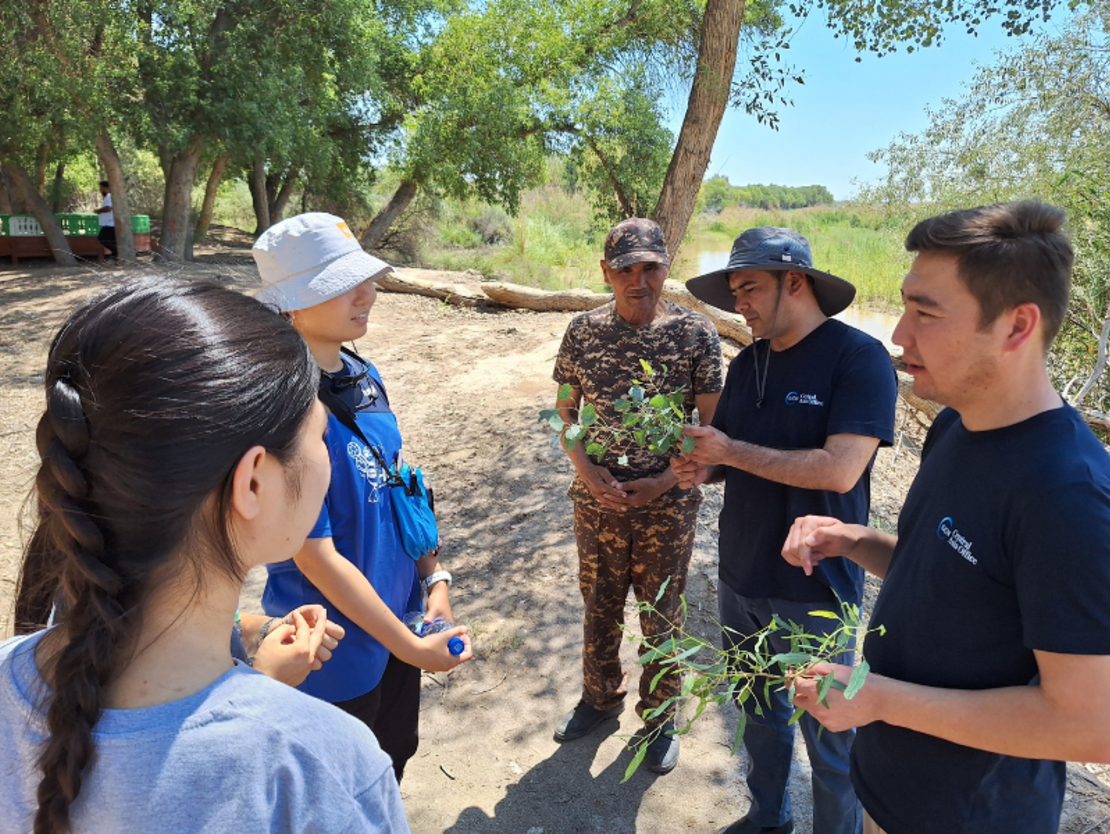
Earlier field visits and fieldwork under the FOLUR-Uzbekistan project showed that local knowledge is essential for understanding how landscapes and ecosystems are changing. Farmers, pastoralists, women, rangers, and other community members see where soil is being lost to erosion, where pastures are becoming less productive, where water is becoming harder to access, and where wildlife increasingly comes into conflict with agriculture.
In June 2026, the process moved from identifying challenges to jointly designing feasible solutions. IUCN and a team of national consultants and experts returned to the three regions, bringing together residents, farmers, pastoralists, protected-area staff, community representatives, and public authorities.
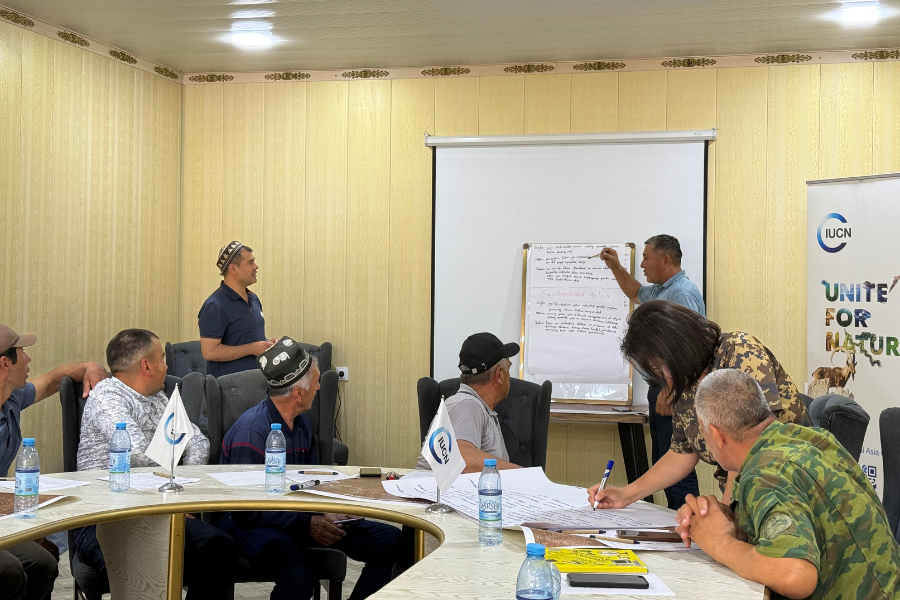
Participants reviewed proposals for restoration interventions and Nature-based Solutions developed through IUCN’s Restoration Opportunities Assessment Methodology, or ROAM. They assessed which measures were realistic for their districts, proposed alternatives, identified priority sites, and considered how they could help implement and maintain the selected interventions. The workshops were followed by visits to sites identified for restoration and Nature-based Solutions pilots, allowing the discussions to continue directly at the proposed restoration sites.
Kashkadarya: Restoring land while creating income opportunities
In the mountain landscapes around the Gissar/Hisar State Strict Nature Reserve, communities face soil erosion, declining land productivity, pressure on pastures and limited access to water. Living alongside wildlife also brings challenges, including occasional conflict between mountain communities and predators such as snow leopards, wolves, and brown bears.
Workshop participants supported terracing, tree planting and orchards, green protective fences, pasture recovery through rotational grazing and improved water infrastructure. Together, these measures could retain water in the soil, stabilise vulnerable mountain slopes, and protect farmland from erosion, landslides and wildlife.
Stakeholders stressed that restoration must also bring visible benefits to local families. Fruit- and nut-bearing trees such as almond, pistachio, walnut, apricot, and apple could help restore degraded land while eventually providing products for households or local markets. Beekeeping, medicinal-plant processing, small-scale ecotourism, and local nurseries were also discussed as ways to diversify incomes and create opportunities for women.
The discussions pointed towards a shared-responsibility model: project partners could provide planting materials, infrastructure and technical support, while local communities would protect and maintain restored plots and benefit from future harvests. Clear agreements will be needed to define responsibilities and benefits.
Khorezm: Protecting farms and wildlife together
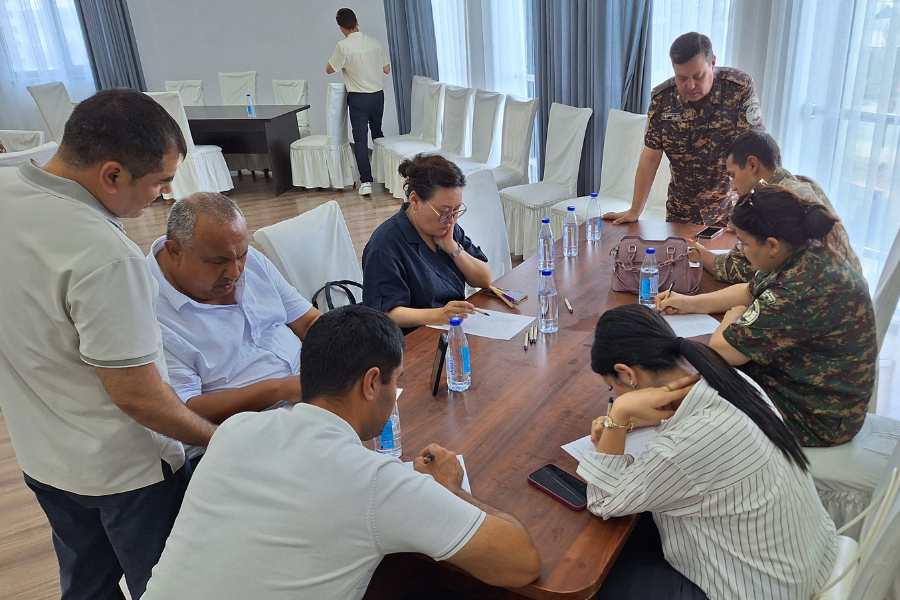
Around Khorezm National Nature Park, farmland, fish farms, wetlands and Tugay forest compete for limited land and water. Agricultural activities place pressure on natural habitats, while wildlife moving beyond the park boundaries can damage nearby crops. Workshop participants therefore focused on measures that could protect both biodiversity and neighbouring livelihoods.
Green fences, hedges, and vegetation belts along exposed park boundaries could help discourage wildlife from entering farms while providing natural habitat for birds, pollinators, and other local species supporting biodiversity. More efficient irrigation could also help farmers produce food with less water.
Communities explored how nature conservation could support local enterprise. Ideas included beekeeping, greenhouse production, fish farming, and carefully managed ecotourism. One proposal was year-round cultivation of dill for Shivit Oshi, a well-known local dish, linking agriculture with Khorezm’s identity and tourism.
Local farmers also highlighted losses to pests in orchard harvests. Participants discussed beneficial insects as a natural form of pest control. Uncultivated green patches and vegetated strips between orchard rows could support them, reduce crop losses, and enrich farmland biodiversity.
The workshop showed that restoration becomes more relevant when it addresses everyday concerns: protecting crops, using water more efficiently, improving harvests, and creating new sources of household income.
Karakalpakstan: Water as the starting point
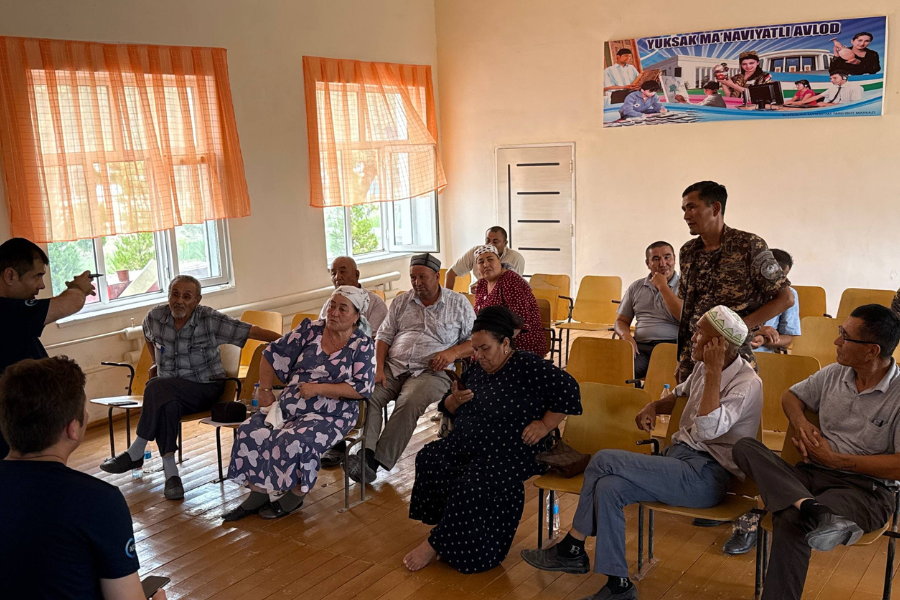
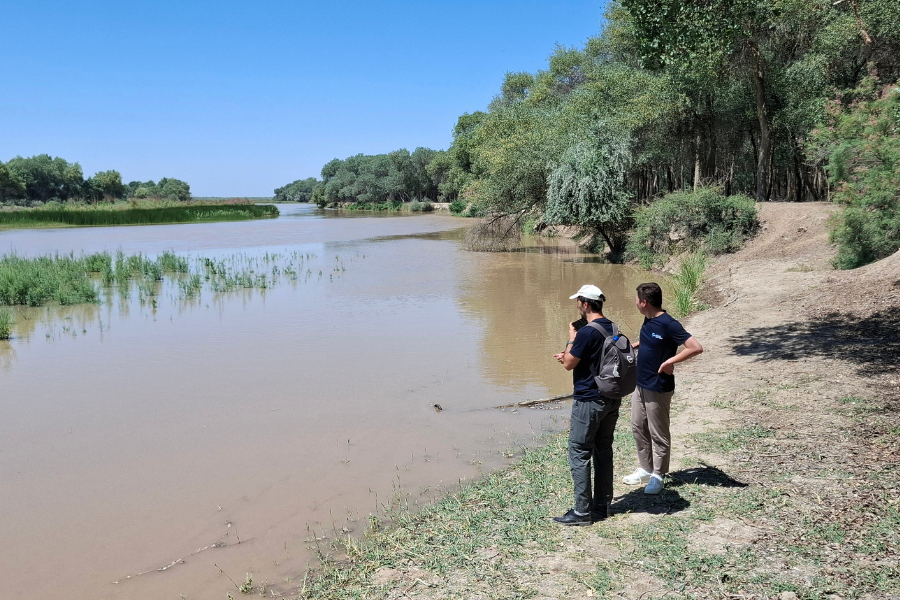
In Karakalpakstan, discussions centred on the Lower Amu Darya Biosphere Reserve, Baday-Tugay and neighbouring farming communities. Here, people did not describe land degradation as an isolated environmental problem. They linked it directly to insufficient irrigation and drinking water, limited employment opportunities, high agricultural costs, and other pressures affecting daily life.
Water was repeatedly identified as the foundation for lasting restoration. Without a reliable supply, plantings cannot survive, farmland cannot recover, and communities cannot maintain restored areas.
Workshop participants supported restoring degraded Tugay forest near Baday-Tugay with native riparian species, such as poplar, willow, oleaster, and tamarisk. Saxaul was identified as more suitable for the surrounding sandy and saline land. Matching species to each landscape is essential because Tugay forest and desert land require different restoration approaches.
Restoration could also help reduce dust, protect agricultural land from salinisation and erosion, and strengthen the resilience of nearby communities.
Local stakeholders were clear that restoration plans must also reflect economic realities. Water access and livelihood pressures will influence whether communities can remain involved over the long term. These concerns must be considered alongside the technical design of interventions.
Restoration designed with and for communities
Priorities differed across the three regions, but a shared message emerged: people are ready to contribute when restoration responds to their lives. Restoration can mean more productive land, better protection from erosion, improved harvests, reduced conflict with wildlife, new livelihood opportunities, and greater resilience to water scarcity and climate change.
Participation is not simply about inviting communities to a workshop. Nor is it about asking them to endorse predefined proposals. It means giving communities a meaningful role in deciding where restoration should happen, which solutions are suitable, how they will be implemented and maintained, and how responsibilities and benefits will be shared.
As the next step, with the support from FAO, IUCN, its team of consultants and local stakeholders will turn the priorities identified during the workshops, field visits, and fieldwork into detailed technical designs and action plans. This will include confirming pilot sites for restoration and NbS, assessing water and infrastructure needs, selecting appropriate species for planting, estimating costs, and agreeing upon roles with local communities and partner institutions.
Grounding these plans in local knowledge and everyday needs increases the likelihood that restoration will not only improve ecosystems but also deliver lasting value to the people who live in and care for them.
The regional workshops and fieldwork in Uzbekistan are part of IUCN’s contribution to the Food System, Land Use and Restoration Impact Program in Uzbekistan (FOLUR-Uzbekistan). This project is funded by the Global Environment Facility (GEF) and led nationally by the Food and Agriculture Organization of the United Nations (FAO), co-implemented by the National Committee on Ecology and Climate Change of the Republic of Uzbekistan and the Ministry of Agriculture of the Republic of Uzbekistan with the support of IUCN and the International Center for Agricultural Research in the Dry Areas (ICARDA).
Learn more about the Food System, Land Use and Restoration Impact Program in Uzbekistan (FOLUR-Uzbekistan) project (GCP/UZB/010/GFF).
Explore other projects and the work of IUCN in Central Asia
To stay informed, join the IUCN Telegram channel
Disclaimer
Opinions expressed in posts featured on any Crossroads or other blogs are those of the authors and do not necessarily reflect the opinions of IUCN or a consensus of its Member organisations.

The Bangladesh Forest Department (BFD) and IUCN Bangladesh, with support from Agence Française de…

Each year, International Women's Day is an opportunity to recognise the women advancing change in…

On 14 January 2026, in Dhaka, the Bangladesh Forest Department and IUCN Bangladesh formally signed…