IUCN CEM Social-Ecological Resilience and Transformation Thematic Group
Overview and description
- Description:
-
The loss of biodiversity, social injustice and inequality, and climate change are interconnected global crises. SERT helps conservationists to confront these crises by using systems science in their ...
Group leadership
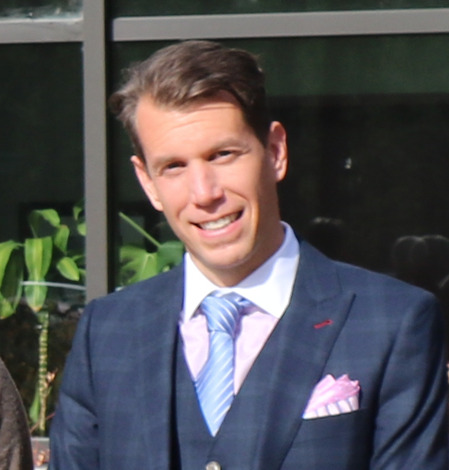
Dr Dorian FOUGÈRES
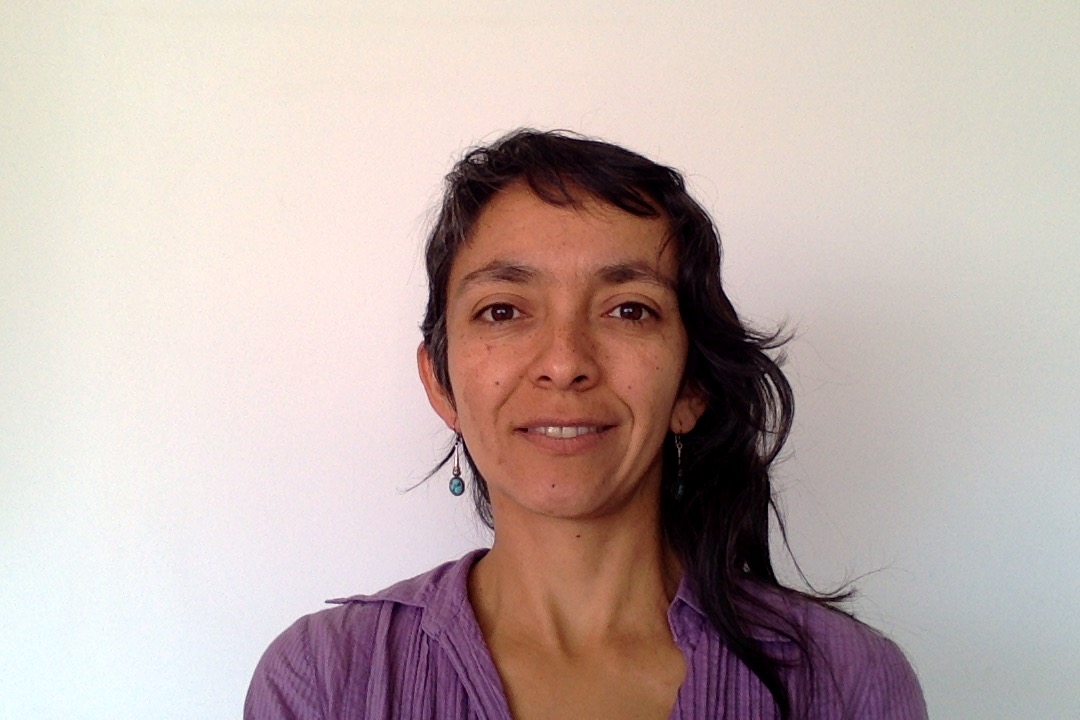
Dr Manuela RUIZ REYES
Deforestation, overfishing, mining, monocropping, and many other human activities are permanently degrading the ecosystems upon which people depend for survival, health and well-being, and economic exchange. Climate change accelerates the transformation of ecosystems, whether through coral bleaching, stand-replacing wildfire, or other disturbances. Sustaining and restoring nature’s diverse contributions to people requires using systems-based approaches to planning and management. These approaches help conservationists to better account for the complex linkages between ecology and society, and lead nature-positive changes in society.
- Resilience: the capacity of a system to absorb disturbance and still retain essentially the same structure, feedbacks, function, and identity.
- Adaptability: an aspect of resilience, adaptability is the capacity of human and biological actors in a system to learn and adjust their responses to changing external drivers and internal processes, and thereby continue development along the current trajectory;
- Transformability: also an aspect of resilience, transformability is the capacity to fundamentally alter a system and cross into a new development trajectory when ecological, economic, or social structures make the existing system untenable.
Resilience is fully consistent with the twelve principles of the Ecosystem Approach – a cornerstone of IUCN – for equitable, inclusive, and holistic management agreed to by the Convention on Biological Diversity.[1]
Resilience emphasizes social learning as an essential process for responding to disturbances and facilitating system transformations. Among other things, this includes reflecting on and changing conservation practice itself. Conservation has many historical connections with colonialism as well as with development as an international post-World War II project. Acknowledging these linkages creates opportunities for combining social with natural sciences, and for taking new and different approaches to resolving today’s interlinked global crises of biodiversity loss, climate change, and extreme inequality.
Regarding the group itself, SERT has over 250 members including Africa (29), East Europe, North and Central Asia (2), Meso and South America (31), North America and the Caribbean (55), Oceania (19), South and East Asia (57), West Asia (3), and West Europe (60). Many members come from not-for-profit organizations, public agencies, foundations and charities, and environmental consultancies, with a few formally representing IUCN and the United Nations. Others work primarily at universities, including business and law schools, as well as research institutes and development organizations. Professionally, the largest number of members have expertise in biodiversity conservation and ecology, including work the landscape scale, as well as climate change adaptation and mitigation, and ecosystem services. Large numbers of members also specialize in governance and rights, while smaller groups specialize in disaster-risk reduction, indigenous people, nature-based solutions, protected areas, education & training, agro-food systems, and urbanization & cities.
[1] Jones, M. 2018. Resilience Thinking Perspective on the Ecosystem Approach. https://portals.iucn.org/union/node/29940
Projects and Initiatives
SERT focuses on five substantive areas – NbS, RLE, Cultural Practices & Indigeneity, Governance & Power, and Working Land & Seascapes – as well as conceptual development and network development. The substantive topics align with and advance the CEM Mandate, IUCN member resolutions, and the IUCN Programme.
As of May 2022, SERT members are beginning to develop project-specific work plans for the quadrennium. Starting from the foundation of resilience and transformation, projects may include
- network mapping
- a South American-based Spanish-speaking webinar
- a knowledge basket product regarding the use of blockchain technologies
- a framework for facilitating transitions to sustainability
- case studies of regional applications of the Red List of Ecosystems
- a planning exercise on involving the natural capital protocol, and
- a webinar on indigenous whole systems approaches to conservation, including food sovereignty.
Projects will be identified by the end of the summer of 2022.
At a glance

Sign up for an IUCN newsletter