Jennifer Rae Pierce is a political ecologist, urban planner, and urban biodiversity policy specialist with 18 years of experience with cities and nature. In addition to leading the IUCN CEM Urban ...
IUCN COMMISSION GROUP
IUCN CEM Urban Ecosystems Specialist Group
Group leadership
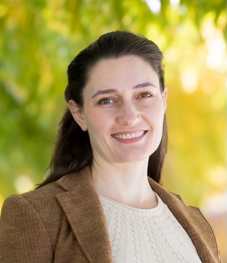
Ms Jennifer PIERCE
Jennifer Rae Pierce is a political ecologist, urban planner, and urban biodiversity policy specialist with 18 years of experience with cities and nature. In addition to leading the IUCN CEM Urban Ecosystems Specialist Working Group she also represents CEM on the IUCN Urban Alliance. She has prepared local government tools and reports including a biodiversity and ecosystem services mainstreaming toolkit for ICLEI, the Urban Nature Indexes for IUCN, the Science-Based Targets for Cities for Nature, ecological footprint measures with BCIT, and serves a consultant on urban biodiversity for the World Bank. Her published research includes global comparative work across hundreds of cities as well as more in-depth explorations of cities in Thailand, India, Japan, Singapore, Israel, Canada, the USA, Brazil, and South Africa. Jennifer holds an architecture degree from the Illinois Institute of Technology, a Master’s in City and Regional Planning from Cornell University, and a Master’s in Environmental Science and Policy from Central European University. She has submitted her PhD dissertation in planning at the University of British Columbia on urban biodiversity worldviews and justice.
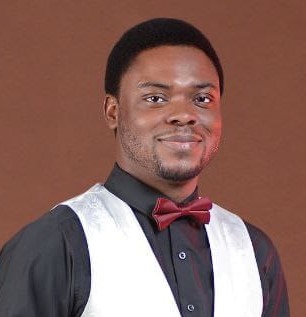
Dr Opeyemi ADEYEMI
Dr. Opeyemi Adeyemi (Yemi) is a forestry and environmental scientist and a lecturer at the Federal University of Technology, Akure (FUTA), Nigeria. His research focuses on the human dimensions of forestry and environmental science, with particular emphasis on socio-ecological systems, urban forestry, ecosystem services, and community participation. His work adopts interdisciplinary approaches that integrate ecological field methods, social science research, GIS/remote sensing, and policy engagement.
He holds a PhD in Forest Science from the University of Pretoria, South Africa, and has international research, teaching, and consultancy experience across Africa, Europe, and Asia. His research explores how social, cultural, institutional, and spatial factors shape human–nature interactions in urban landscapes, with a focus on equity, governance, and sustainability.
Yemi has published in leading international peer-reviewed journals, including Urban Forestry and Urban Greening, secured competitive international research funding, and contributes to high-level scientific and policy processes as a Fellow of the Intergovernmental Science-Policy Platform on Biodiversity and Ecosystem Services (IPBES). He has held visiting research appointments in Thailand and Finland, supervised undergraduate and postgraduate students, and currently serves as a Contributing Editor for Cities and the Environment (CATE) Journal
Dr. Opeyemi Adeyemi (Yemi) is a forestry and environmental scientist and a lecturer at the Federal University of Technology, Akure (FUTA), Nigeria. His research focuses on the human dimensions of ...

Ms Jayshree SHUKLA
Jayshree Shukla is an early career ecologist working at the interdisciplinary nexus of climate-adaptive ecosystem conservation and restoration of terrestrial and coastal ecosystems. She holds an MS degree in Biological Sciences and is currently earning her PhD from Adelaide University, Australia. Her research explores coastal vulnerability to climate change and pathways to mitigate its impacts through improved restoration, conservation, and management. After serving as a member of IUCN-CEM South Asia for 5 years, she’s now an active YP member in IUCN-CEM Oceania, covering Australia, New Zealand, and the Pacific Islands. She has contributed to and authored multiple international peer-reviewed publications bridging urban and coastal habitat ecology. Her work is driven by a strong commitment to applied, climate-relevant research that supports real-world conservation outcomes for both ecosystems and communities.
Jayshree Shukla is an early career ecologist working at the interdisciplinary nexus of climate-adaptive ecosystem conservation and restoration of terrestrial and coastal ecosystems. She holds an MS ...
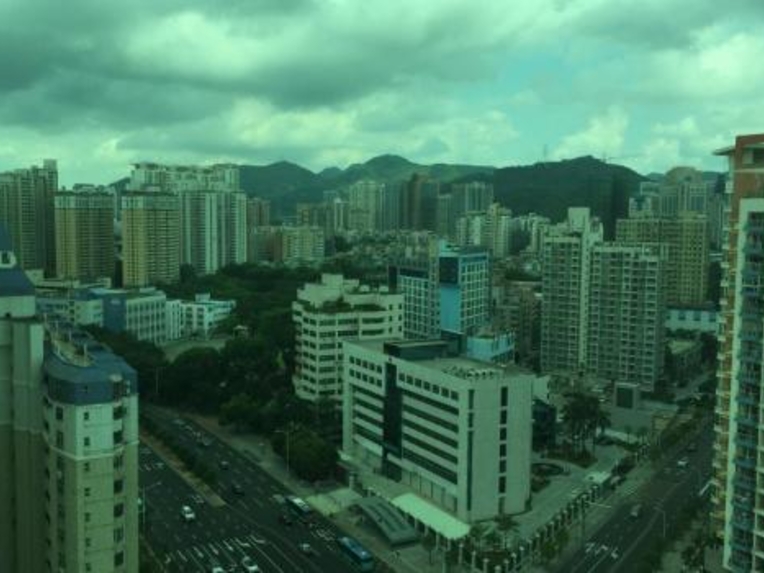
Urban areas are home to more than 54% of the global population in 2017, and this proportion is expected to reach 66% in 2050. While urban areas only cover a small proportion of the Earth's land surface (<1%), they account for 67-76% of global energy consumption and 71-76% of fossil fuel-related CO2 emissions, approximately 60% of all residential water use, and 80% of the wood used for industrial purposes. More importantly, the impacts of cities are well beyond their physical boundaries. With the rapid urbanization, cities have been the centers of major environmental problems. Meanwhile, urban areas are increasingly the engines of innovation and socioeconomic development to mitigate and adapt to local, regional and global social and environmental challenges. With more and more people living in cities, urban areas are increasingly key to regional and global sustainability, and urbanization can, and shall be part of the solution of sustainability, from local and global scale.
Ecological knowledge about urban areas has been expanding since the 1990s with the growing scientific investments in the study of cities as urban ecological systems. This knowledge progression lays the foundation for better practices on urban ecosystem management, in response to the increasing need of urban areas to develop and implement plans to increase their sustainability and resilience, and ultimately, the human wellbeing of urban dwellers.
Objectives
The overarching objective of the specialist group of urban ecosystems is to promote the adoption of, and provide guidance for, ecosystem approaches to the planning and management of urban ecosystems to enhance the ecosystem services provided by urban ecosystems, and thereby human well-being. It also aims to build a network and platform to bring scientists, practitioners, and policy and decision makers together to advance our ecological understanding of urban areas, and to better plan and design urban ecosystems to increase their sustainability and resilience. Specifically, this specialist group seeks to:
- Enhance understanding of urban areas as social-ecological systems, and generate knowledge and guidance for better urban ecosystem management;
- Identify key issues in urban ecosystem management, and its linkage to urban sustainability and resilience;
- Build a network and platform to bring scientists, practitioners, and policy and decision makers together, and raise attention and public awareness of the importance of urban ecosystem management among scientists, policy makers, and general public.
Membership
If you are interested in the activities of the Specialist Group – and particularly if you would like to contribute to them – please contact the Specialist Group Lead. We welcome a wide range of disciplinary backgrounds from the natural as well as social sciences. We particular welcome urban practitioners and policy and decision makers.