Melita is a co-Director of CORDIO East Africa, based in Kenya. She has worked in coral reef and fisheries research, management and conservation in East Africa, elsewhere in the Indian Ocean and also ...
IUCN COMMISSION GROUP
IUCN SSC Snapper, Seabream and Grunt Specialist Group
Group leadership
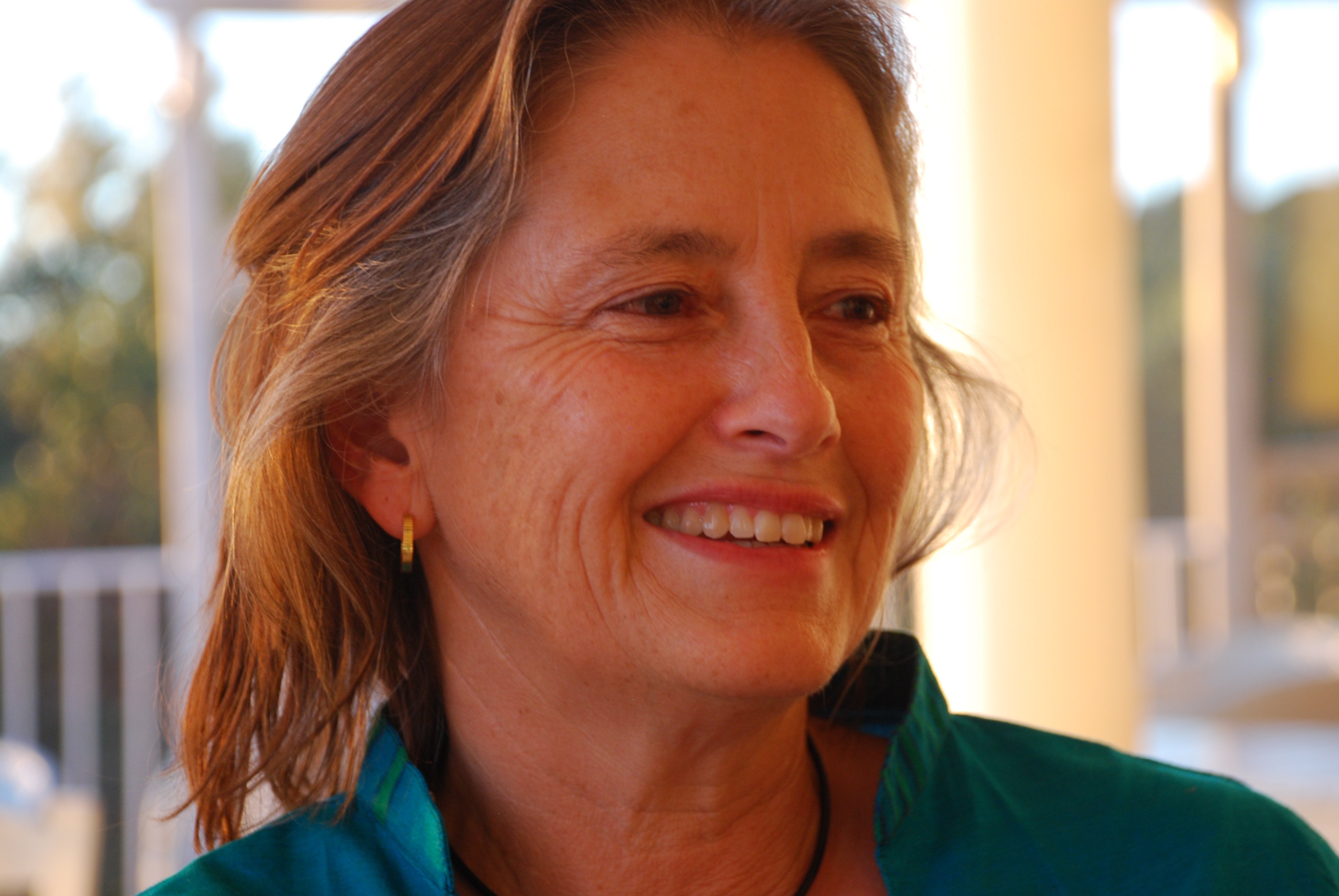
Dr Melita SAMOILYS
Melita is a co-Director of CORDIO East Africa, based in Kenya. She has worked in coral reef and fisheries research, management and conservation in East Africa, elsewhere in the Indian Ocean and also in the Pacific and Red Sea. She has contributed to marine protected areas and fisheries policy development in Kenya, Tanzania, Mozambique, Djibouti, Sudan, Somalia, Philippines, Australia, Fiji and Solomon Islands and globally. Melita was born in Tanzania, educated in Uganda, UK and Australia, and has lived in Kenya for 25 years. Her areas of experience include coral reef ecology particularly of fishes, marine protected areas, climate change, artisanal fisheries, community-based conservation and vulnerable species protection. She is a member of three IUCN Species Specialist Groups - Groupers and Wrasses, Shark (Vice Chair Africa), Snapper Seabream and Grunt (Co-Chair). She is an Associate Editor of the Royal Society Open Science Journal and on the Editorial Board of the Western Indian Ocean Marine Science Journal. Melita’s MSc and PhD were from Queensland University and James Cook University in Australia. She is a Senior Research Associate University of Oxford, and Adjunct Academic Staff Pwani University, Kenya.
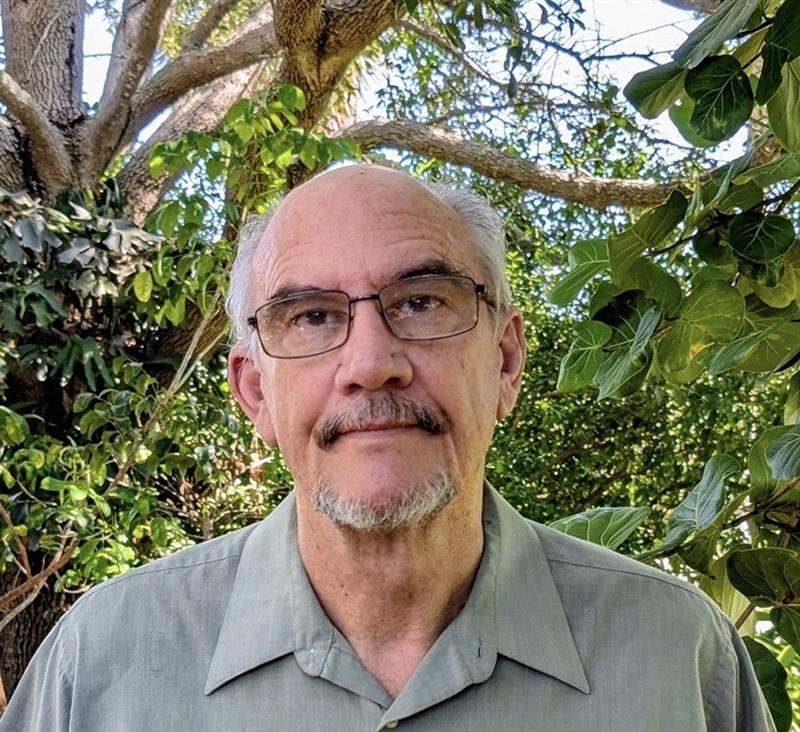
Dr Kenyon LINDEMAN
Ken is a Professor Emeritus, Florida Institute of Technology. His focus is on the conservation science of coastal fishes and their habitats, and the applications of waterfolk knowledge to management in the southeast U.S. and Caribbean. Over 80 publications with many partners in >25 science, policy, and law journals; 4 books; 15 chapters in other books; and large agency or nonprofit reports. Work experience in addition to F.I.T. includes NOAA, University of Miami, several conservation nonprofits, and the private sector. Founded the Academic Sustainability Program at F.I.T., 2010. Service on dozens of expert panels, city to local. Ph.D., RSMAS, Univ. of Miami.
Ken is a Professor Emeritus, Florida Institute of Technology. His focus is on the conservation science of coastal fishes and their habitats, and the applications of waterfolk knowledge to management ...

Dr Barry RUSSELL
Dr Barry Russell is a former Assistant Director of the Museum & Art Gallery of the Northern Territory in Darwin, Australia, and was also Principal Scientist (Marine Biodiversity) with the Northern Territory Department of Natural Resources, and Environment. He has over 50 years research experience on the systematics, ecology and behaviour of tropical demersal fishes of the Indo-West Pacific, and has published more than 150 papers on the taxonomy and ecology of fishes.
He is now retired but holds an Emeritus position at the NT Museum and is a Research Associate at Charles Darwin University in Darwin, Australia. He also is Red List Authority for the IUCN Snapper, Seabream and Grunt Specialist Group.
His current research interests include the taxonomy and phylogenetics of lizardfishes (Synodontidae) and threadfin breams (Nemipteridae).
Dr Barry Russell is a former Assistant Director of the Museum & Art Gallery of the Northern Territory in Darwin, Australia, and was also Principal Scientist (Marine Biodiversity) with the Northern ...
Steering Committee of the Snapper, Seabream and Grunt Specialist Group
- Dr Annadel Cabanban, Conservation International, Manilla, Philippines
- Winston Cowie, Environment Agency, Abu Dhabi, UAE
- Dr Kafayat Fakoya, Lagos State University, Lagos, Nigeria
- Dr. Will Heyman, Sustainable Marine Solutions, US
- Christi Linardich, Old Dominion University, US
- Dr Rekha Nair, Central Marine Fisheries Research Institute, Kochi, India
- Dr Stephen Newman, Dept. Primary Industries & Regional Development, Perth, Australia
- Dr Ewusie Kofi Francis Nunoo, University of Ghana, Accra, Ghana
- Dr. Kennedy Osuka, University of Liverpool, UK
- Dr Jose Tavera Vargas, Universidad del Valle, Cali, Colombia
- Dr Monica Valle, Marine Resources Assessment Group, US
- Dr Melita Samoilys, CORDIO, East Africa
- Dr Ken Lindeman, Florida Tech, US
- Dr Barry Russell, Red List Authority, Museum & Art Gallery of the N. Territory, Darwin, Australia.
Global Spawning Aggregation and Fishers' Knowledge Workshop
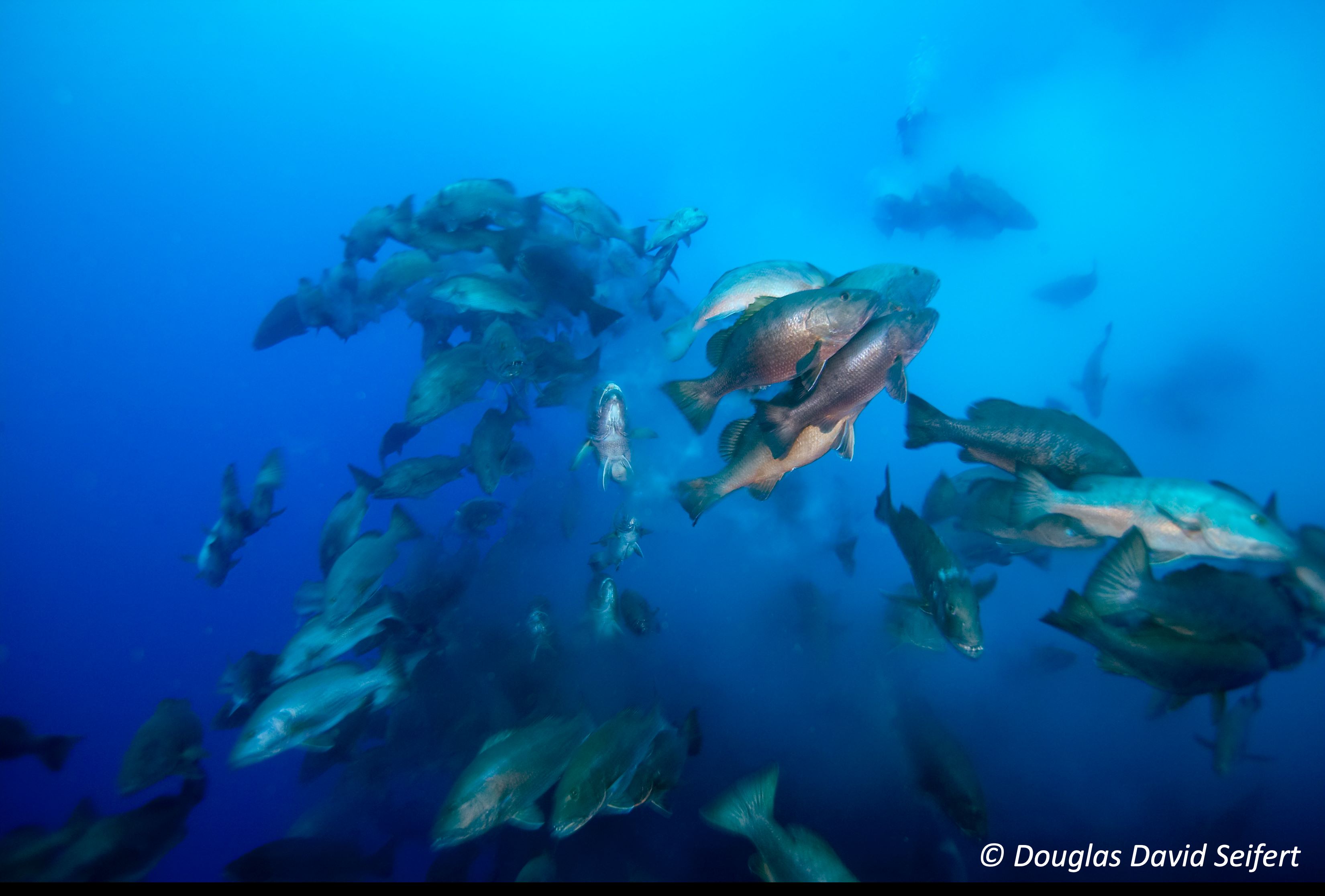
The SSG SG hosted a two-day virtual event in June 2024 on Fish Spawning Aggregations and Fishers' Knowledge: A Global Workshop to Advance Conservation of Snappers and Associated Fishes. A digital program of the video presentations, link by link, for the two-day event is available at FSA x FK Presentations.
An outstanding resource collection for spawning aggregations and fishers’ knowledge is the Big Fish Initiative. Abundant resources in several languages for the Western Atlantic are organized for Decision Makers, Fisherfolk, and Seafood Consumers. There are many applications for FSA and FK efforts in other regions. Hundreds of species in the SSG SG are harvested in Small Scale Fisheries (SSFs) around the world, often with diverse catches but very limited data. To aid management of these fisheries, a multilingual hub of valuable information is at SSF Resource and Collaboration Hub.
Southern Red Snapper at the UN Climate Change Conference COP 30
SSG SG members from French Guiana, Brazil and the US worked with partners to design and present in a two-day event at the UN Climate Change Conference COP 30 in Belem, Brazil, Nov. 2025. The second day focused in part on the Southern Red Snapper, Lutjanus purpureus, and its role in the larger N. Brazil Shelf ecoregion, including the presentation Overview of the Red List Assessment of the Southern Red Snapper with Consideration of Primary Attributes for Long-term Climate Resilience by Beatrice Padovani Ferreira and other SG members, all activities were organized by member Tony Nalovic. Follow-up policy actions are in discussion. A summary of this and other presentations is available at Session Two Summary, COP 30.
More about the Specialist Group
Hundreds of species of snappers, seabreams, grunts, threadfin breams, emperors and fusiliers inhabit tropical and warm temperate coastal regions, providing billions of dollars in seafood and other ecosystem services on coral reefs and in estuaries. However, many species are subject to heavy fishing mortality as well as habitat loss and potential effects of climate change. Management is further complicated by identification challenges, a common absence of species-specific fishery data, and still-changing species and genus names.
The SSG SG has over 70 science and management experts working in over 30 countries to achieve sustainable use of these diverse coastal fishes through the processing of complex phylogenetic challenges, population assessment research, and policy actions that engage communities in decision-making. This work takes many forms, for example: completing the first IUCN Red List assessments of over 550 species, and protecting spawning aggregations.
Key Features of SSG Species
- they can inhabit almost every estuarine and coastal marine habitat in tropical through warm-temperate areas of the globe
- they are some of the most iconic coastal fisheries on the planet: many species are sold as “red snapper” and hundreds of other species are also caught for food
- they are taken by diverse fishing gears including various types of traps, nets, longlines, spears, hook and line, and trawls
- evidence suggests many species are subject to heavy fishing pressure ...
The August 2025 Red List totals for all species are in the adjacent SSG Species Table.
Phylogenetic information on some taxa within these families is not fully resolved. The numbers provided are estimates based on the latest information.
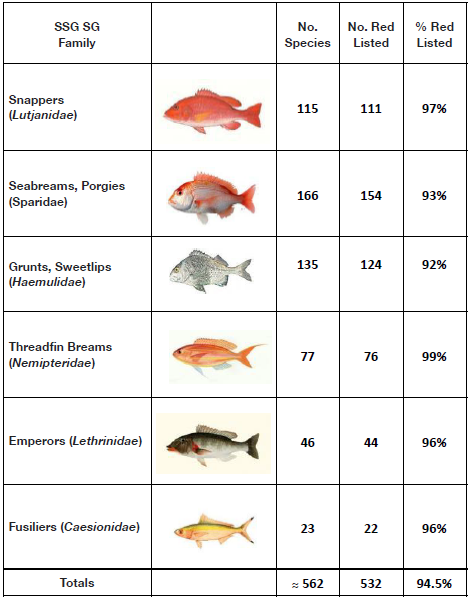
Image credits:
- Dentex hypselosomus Bleeker, 1854, Yellowback sea-bream, Japan. Image: Masato Shiina, Uwajima Fisheries High School, Japan.
- Anisotremus surinamensis, (Bloch, 1791), Black Margate, W. Atlantic. Image: S. Atl. Fish. Management Council.
- Lutjanus guilcheri, Fourmanoir, 1959, Yellowfin red snapper, Indian Ocean. Image: FAO.
- Nemipterus bathybius, Snyder, 1911, Yellowbelly threadfin bream, Western Pacific. Image: Chinese Academy of Fisheries Sciences, Information Center.
- Lethrinus conchyliatus, (Smith, 1959), Red-axil emperor, Indo-West Pacific. Painting: R. Swainston, courtesy of FAO.
- Pterocaesio capricornis, Smith & Smith, 1963, Capricorn fusilier, Western Indian Ocean. Painting: P. Lastrico, courtesy of FAO.
Specialist Group work
The Snapper, Seabream and Grunt Specialist Group (SSG SG) has 18 science and conservation targets within the IUCN 2021-25 quadrennium. The highest priority targets include: Red List assessments of species from six coastal fish families, global work on educating practitioners in the identification of SSG spawning aggregations, the use of fisher’s knowledge in sustainable fishery management, the identification of SSG species undergoing high bycatch mortality, and other activities. Additional information follows.
Red Listing of over 550 Coastal Fish Species
To inform conservation efforts, many experts have worked with the SSG SG to assess species extinction risk for the IUCN Red List of Threatened Species. With over 500 species completed, we are focused on completing the last 8% of species to finish the first-ever assessment of all species.
Read more
Conservation through Spawning Site Protection, Bycatch Reduction, and Other Priorities
Species conservation findings are applied to priorities including regional by-catch reduction, protection of SSG spawning aggregation sites using research and training, applications of fishers’ knowledge, regional identification guides, and other priorities.
Read more
Applied Policy Actions to Sustain Populations and Species
To apply results from species Red List assessments and related research, we engage with diverse partners including universities, governments, fishers, and non-profits. We are expanding our website and other communication outlets to advance best practices in fishing and habitat management.
Read more
Annual Report

Learn about SSG SG’s work and results in 2024 and 2025.
2024-2025 SSG SG Annual Report
Previous reports:
2023 SSG SG Annual Report
2022 SSG SG Annual Report
2021 SSG SG Annual Report
2020 SSG SG Annual Report
2019 SSG SG Annual Report
2018 SSG SG Annual Report
2016-2017 SSG SG Annual Report
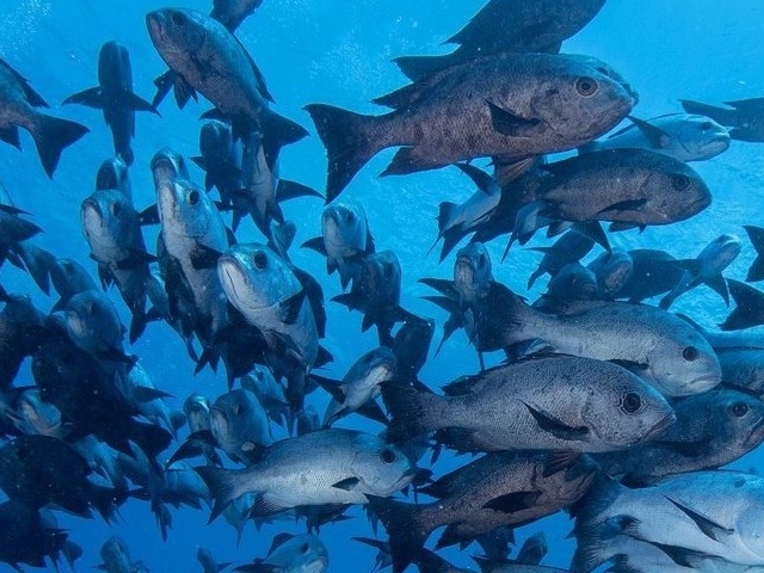
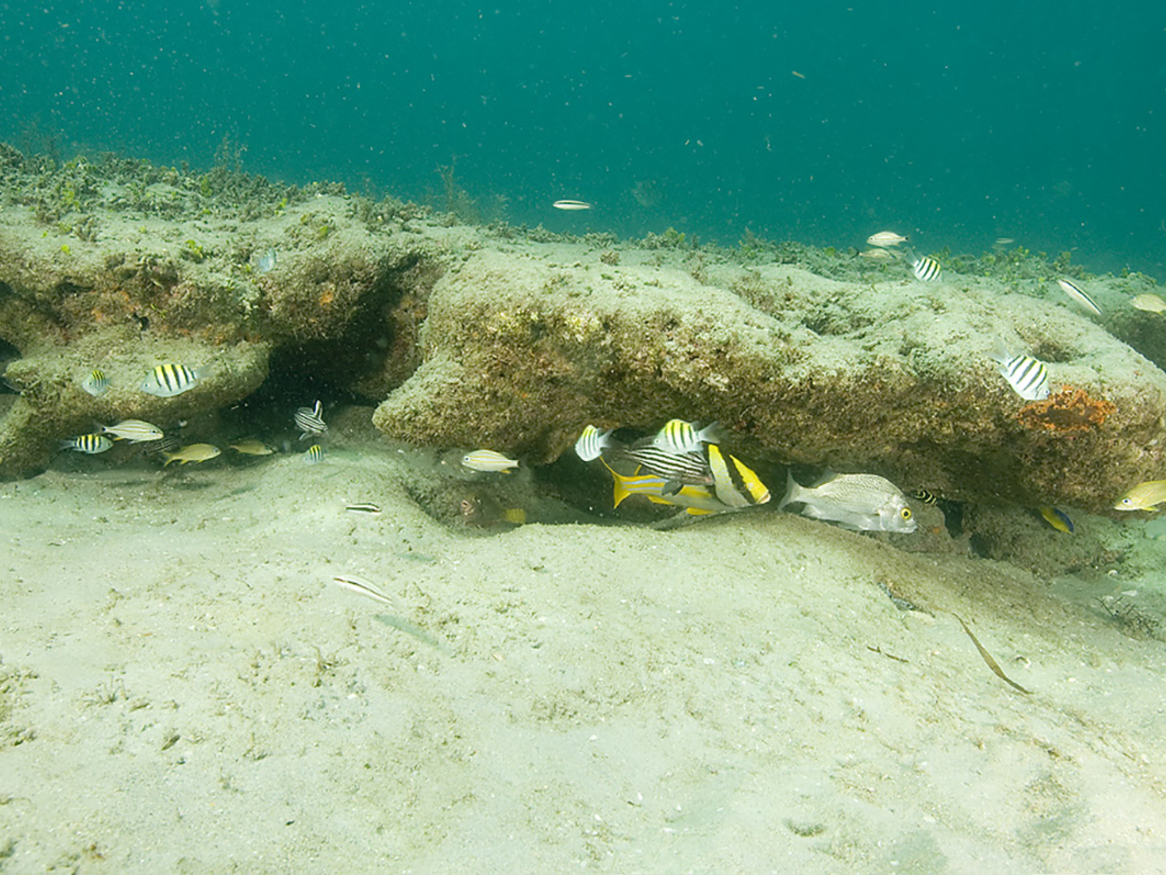
Grunts and co-occurring species on nearshore reefs, Singer Island, Florida. Photo by D. B. Snyder
Photo: D. B. Snyder
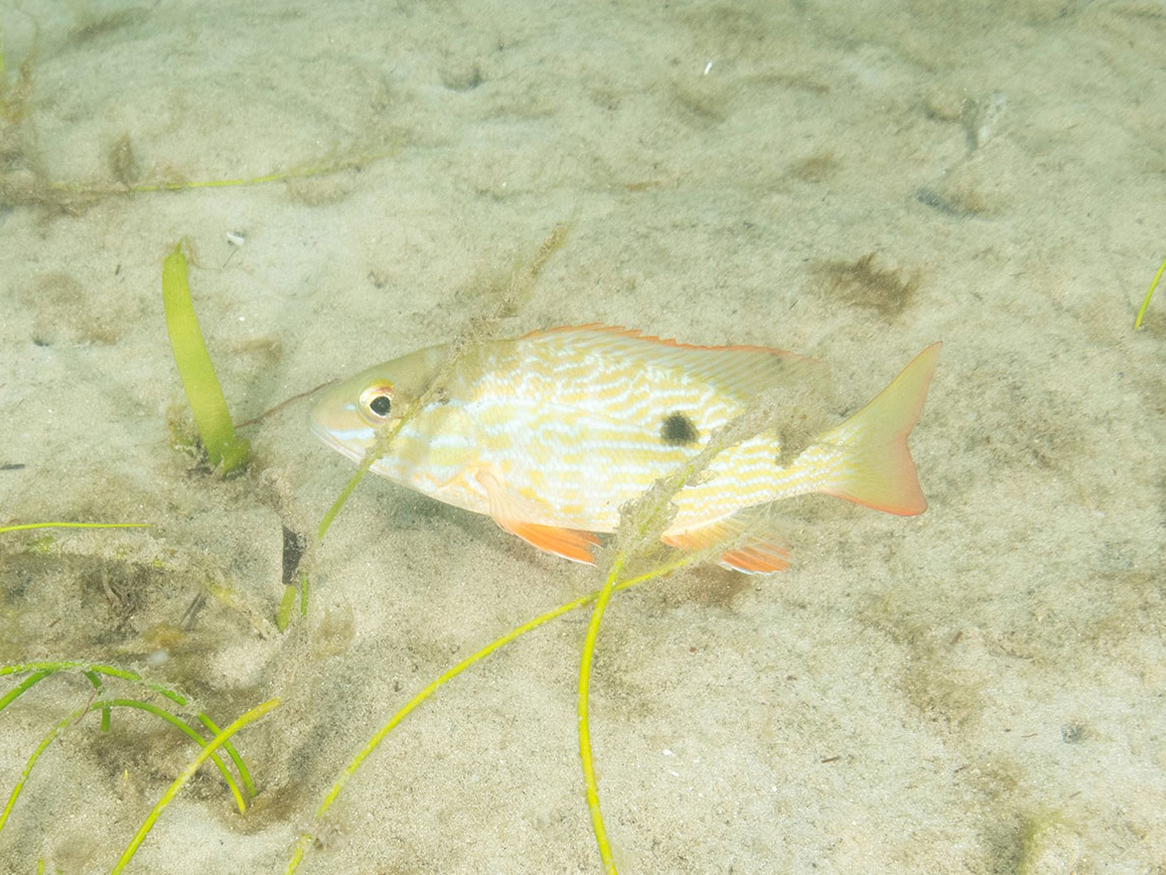
Mutton Snapper Juv., East Florida. Photo by D. B. Snyder
Photo: D. B. Snyder