International Model Forest Network (IMFN)

The International Model Forest Network (IMFN) is a voluntary global community of practice whose members and supporters work toward the sustainable management of forest‐based landscapes and natural resources through the Model Forest approach. As a network, the IMFN covers 60+ Model Forests in over 35 countries covering 70+ million hectares, making it the world's largest network dedicated to sustainable landscape management. 

What is a Model Forest?

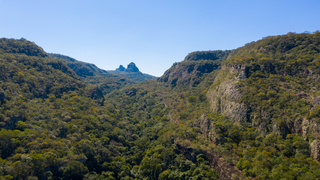
Model Forests are working landscapes that prioritize forest conservation and restoration alongside the social, economic and environmental goals of local communities. These 'living laboratories' serve as unique spaces where governments, community leaders, and other stakeholders can test new policies and programs. 

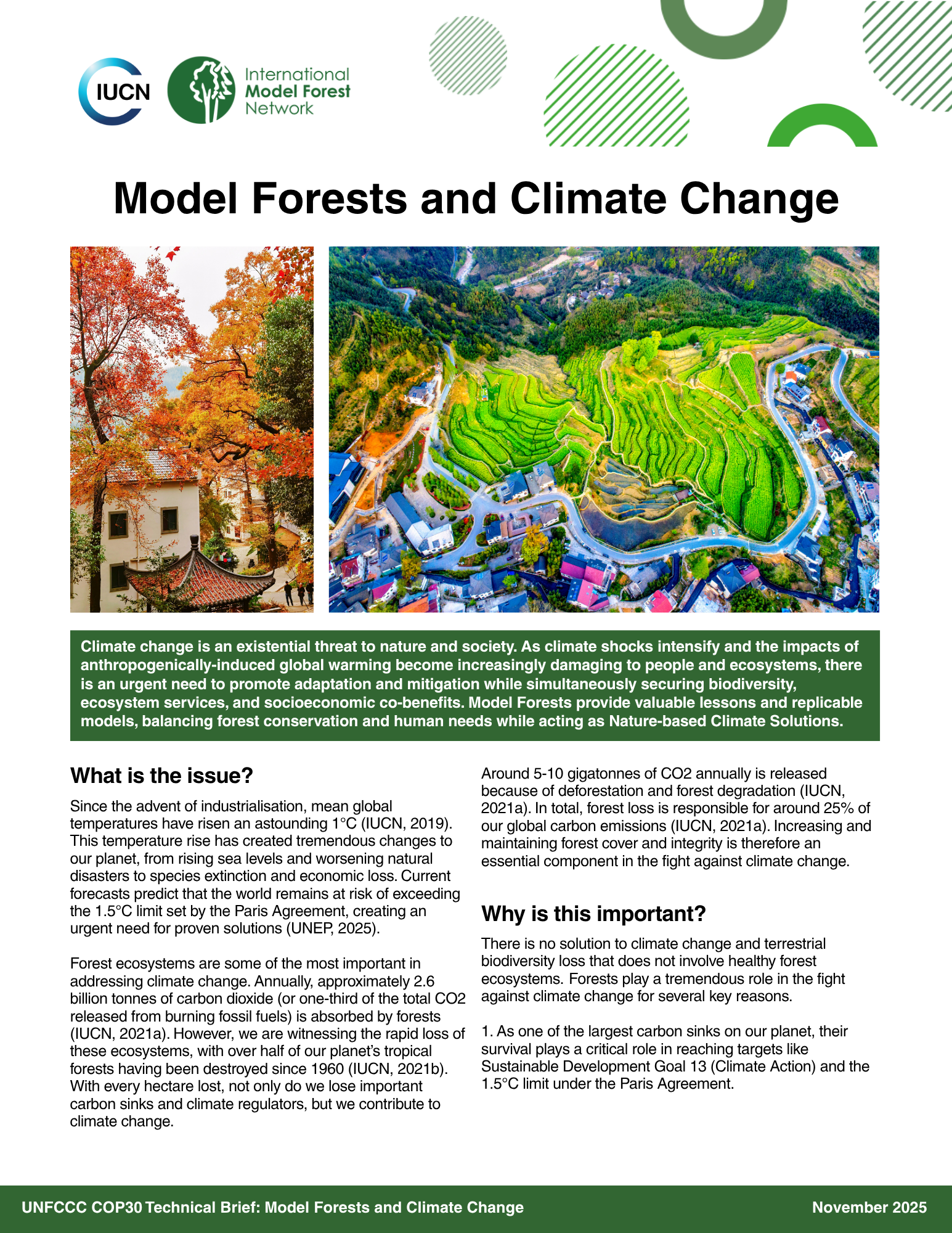
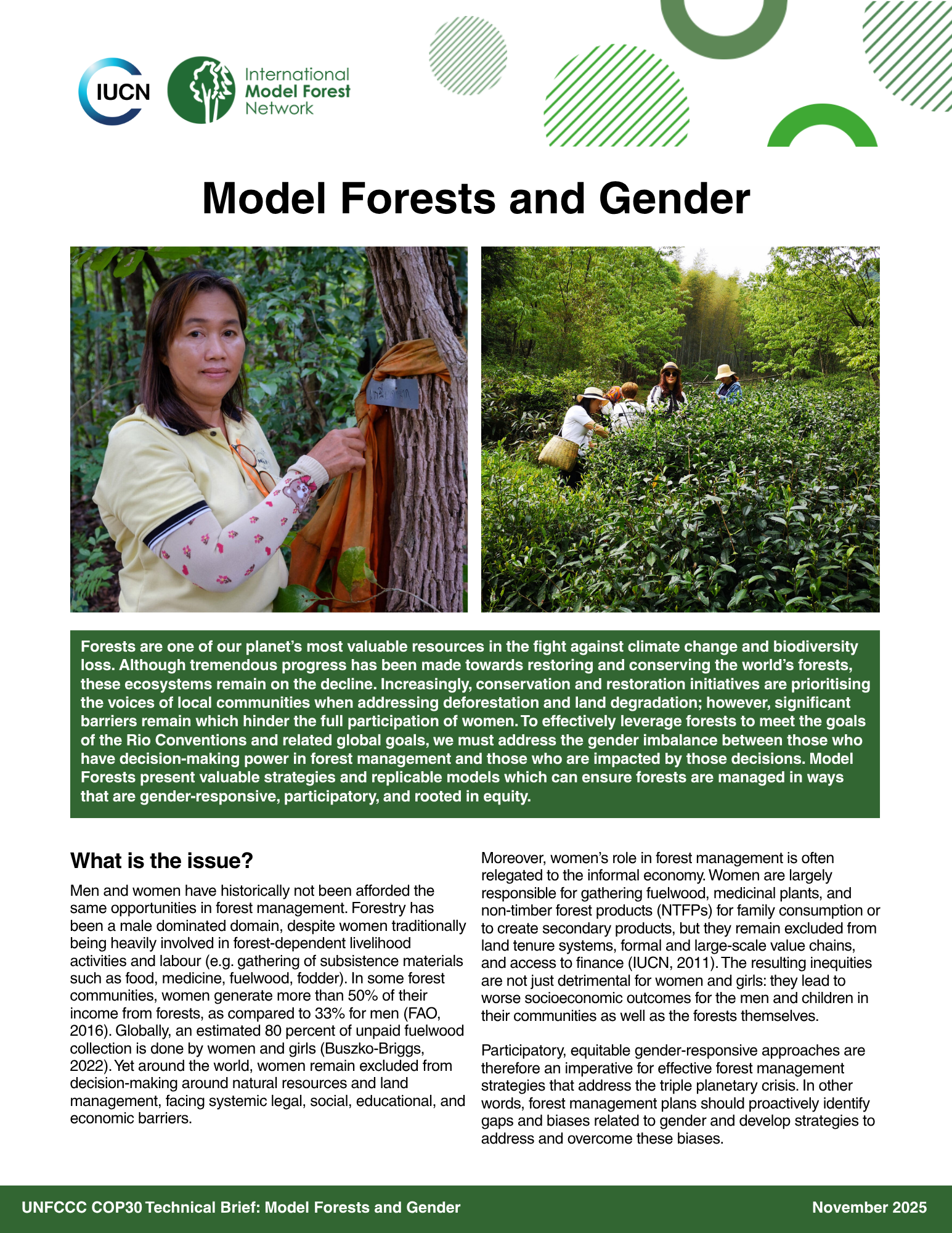
Model Forests not only contribute to the fight against climate change and biodiversity loss, but notably also innovate strategies that prioritize the human communities with which they are intertwined. This community-based approach to sustainable management nurtures trust and transparency, increasing the willingness to implement innovative solutions. The Model Forest management process relies on voluntary participation from public, private and volunteer sectors, community organizations, academia, and research institutions. Stakeholders in the Model Forests define what sustainability means within their own context; identifying a common vision and set of goals, devising a governance structure and strategic plan, and working together to achieve the goals set out in that plan.

IUCN and Model Forests 

IUCN is collaborating with the International Model Forest Network Secretariat to technically support select model forests across Asia, Africa and Latin America in boosting on-the-ground sustainable forest management and forest landscape restoration that generates measurable benefits for climate, biodiversity and economies. From 2024 to 2026, IUCN will design and implement tailored intervention packages with each of their partner Model Forests to enhance FLR planning, monitoring, and implementation capacities, with a focus on applying a gender-forward approach and initiating a specialized incubation and acceleration initiative to strengthen women's roles in FLR. The IUCN IMFN collaboration will support the following forests: the Lin'an Model Forest in China, the Chiquitano Model Forest in Bolvia, the Ngao Model Forest in Thailand, the Ma'an and Dja et Mpomo Model Forests in Cameroon. 

Resources

This website and associated knowledge products have been made possible with financial support from the Government of Canada’s Global Forest Leadership Program and through the International Model Forest Network (IMFN) Secretariat’s IMFN Climate initiative which supports efforts to scale up forest and landscape restoration, enable inclusive landscape governance, and equip the next generation of forest leaders to address the twin crises of climate change and biodiversity loss.


IMFN logo
IMFN


Canada government logo