5th Phase of the France-IUCN Partnership (2021-2025)

With a budget of €11 million, this phase focuses on four strategic priorities, in line with IUCN’s Nature 2030 Programme and France’s priorities.


Programme 1 - Accelerating the Deployment of Nature-based Solutions (NbS)
 

Nature-based Solutions (NbS) represent a strategic bridge between biodiversity conservation and the resolution of societal challenges such as climate change, food security and ecosystem degradation. During this phase, the France–IUCN Partnership moved decisively from conceptualisation to consolidation, establishing global standards, operational tools and financial pathways that ensure credibility and prevent greenwashing.

A flagship achievement was the 2024–2025 revision of the IUCN Global Standard for NbS. Conducted through a rigorous global consultation involving over 1,000 experts and informed by more than 800 applications in over 60 countries, the revised Standard strengthens its eight criteria and 28 indicators, including clearer requirements on governance, financial sustainability and long-term impact. This scientific robustness proved decisive at the 6th United Nations Environment Assembly (UNEA-6), where Member States agreed to reinforce the existing IUCN Standard rather than create competing frameworks.

To accelerate operational uptake, the Partnership supported the development of iNbS (interactive Nature-based Solutions), a global digital one-stop platform for practitioners, governments and investors. Beyond integrating the online Self-Assessment Tool (SAT), now used by more than 700 registered users, iNbS provides sector-specific guidance and contextual interpretation of the Standard. These include practical modules for agriculture, water management, urban systems, coastal and marine environments, and climate adaptation planning. The platform also connects users to training resources, case studies and a marketplace interface linking credible NbS projects with potential financing sources.

Through the IUCN Academy, over 8,500 participants have accessed NbS training modules, including a professional certificate now available in French to support AFD and its partners.

Finally, engagement with development banks (IDFC, ADB, AIIB) and a joint proposal to the Green Climate Fund aim to mobilise large-scale finance and integrate the Standard into national investment systems, reinforcing NbS as a credible pathway for climate, biodiversity and development action.

Programme 2 - Integrating Agroecology for Land Health


Launched in 2021, the Sustainable Agriculture and Land Health Initiative positioned IUCN as a credible and influential actor in the transformation of food and agricultural systems. The programme combined policy dialogue, knowledge and capacity development and field engagement to accelerate the transition toward agroecological and nature-positive systems. 

At the international level, IUCN strengthened its advocacy across major global processes, including the UN Food Systems Summit (2021) and its stocktake moments (2025) and the three Rio Conventions. Through targeted engagement at CBD COP15 and 16, UNFCCC COP28 and 30, CCD COP16 and related negotiations, IUCN helped elevate sustainable food and agricultural systems, soil health and agroecology within biodiversity, land degradation and climate agendas. It actively contributed to global coalitions such as the Agroecology Coalition, the Coalition for Action on Soil Health (CA4SH) and the One Planet Network Sustainable Food Systems Programme reinforcing its legitimacy within both conservation and agricultural communities.

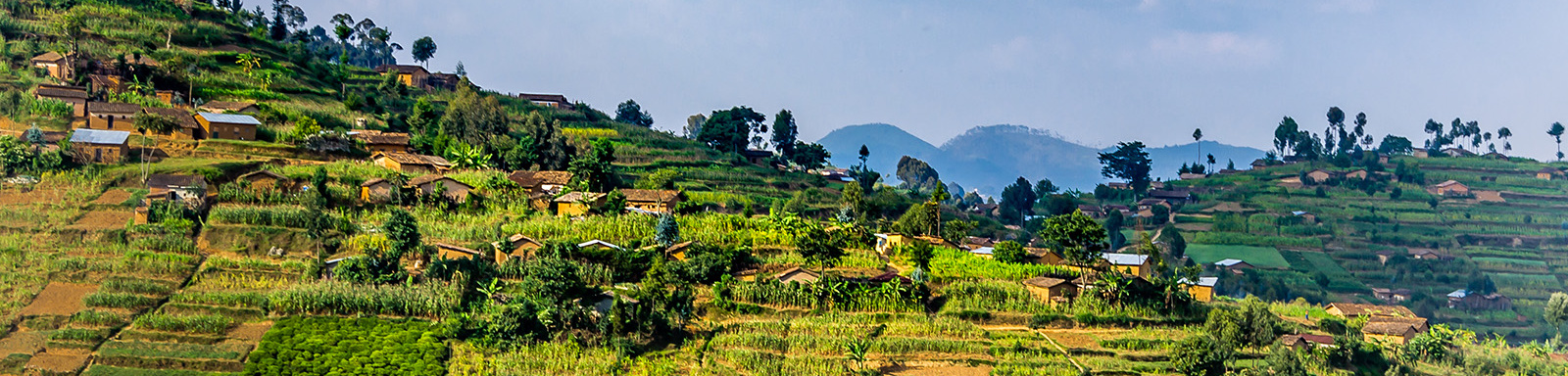
A defining feature of the programme was the launch of Common Ground Dialogues in countries including Rwanda, Viet Nam, India and Central America. These multi-stakeholder platforms brought together farmers, policymakers, researchers and conservation actors to build shared visions and action pathways, helping bridge longstanding divides between agriculture and biodiversity sectors.

The programme also delivered strategic knowledge tools. The 2024 report Sustainable agriculture and Nature-based Solutions assessed the alignment of 14 agricultural approaches with the IUCN Global Standard for NbS. The Land health monitoring framework provides a multi-scale methodology to assess biodiversity and ecosystem services in agricultural landscapes. In parallel, work advanced to integrate agroecosystems into the IUCN Red List of Ecosystems and explore recognition of high-value agricultural landscapes as effective conservation measures.

Finally, the 2024 flagship report Agriculture and conservation explored the positive and negative relationships between agriculture and nature conservation and mobilised new modelling approaches for a range of realistic policies to examine whether ending hunger and ensuring food security could be achieved while also protecting and restoring nature. 

Programme 3 – Ocean: From Regenerative Blue Economy to Global Ocean Governance


Programme 3 strengthened IUCN’s leadership in advancing effective, science-based and equitable ocean governance through four complementary workstreams: regenerative blue economy, marine protected areas and the Green List, World Heritage, and high seas governance.

3.1 Regenerative Blue Economy (RBE)

A flagship achievement was the publication of Towards a Regenerative Blue Economy, which clarified the evolution of blue economy concepts and proposed guiding principles grounded in conservation and sustainable development. The report gained strong international traction and informed the adoption of a dedicated Resolution at the IUCN World Conservation Congress 2025. The programme also produced a draft toolkit for sustainable and regenerative aquaculture tested in Senegal and an “Explainer brief” (accessible here), with the aim to support the uptake at national and international levels. The IUCN Ocean team is now looking at developing further case studies and expanding the Regenerative Blue Economy concept beyond the aquaculture sector. These efforts positioned IUCN as a reference voice linking ocean conservation with sustainable – and regenerative where possible - economic transformation.

3.2 Green List and Marine Protected and Conserved Areas

The Partnership reinforced the IUCN Green List as a global benchmark for effective and equitable management of marine protected and conserved areas. Technical guidance was developed to interpret the Green List Standard in marine contexts and applied across West Africa and the Western Indian Ocean. Regional expert groups were established and trained, mentorship systems strengthened, and managers supported through workshops and self-assessment processes. The Green List was promoted as a key qualitative indicator for achieving the global 30×30 target under the Kunming–Montreal Global Biodiversity Framework.

3.3 World Heritage and Governance

Work focused on strengthening governance and management effectiveness of natural and mixed World Heritage sites, particularly in overseas territories. Comparative analyses aligned the Green List Standard with UNESCO reporting tools and the IUCN World Heritage Outlook, facilitating coherence between evaluation systems. Dialogues with site managers improved reporting processes and highlighted the Green List as a complementary pathway for continuous improvement.

3.4 BBNJ – Explanatory Guide for High Seas Implementation

As the new Agreement on Biodiversity Beyond National Jurisdiction (BBNJ) moves toward implementation, the Partnership supported IUCN’s development of an Explanatory Guide to help States and stakeholders navigate its provisions. Led collaboratively by IUCN’s Centre for Policy and Law and the Ocean Team, and drawing on expertise from multiple IUCN Commissions, the Guide clarifies obligations related to marine genetic resources, area-based management tools, environmental impact assessments, and capacity building. By translating complex treaty language into practical guidance, it supports coherent, science-based implementation of the high seas treaty and strengthens the Partnership’s broader ambition for transformative ocean governance.

Programme 4 – Science and Governance for Nature


Programme 4 strengthens the science-policy interface and governance frameworks required to deliver credible, evidence-based biodiversity action at global and national levels.

A central achievement has been IUCN’s sustained engagement in global biodiversity policy processes. Through the strategic partnership with IPBES (the Intergovernmental Science-Policy Platform on Biodiversity and Ecosystem Services), IUCN mobilised its scientific networks to review and influence key assessments, including the 2024 reports on Transformative Change and the Biodiversity–Water–Climate–Health Nexus. During IPBES plenary negotiations, coordinated inputs helped ensure that critical scientific messages were reflected in the final Summaries for Policymakers. The expanding IPBES stakeholder network (ONet), particularly in Africa, further strengthened inclusive participation in global biodiversity governance.

Beyond IPBES, the programme supported active engagement in Convention on Biological Diversity (CBD) processes, including technical meetings and preparatory work towards COP implementation. IUCN contributed scientific tools and policy guidance to support implementation of the Kunming–Montreal Global Biodiversity Framework, reinforcing its role as a trusted advisor to governments. In the Mediterranean region, the BeMed+ project linked science and local governance to address plastic pollution, demonstrating how global policy commitments can translate into regional action.

The programme also reinforced global biodiversity standard-setting. Through its formal Liaison A status with ISO’s Technical Committee 331 on Biodiversity, IUCN ensured that emerging international standards on biodiversity metrics, restoration, corporate performance and “nature positive” approaches are aligned with robust scientific principles and existing IUCN standards.

Accountability mechanisms were strengthened through the Contributions for Nature Platform, which now hosts more than 10,250 conservation actions worldwide. By integrating the STAR metric and a new climate indicator, the platform allows users to quantify potential biodiversity and climate impacts, directly supporting reporting under the Global Biodiversity Framework.

On natural capital, preparation of Phase II of BIODEV2030 enabled its deployment in 15 countries between 2024 and 2026, generating more than 30 policy briefs recommending sectoral policy reforms and more than 10 landscape-level bankable project proposals. In addition, analytical work mobilized key databases including the IUCN Red List and examined connections on agricultural support, biodiversity and trade to reform harmful incentives. In line with KMGBF target 18, this work  provides evidence for a better alignment between agricultural support policies and national biodiversity conservation targets. IUCN Members were consulted on IUCN Resolution 120 “Towards an IUCN Natural Capital Policy) during three 2024 Regional Conservation Fora (in Asia, Europe and Oceania) and it resulted in the Progress report to Council on CEESP-CEM Natural capital task force. In parallel, natural capital accounts for Kenya, Gabon and Viet Nam have been finalized, as well as a method and its application to calculate Nation’s deforestation footprints. Finally, the France – IUCN partnership allowed to contribute on the development and applications of the STAR metric, notably on STAR and agriculture and on a method for calibrating the metric on the ground (see for example Mair et al., 2026 for a practical case of calibration in Costa Rica).

Finally, the IUCN Academy expanded global capacity-building, with 19 online courses, over 16,000 users and a bilingual Professional Certificate on the Global Standard for Nature-based Solutions, including a dedicated cohort for AFD staff and partners.

Together, these achievements position IUCN at the intersection of science, policy and implementation—ensuring that global biodiversity commitments are grounded in evidence, measurable in impact, and supported by strengthened institutional capacity.