
The France-IUCN Partnership: 20 Years of Action for Nature and Development
The partnership between France and the International Union for Conservation of Nature (IUCN) represents a strategic, long-term commitment to addressing the world's most pressing environmental challenges. Established in 2005, and currently one of IUCN's eight Framework Partners, it bridges international policy and on-the-ground conservation by combining scientific expertise, policy influence and field-based action.
This long-term investment strengthens the effectiveness of France's global environmental engagement while supporting the delivery of
IUCN’s programme.
You can follow regular updates on the Partnership on our LinkedIn page.
Description
20 Years of France–IUCN Partnership for Nature and Development
€44M
mobilised since 200520
years of partnership~25
experts seconded to the IUCNA Historic Foundation and Global Influence
France's relationship with the International Union for Conservation of Nature is firmly rooted in the Union's history, founded in Fontainebleau in 1948. France became a Member in 1977. Since 2005, France has committed €44 million to Partnership programmes, and seconded around 25 experts to IUCN headquarters and regional offices.
Today, the Partnership brings together four key French public institutions:
Driving forward critical conservation practice and policy
 For over two decades, this Partnership has been at the forefront of developing tools, driving forward policies and raising awareness for many of the most critical conservation issues of our time. They serve as the building blocks for conserving nature for future generations.
You can read more about the key achievements of the France-IUCN Partnership in the linked reports below.
The 5th phase of the Partnership (2021–2025)
The 5th phase of the France- IUCN Partnership (2021–2025) focused on four strategic priorities, in line with IUCN’s Nature 2030 Programme.

IUCN teams and French partners’ representatives involved in the 5th Phase (2021–2025)
News and Events
News
09 Feb, 2026
Gland, Switzerland, 9 February 2026 – Positive action by businesses and financial institutions is essential in the transformation to a just and sustainable economic system, according the new Business…

Explainer brief
2025
A Regenerative Blue Economy is an economic model that combines rigorous and effective regeneration and protection of the ocean and marine and coastal ecosystems with sustainable, low or no-carbon…

News
11 Oct, 2025
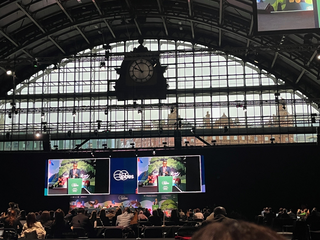
Abu Dhabi, United Arab Emirates, 11 October 2025 (IUCN) – Today at the IUCN World Conservation Congress 2025, IUCN launched a new publication, titled “Agricultural support, biodiversity, and trade:…
Press release
10 Oct, 2025
Abu Dhabi, United Arab Emirates, 10 October 2025 (IUCN) – IUCN has officially launched the Second Edition of the IUCN Global Standard for Nature-based Solutions™ at the IUCN World Conservation…
