The Mediterranean Fin Whale: The Greyhound of the Seas
Welcome to our new “Species of the Month” series. Every month we will bring you a Mediterranean species for you to discover. We are launching our series today with the largest Mediterranean whale, the majestic fin whale, to celebrate World Whale Day.
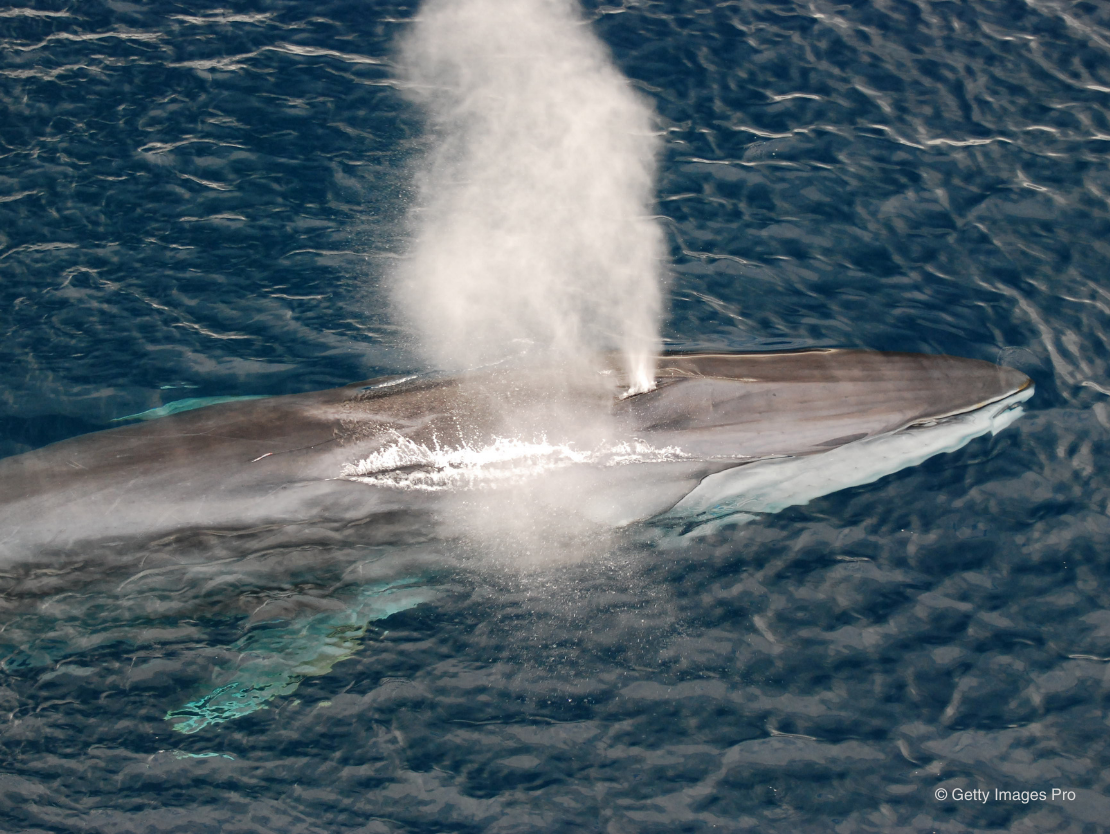
The Mediterranean fin whale (Balaenoptera physalus), known as the Greyhound of the seas, is not only the largest species of cetacean present in the Mediterranean Sea, but also the second largest whale in the world, rivalled only by the Blue Whale. This species can grow up to 22m long and weigh up to 75,000kg, equivalent in size to a 7-storey building and in weight to a Boeing 737!
If you were ever to cross a Mediterranean fin whale, an unlikely but not impossible event to occur, you can recognise it by its dark grey back, white belly and small fin near its tail. Even more noticeable, is its asymmetrical head colouring: dark on the left side of the lower jaw, white on the right-side of the lower jaw.

But why is it called the Greyhound of the seas? Is it because of its grey colouring? No. It is because, despite its impressive size, it is one of the fastest great whales1 on earth. It’s ability to reach up to 40 km/h is so fast that once upon a time whale hunting boats could not keep up with it, allowing it to avoid the threat of whale hunters for a long time. Since then, technology has caught up and Mediterranean fin whales can now be followed by boat.
The Mediterranean fin whale is most commonly found far from the coast but can be seen closer to the shoreline, especially in straits or bordering capes. They are known to move in small groups, so if you spot one, lucky you! You are likely to see 1 to 6 more. You might even see different species too if you catch them at mealtime, as they have been seen feeding alongside other whales and even dolphins. Unbothered queens!
This species are nomadic opportunists, meaning they tend to concentrate in areas of high food availability, such as upwelling areas that bring nutrients from the deep sea to the surface. These big creatures feed predominantly on krill and small pelagic fish, such as anchovies or sardines. Tasty! Not unlike other whales, fin whales use a lunging technique to feed. This consists of opening their mouth and gulping in large amounts of water and any food that might be floating in it. The food is then filtered out as they push the water through their baleen, which the krill cannot go through, leaving all that tasty goodness stuck inside the whale’s mouth - à la Pinocchio.

The best times to go fin whale watching in the Mediterranean is around summertime as this is when they migrate over to the Atlantic. Find yourself a balcony overlooking the sea in southern Spain, northern Morocco or Portugal and bring your binoculars. (Check out how you can recognise the fin whale by its blow). If you miss them, no problem! Mediterranean fin whales live up to 90 years old, so you can simply try again the following year.
If you go whale watching, make sure to do so responsibly. Fin whales are considered vulnerable by the IUCN Red List of Threatened Species, and the Mediterranean sub-population in particular is considered Endangered. Threats vary from maritime traffic, to pollutants and micro-/nanoplastics, to climate change and ocean acidification.
These beautiful creatures, like so much of marine biodiversity in the Mediterranean Sea, are under threat. Protecting them and their ecosystems is one of our objectives at IUCN Med. Find out more about the work we do here.
Until next month!
Talia, from the IUCN Med communications team
______________________________________
1 Great whales are typically longer than 10m and weigh over 10 tonnes.
The Mediterranean fin whale subpopulation is listed as Endangered by the IUCN Red List of Threatened Species.
Thank you to organisations, such as ACCOBAMS and the IUCN SSC Cetacean Specialist Group, for the work they do monitoring and protecting cetaceans. Their work is invaluable to the conservation of these species.
Sources:

Disclaimer
Opinions expressed in posts featured on any Crossroads or other blogs are those of the authors and do not necessarily reflect the opinions of IUCN or a consensus of its Member organisations.

The Bangladesh Forest Department (BFD) and IUCN Bangladesh, with support from Agence Française de…

Each year, International Women's Day is an opportunity to recognise the women advancing change in…

On 14 January 2026, in Dhaka, the Bangladesh Forest Department and IUCN Bangladesh formally signed…