A Journey of Conservation Success Stories with the Green List
The Green List is more than just a certification; it's a global movement that brings together diverse stakeholders to promote sustainable management practices in protected areas. This participatory process involves experts, mentors, organizations, managers, and local communities, all working towards a common goal: the effective and fair management of natural resources.
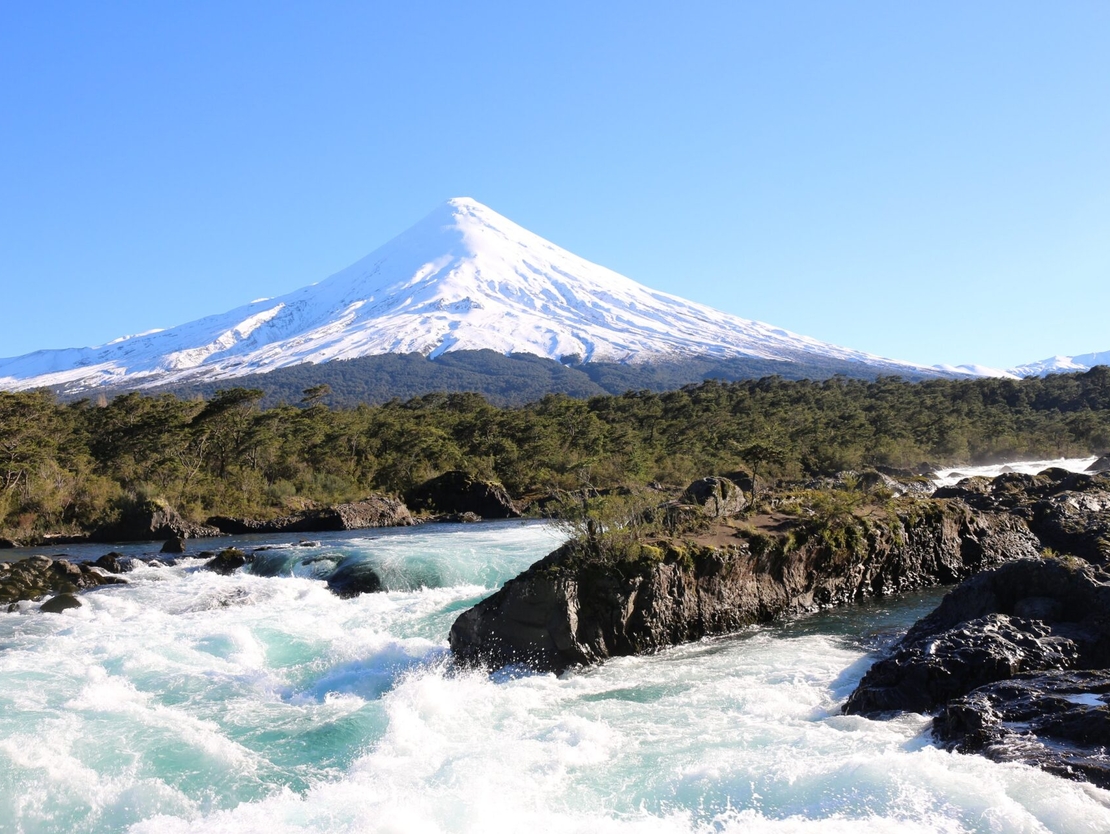
The Green List has proven to be a catalyst for positive change in conservation efforts worldwide. From the technological advancements in Pará to the scientific research in Mato Grosso, the inclusive conservation model in Colombia, the transformative journey in Chile, and the strengthening of protected areas in Bolivia, the Green List showcases the power of collaboration and continuous improvement in managing protected areas. Through these stories, we see how the Green List is making a tangible difference in the conservation of our planet's natural treasures.
A Technological Leap for Conservation
In the heart of Pará, the Soure Marine Extractive Reserve embarked on a transformative journey through the Green List process. The reserve faced a significant challenge: monitoring the mangrove crab, a species crucial for the health of the mangrove ecosystem. With limited resources, the task seemed daunting.
However, the Green List process opened new doors. The reserve secured resources and partnerships for its crab monitoring project, a key annual objective. This was made possible through the Tech4Nature project, funded by Huawei. The project aimed to develop low-cost technological solutions to monitor the effects of climate change and the mangrove crab population. With the participation of local communities and partners like IUCN Brazil, Rare Brasil, the Federal University of Pará (UFPA), and ASSUREMAS, the project took off.
Lucas Gadelha from RESEX Marinha de Soure shared his excitement: "During the Green List process, we were able to obtain resources and partnerships for our crab monitoring project. Now we'll be able to implement the monitoring with the support of technology and guaranteeing community participation."
Showcasing Conservation Success Thresholds
In the lush landscapes of Mato Grosso, the Cristalino Private Natural Heritage Reserve (RPPN) embarked on its Green List journey. The reserve's management team recognized the need for scientific research to determine the conservation success thresholds for the region's species. This led to an official partnership with the Federal University of Mato Grosso.
The collaboration focused on studying the impact of tourism on large mammals using trap cameras. University students participated in this research, mapping threats to natural, ecosystem, cultural, and social values. The strengthened partnership generated valuable insights into the region's biodiversity.
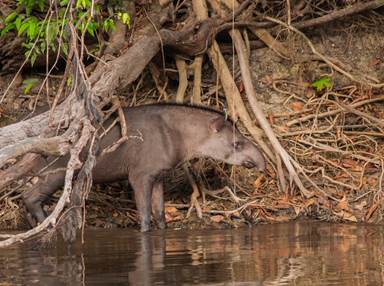
South American tapir (Tapirus terrestris), also commonly known as the Brazilian tapir or the Amazonian tapir, is the largest terrestrial mammal on South America. The South American tapir is considered Vulnerable in IUCN’s Red List of Threatened Species. Picture taken in the Cristalino Private Natural Heritage Reserve. Credits: Lucas Eduardo Araújo Silva.
The reserve's journey didn't stop there. The management team drew up a plan to research and construct conservation limits, aiming for concrete results from its actions. This comprehensive approach ensured that the reserve's conservation efforts were grounded in scientific evidence and community involvement.
Inclusive Conservation in Colombia fostering deeper connection between people and nature
Colombia's experience with the Green List has been nothing short of transformative. The country embraced the Green List process as an opportunity for growth and strengthening the effective management of its protected areas. Through adaptive and collaborative planning, Colombia integrated scientific and traditional knowledge, creating a participatory model that involved local institutions and communities.
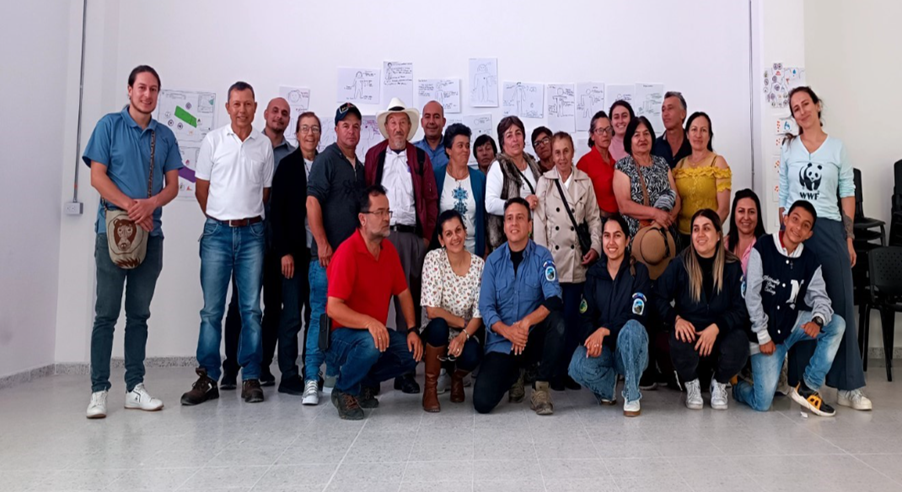
Signing of Conservation Agreements in Chingaza. In this photo, taken on December 18, 2024, community leaders and technicians from Chingaza National Natural Park sign conservation agreements. This symbolic act, part of the ARCA workshop under the Green List Colombia program, reflects the joint commitment to sustainable management and climate change adaptation in the region.
Sandra Valenzuela, President of EAGL Colombia, proudly stated, "Colombia has positioned itself as a world benchmark in biodiversity protection, innovating in its National System of Protected Areas. The recognition of five protected areas on the IUCN Green List, with three more candidates, is a source of pride for conservationists and park rangers."
Colombia's approach not only protected ecosystems but also fostered a deep connection between people and nature. By sharing its learnings, Colombia inspired other countries to follow an inclusive and sustainable conservation path, demonstrating that high environmental standards can be achieved through collaboration.
Chile Leading the Way with Green List Value-Added Proposition
In Chile, the National Forestry Corporation (CONAF) initiated an internal process to apply the Green List standards across its entire system of 109 protected areas.
This process led to the reactivation of participation mechanisms, the creation of social linkage plans, advances in gender equality, and joint work with stakeholders. The self-assessment in 24 national parks, mainly in Patagonia, identified areas with high compliance levels, selecting Vicente Pérez Rosales and Cerro Castillo National Parks as national pilots.
Alexis Gajardo, Green List Manager of Vicente Pérez Rosales National Park, reflected on the journey: "Through the Green List, we have been able to realize the gaps we have in the Vicente Pérez Rosales National Park. It has been so important because we have been able to work to improve and be a protected area managed effectively and comprehensively."
Strengthening Protected Areas in Bolivia: A National Commitment to Conservation
"Bolivia's commitment to the Green List has proven to be a catalyst for strengthening our Protected Areas, ensuring their effective management and mobilizing resources at the national and international levels." – Rodrigo Tarquino, Key Expert Forest4life
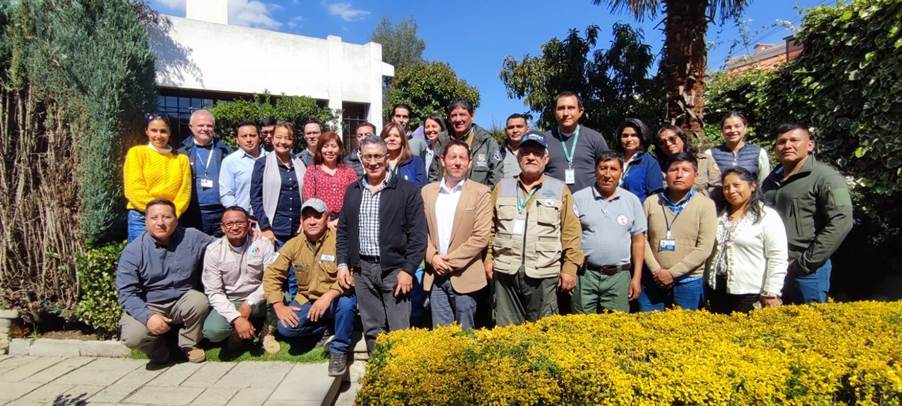
The case of Bolivia with the Green List illustrates how strong institutional commitment can mobilise significant resources and advance the effectiveness of Protected Area management. By adopting the Green List as a benchmark in public policy, Bolivia has not only elevated local conservation efforts but also emerged as a leader in the application of international conservation standards.
The partnership between Bolivia’s National Service of Protected Areas (SERNAP) and the International Union for Conservation of Nature (IUCN) has significantly improved management and effectiveness in critical regions such as the Panatanal Chaco and the Bolivian Amazon. As more Protected Areas integrate this standard, Bolivia continues its national commitment to conservation, fostering effective governance of nature and ensuring the sustainability of its natural resources for future generations.
This approach not only benefits Bolivia but also serves as an inspiring model for other nations in the region and globally.
Read more:
- Bolivia – Fortalecimiento de las Áreas Protegidas en Bolivia a través de la Lista Verde: Un Compromiso Nacional para la Conservación
- Chile – Fortalecimiento de la gestión integral de los Parques Nacionales Cerro Castillo y Vicente Pérez Rosales a través del Estándar Lista Verde de la UICN
- Colombia – Del desafío al triunfo: la travesía verde de Chingaza
- Manejo sustentable del bosque, 10 años de aprendizaje en Manuripi | PANORAMA
- Valuing protected areas through scientific and traditional knowledge | PANORAMA
- Cristalino Jungle Lodge and Foundation: A private protected area contribution to conservation in Brazil | PANORAMA