From protection to restoration: Strengthening forest landscapes worldwide
Forests play a critical role in regulating the global climate, maintaining biodiversity, and supporting the resilience of ecosystems and communities. However, ongoing degradation and deforestation continue to erode these essential functions. Through forest-focused initiatives supported by the Global Environment Facility (GEF), efforts are underway to conserve remaining forest ecosystems, restore degraded landscapes, and strengthen sustainable management practices. Advancing these actions is fundamental to mitigating climate change, reducing biodiversity loss and promoting long-term environmental and socio-economic stability.
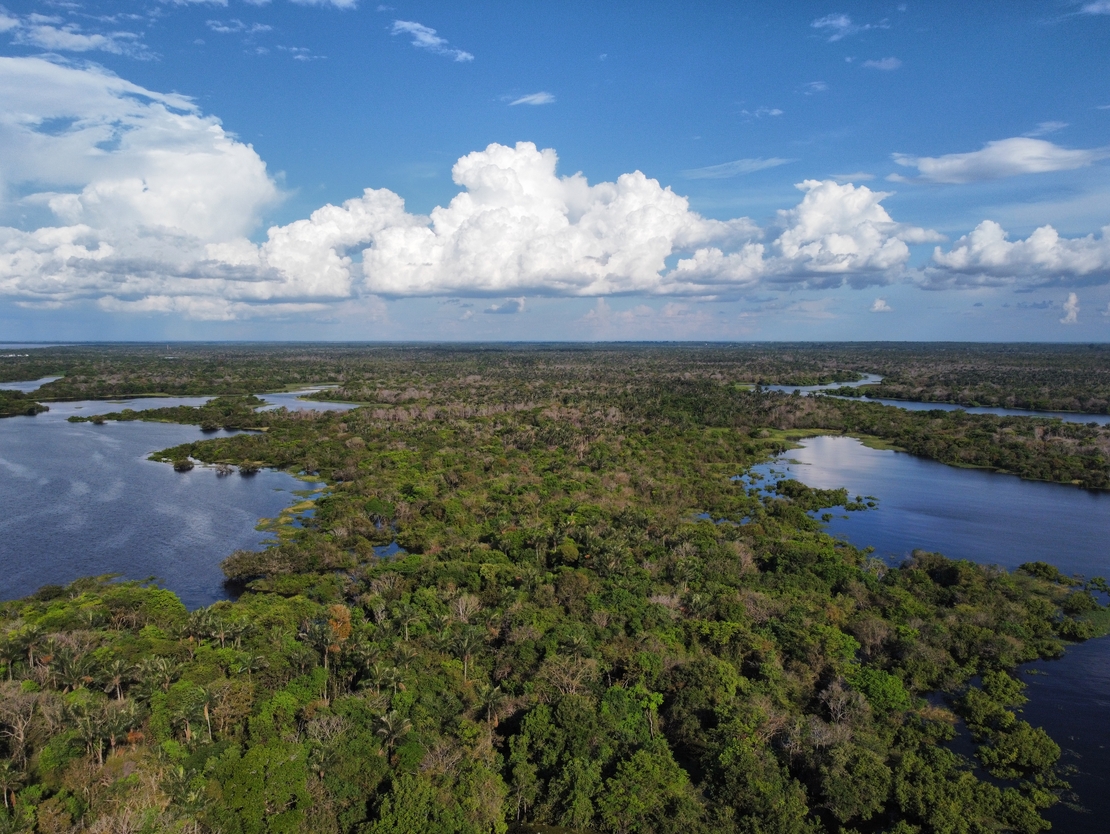
Brazilian Amazon
GEF-supported initiatives implemented with IUCN and its partners are helping scale up the conservation and restoration of forests across regions and ecosystem types. From primary tropical forests to planted forest landscapes, these projects demonstrate how improved governance, sustainable management and targeted restoration efforts can enhance ecosystem resilience while supporting Indigenous People and local communities.
Strengthening conservation of primary forests through improved partnership and coordination (Global programme)
Intact tropical primary forests are among the most valuable ecosystems on Earth, hosting irreplaceable biodiversity, storing immense amounts of carbon and providing immeasurable ecosystem services to humans. Yet, their importance is insufficiently recognised and inadequately prioritised contributing to the increasing threats they are under from agricultural expansion, infrastructure development and illegal logging. The Strengthening Conservation of Primary Forests through Partnership Enhancement and Coordination of Support project, financed by the GEF, and implemented with partners, aims to address these challenges through coordinated global action.
The initiative enhances collaboration among governments, research institutions and civil society to increase awareness and strengthen governance frameworks for primary-forest protection. It promotes harmonised monitoring systems to assess primary forest condition and facilitates the exchange of best practices between tropical forest countries. By building a global partnership platform, the project helps direct financial and technical resources to where they are most needed.
“By fostering coherent and collaborative approaches, the project seeks to shift forest protection from isolated national efforts to a connected, transboundary network of conserved primary forests that underpin climate and biodiversity goals,” said Chetan Kumar, Head of IUCN’s Forest and Grasslands team.
Safeguarding the Cantanhez Primary Forest Landscape in Guinea-Bissau
In Guinea-Bissau, in the northernmost point of the Guinean forests in West Africa, the Promoting and Strengthening Restoration and Conservation of Cantanhez Primary Forests project focuses on the rich forest mosaic of Cantanhez National Park. The targeted areas, constituted of 105,767 ha of protected areas and non-protected areas, is characterised by its unique biodiversity and natural resources, including primary forest, mangrove forests, wetlands and diverse wildlife (endemic and/or endangered species), making the Cantanhez zone an important ecological hotspot with essential ecosystem services to surrounding communities.
The project supports protected area governance effectiveness; sustainable land use and ecological connectivity in and between protected and non-protected areas, both nationally and in neighbouring Guinea; stakeholder and the private sector engagement; and policy and law enforcement at national and regional level. Working closely with local communities and national institutions, it promotes alternative livelihoods such as sustainable agroforestry and the value chain of non-timber forest products, reducing pressures on natural forests and building sustainable development locally to tackle negative climate effects on communities and primary forests. Training and monitoring initiatives are also helping local groups participate more effectively in conservation decision-making.
“Through a combination of ecological restoration, biodiversity conservation, climate change adaptation and mitigation through nature-based solutions, national and regional collaboration, knowledge and information sharing, community empowerment and strengthened management capacity, the project aims to secure the long-term health of Cantanhez’s forest landscapes, unique biodiversity and the well-being of the people who depend on them,” said Jean-Louis Sanka, Programme Manager, Guinea-Bissau Programme Office.

Enhancing ecosystem services of planted forests in China
Not all forest restoration takes place exclusively in natural forests. In China, IUCN and partners are demonstrating how planted forests can be designed and managed to provide a wider range of ecosystem services. The Building Climate-Resilient Green Infrastructure project focuses on improving the ecological performance and resilience of planted forests through innovative forest-landscape restoration and governance reform.
The initiative pilots restoration activities in key watersheds and develops new valuation tools to assess the ecosystem services these forests deliver – from carbon sequestration and soil stabilisation to water regulation and biodiversity enhancement. It also strengthens institutional frameworks by integrating ecosystem-service considerations into national and provincial forest-management policies.
“By showcasing evidence-based approaches to sustainable management, the project contributes to a broader understanding of how planted forests can function as part of green infrastructure that supports both ecological and socio-economic objectives,” said Yan Zhang, Country Coordinator, IUCN China Country Office.

Looking ahead: newly launched initiatives
Two new GEF-supported programmes have recently begun implementation, expanding IUCN’s work on forest conservation and restoration at a biome scale:
- Mesoamerica Critical Forest Biome Integrated Programme
This initiative unites six countries across Mexico and Central America to conserve and restore critical forest ecosystems, strengthen community-based management and enhance regional cooperation to address drivers of deforestation. - Asia-Pacific Critical Forest Biome Integrated Programme
Covering primary forests in Southeast Asia and the Pacific, this programme aims to protect globally significant biodiversity, reduce deforestation and degradation, and promote sustainable livelihoods in forest-dependent communities in three countries.
Together, these efforts are informing practical models for sustainable forest management, helping countries deliver stronger conservation outcomes and build long-term ecosystem resilience.
The upcoming UN Climate Change Conference (COP30) will heavily feature forests, highlighting them not only as carbon sinks but as essential development assets that contribute to both mitigation and resilience against climate change. Thematic Days centred around forests and other ecosystems will take place from 17-18 November 2025.
To learn more about how IUCN and GEF are catalysing innovation and investments in forest ecosystem conservation, visit the IUCN-GEF Project Agency page on our website or IUCN's broader forest work here.

The Bangladesh Forest Department (BFD) and IUCN Bangladesh, with support from Agence Française de…

Each year, International Women's Day is an opportunity to recognise the women advancing change in…

On 14 January 2026, in Dhaka, the Bangladesh Forest Department and IUCN Bangladesh formally signed…