For a Plastics Treaty that conserves nature
Plastic pollution is one of the fastest-growing drivers of biodiversity loss, undermining all ecosystems and ocean health, human well-being, and the potential of a circular plastics economy and a sustainable blue economy. Ahead of the convening of the next Intergovernmental Negotiating Committee (INC) session on a Plastics Treaty (Third Part of the Fifth Session INC 5.3), two new briefs funded by NORAD highlight the work that IUCN continues to do within the plastic pollution and biodiversity interlinkages.
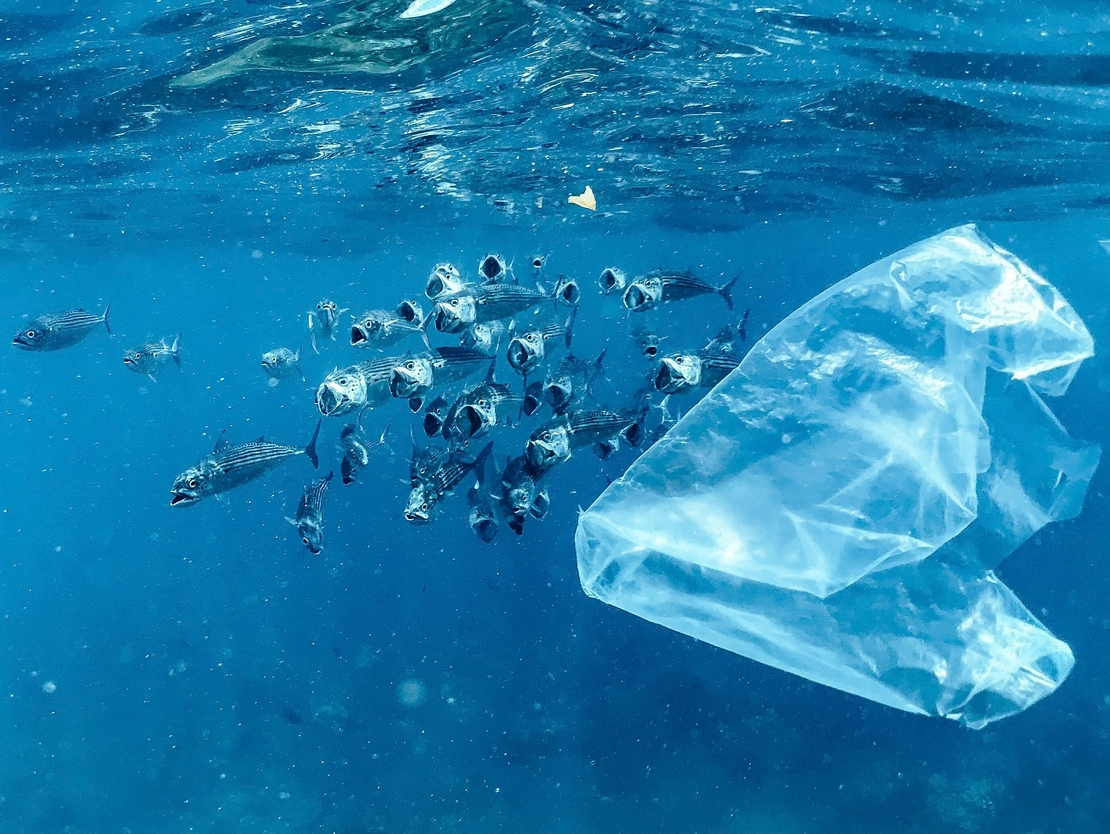
Since 2014, IUCN has been at the forefront of tackling plastic pollution across six global regions and more than 20 countries, mobilizing a portfolio of over USD 100 million. Through this work, IUCN has built a strong evidence base on plastic fluxes from source to sea—using plastic footprint and hotspot assessments, advancing research to improve scientific understanding, and advising governments worldwide on effective legal and policy responses.
On the ground, IUCN is delivering results through projects such as AFRIPAC, Closing the Caribbean Plastic Tap, the Pacific Plastics Project, and IslandPlas, while also playing an active role in the Plastics Treaty negotiations since their inception. Across headquarters, regional and national offices, our scientific Commissions, including the World Commission on Environmental Law, and through our Membership, IUCN provides science-based legal and policy support, capacity building for negotiators such as the legal training at UNEA7, and practical solutions to help countries meet obligations across multiple international frameworks—including the Kunming-Montreal Global Biodiversity Framework and its Target 7 in particular.
The work on the ground is complemented by our efforts at the different INC sessions, including proposing options for entry points for biodiversity language within the future Plastics Treaty (A global plastics treaty and biodiversity: converging or conflicting regimes? - resource | IUCN; Reinforcing Commitments to Nature and Communities: Options to include Biodiversity in the future Global Plastics Treaty - resource | IUCN). Thus, IUCN is continuing to support negotiators with policy and legal briefs, such as the newly published:
Gaps and synergies between proposals for a Global Plastics Treaty and existing Multilateral Environmental Agreements – Policy and Legal analysis, developed jointly by IUCN WCEL (Translation in French, Spanish, and Portuguese)

In the Gaps and Synergies briefing, IUCN and IUCN WCEL highlight the ways in which multiple multilateral environmental agreements (MEAs) could be connected to issues relating to plastic pollution as well as the significant gaps in their jurisdiction, which makes a global instrument addressing plastic pollution necessary. Specifically, MEAs such as the Basel Convention, the Rotterdam Convention and the Stockholm Convention, the Minamata Convention on Mercury and the Montreal Protocol on Substances that Deplete the Ozone Layer, as well as the “Global Framework on Chemicals and the recently established new “Science-Policy Panel on chemicals, waste and pollution (ISP-CWP)”, and other global and regional Conventions, address parts of the plastic pollution crisis but not all aspects of it. Since the August 2025 5th resumed session of the INC (INC – 5.2), ended without producing a treaty instrument, some have suggested that a way forward could be to expand the regulation of plastic pollution elements under existing international agreements.
Simultaneously, States have committed to ensure the protection of rivers, coastal and marine ecosystems, recognising their connectivity as a continuum in many global and regional regulatory frameworks, while progressively developing and adopting plans, policies and laws to control, prevent and reduce plastic pollution on a national and local level. The management and governance of land, water, coastal and marine ecosystems is complex and dynamic by nature and requests a holistic approach. Thus, the second briefing elaborates on the governance instruments at national and local levels to address the breath of the complexities of marine plastic pollution by focusing on the Source-to-Sea (S2S) approach.
As IUCN looks ahead to rolling out the 2026–2029 Programme and gets ready to implement the recently adopted IUCN Resolution 8.058 on “Advancing actions to end plastic pollution to protect human health, biodiversity and the environment” we seek additional support to deepen and scale this work in three interconnected areas:
Supporting Member States in the Plastics Treaty process (INC negotiations and capacity building for legal implementation across different Multilateral Environmental Agreements),
Scaling up ocean conservation by addressing plastics in marine ecosystems,
Advancing the transformative concept of a Regenerative Blue Economy.
Through these three priorities, IUCN aims to bridge global policy, regional and local conservation action, and regenerative economic models—helping countries and communities achieve healthy, resilient ecosystems and a just transition toward a nature positive circular and regenerative future.
A further strength of our union is the development of comprehensive explanatory guides of international legal instruments, such as the upcoming BBNJ Agreement or on the Nagoya protocol. Should there be the interest of the global community, IUCN is ready to develop one for a future Plastic Treaty.
Mandated by its members, IUCN will continue to play a catalytic role in supporting Member States in policy discussions, scaling up conservation solutions, and integrating plastics into the emerging paradigm of a Regenerative Blue Economy. One way of doing so, is by providing a dedicated course on the issue on the IUCN Academy, with inputs from its commission experts and partners. Additionally, in 2025 IUCN WCEL created a new Pollution Law Specialist Group to allow for a focus on legal and regulatory issues relating to pollution across all jurisdictions, and to facilitate the ongoing work between IUCN and IUCN WCEL in this critical topic.
In Kashkadarya, Khorezm and the Republic of Karakalpakstan, local communities are helping turn…
The third in a five-part series, this webinar brought together speakers from across West and…

This week, the Yerevan Municipality hosted the inaugural ceremony marking the establishment of the…